April 20, 2026

Are Gold And Silver Bullion Sales Reported To The IRS? Tips For Keeping Bullion Sales Private

Long term gold and silver investors who have gradually accumulated physical precious metals over the years have seen the value of their holdings increase substantially when measured against the value of the paper dollar.   Astute investors realize that a large part of the “gains” on their precious metals have merely preserved purchasing power compared to paper money which has been consistently debased by the monetary and fiscal policies of the government and federal reserve.

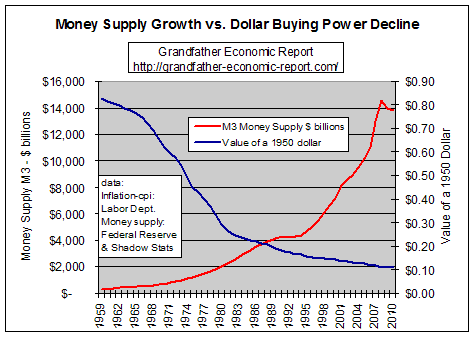
In the eyes of the taxing authorities, however, the increased value of an investment due to inflation is still considered a gain regardless of whether or not there was an increase in purchasing power.  As the chart below graphically depicts, a $4,000 investment made in 1986 and now worth $8,000 is still worth only $4,000 in purchasing power -thus the true economic gain is zero.  Try telling that to the IRS!  After paying long term capital gains on the phantom $4,000 “profit”, you are left with less that you had in 1986.
There is, however, a silver and gold lining for investors in physical precious metals since, under many circumstances, the sale of your gold and silver bullion is not reported to the IRS.  There are circumstances, however, in which a bullion dealer is required to file a Form 1099-B with the IRS which reports sales transaction proceeds, name, address and social security number.  It is obviously important to most investors to know what types of sales are kept private and what types of sales are reported to the IRS.

Thanks to our friends at GoldSilver.com, here is the essential up to date information that you need to know before selling gold and silver bullion.

Before we begin, the following information covers aspects of investor privacy, not an investor’s responsibility to pay income tax gains on any profits made from the purchase and sale of investment grade bullion products.  For tax questions, please seek professional tax consul.

We know investor privacy is very important to physical silver and gold purchasers and confidentiality is one of the values we covet most along with our customers.

For some bullion investors, ensuring themselves a private sale is their most important objective and we understand the myriad of reasons as to why this is so.

That being said, we must always adhere to the rules of our industry.

Being a bullion dealer, we are often asked by customers questions like…

– Are my transactions private?

– When I sell my gold bullion or silver bullion, is it a private transaction, or is it reported to the IRS?


First, when a customer buys from our dealership, the transaction is private.

We have specifically designated the current payment method options on our website so that investors who buy bullion from us, do so in confidentiality.

Secondly, when an investor sells their gold bullion or silver bullion to a dealer like us, some of these trades are private while some are not.

Depending upon what you are selling will depend upon whether the powers that be require us as a bullion dealer to fill out something called an IRS 1099-B Form.
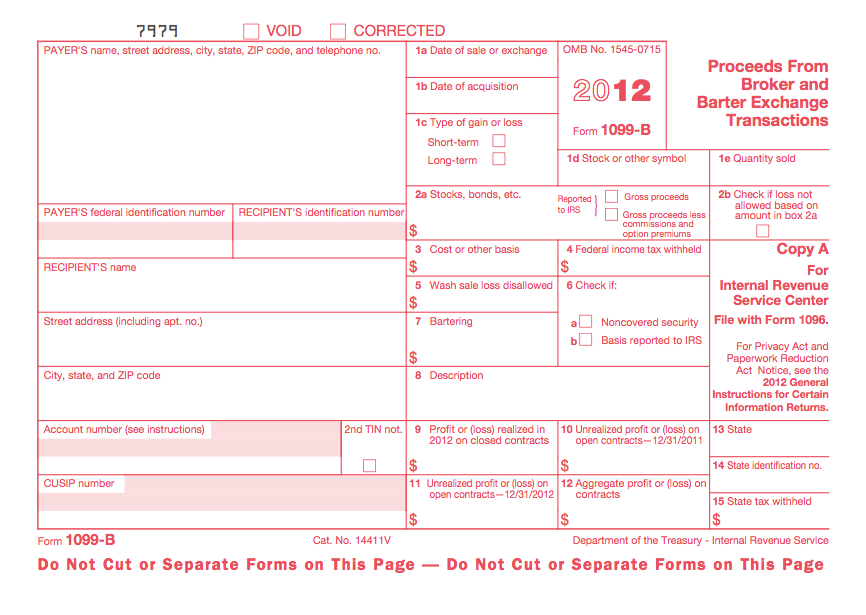


IRS 1099 Gold Reporting & Silver Reporting

When you sell your bullion back to a dealer, the pertinent questions for a dealer are:

1) What form of gold and or silver bullion are you selling?

2) What amount of silver bullion and or gold bullion are you selling?


The following covers private investor sales of bullion products we currently offer at GoldSilver.com.

1099 EXEMPT PRIVATE SILVER BULLION
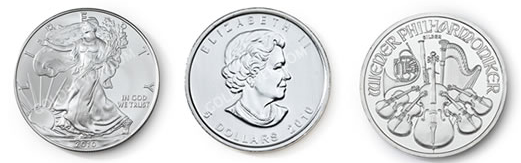
Private silver bullion ( IRS 1099 Form exempt ) consists of any quantity sold to a dealer of the following items:

– American Silver Eagle Coins

– Canadian Maple Leaf Silver Coins

– Austrian Philharmonic Silver Coins


1099 REQUIRED SILVER BULLION
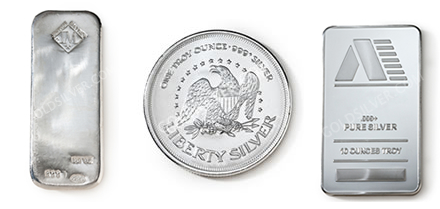
Reported silver bullion ( IRS 1099 Form required ) consists of 1000 ounces or more sold to a dealer of the following items:

– .999 fine silver bullion bars  (any sizes)

– .999 fine silver bullion rounds  (any sizes)


1099 EXEMPT PRIVATE GOLD BULLION
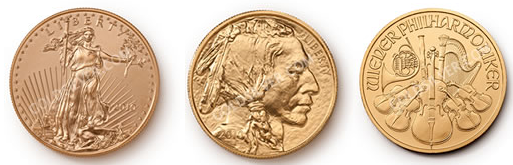
Private gold bullion ( IRS 1099 Form exempt ) consists of any quantity sold to a dealer of the following items:

– American Gold Eagle Coins

– American Gold Buffalo Coins

– Gold Austrian Philharmonic Coins


1099 REQUIRED GOLD BULLION COINS
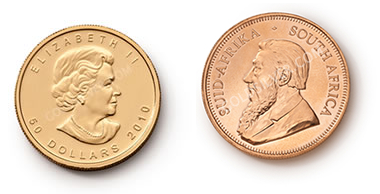
Reported gold bullion coins ( IRS 1099 Form required ) consists of 25 ounces or more sold to a dealer of the following items:

– Canadian Gold Maples (1 oz)

– South African Krugerrands (1 oz)


1099 REQUIRED GOLD BULLION BARS
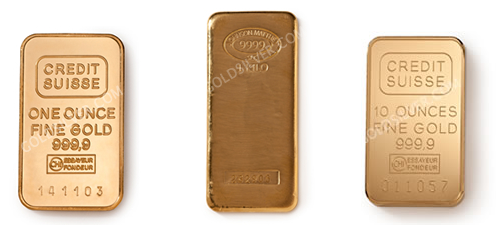
Reported gold bullion bars ( IRS 1099 Form required ) consists of 32.15 ounces or more sold to a dealer of the following items:

– .999 fine gold bullion bars (any sizes)

***
These are the IRS 1099-B Form reporting requirements for the bullion products we offer at GoldSilver.com as of May 2012.

Stay tuned to GoldSilver.com for any future news or proposed changes to the current IRS 1099 gold and silver reporting requirements.
Correction In Gold and Gold Stocks Spells Opportunity For Long Term Investors

It is no secret that the price of gold has been declining since reaching almost $2,000 per ounce last year.   After rallying in the early part of the year, gold prices have now fallen to $1,556, representing a decline of $42 per ounce or 2.6% below the closing price on the first trading day of 2012.

The devastating declines in the stock prices of major gold mining companies since early 2012 have been far out of proportion to the decline in the price of gold bullion.  Viewing the gold stocks in isolation, one would assume that the price of gold had collapsed by hundreds of dollars per ounce.

While opinions vary on where we go from here, the deeply bearish price action and bearish press articles on gold and gold stocks lead this writer to believe that we are setting the groundwork for a major rally at some point in the future.  Actions by global central banks to prevent a collapse of the financial system via the creation of oceans of newly printed paper currencies leads to the inevitable conclusion that at some point gold and gold stocks will soar far beyond the most bullish gold price forecasts.  As always, however, the question is the timing of gold’s ascent.

TDV Golden Trader has examined the current factors impacting the gold market and cautions that a return to new highs in gold, gold stocks and silver, although inevitable, may not be imminent.

Is This The Bottom For Gold and Gold Stocks? Not So Fast…

Since the speculative highs of 2011, the precious metals are continuing to correct and head lower, even in the face of Operation Twist and the ECB’s Long Term Refinancing Operation (LTRO) printing.  And with the elections in France and even more socialism on its way, it looks like Euroland is ready to run the printing press again and the Fed will join the party. But I am not convinced that gold and silver will take off right away.  Everyone knows that the central banksters are running the printing presses on overtime, so in effect, we always had and always will have QE, yet the price of the metals continues to drift lower.

When comparing the 2007-2008 peak and crash to what we are dealing with now, I think we have to look beyond the chart patterns and timing.  Looking at market conditions and sentiment for clues to turning points is just as important.  Back in ’08 we had a liquidity event which caused the nose dive in the markets.  Once the system was liquefied by TARP and then QE, the precious metals came bouncing back fairly quickly and then went on to make new highs right after QE2.

We appear to be in a period where the gold price will not run away quickly anytime soon, but we are also in the midst of a long drawn out liquidation of the metals as the central banksters keep accumulating gold at lower prices. Many central banks have been net buyers and importers of gold, and that trend looks sure to continue.  So, where is the selling coming from?

FROM WHERE COMES THE SELLING?

The paper selling we are witnessing is most likely squeezing the weak hands into coughing up their gold. Hopefully it’s only paper gold that is getting liquidated.  Investors in gold and silver may get frustrated and then capitulate into selling as the paper pushers continue to force them out of their positions.  But there are two potential catalysts that could reverse this trend:

1. If the shorts are forced to cover their position and decide to jump on the long side
2. The paper traders are forced to deliver the physical, which will most likely never happen.

Black swans are always lurking in the background, but they have yet to rear their ugly heads and the gold market is not anticipating any of them at the moment.  Until they appear, the precious metals may continue to drift lower.

The metals have been in a great bull run for the last decade.  But, what we haven’t seen yet is a 1974 style peak and trough that lasts for a couple of years. That is where we could be heading with precious metals right now.  In September of 2011, the price of gold peaked over $1900 and ever since then has been correcting lower (now almost nine months later).  During 1974 the peak price was just under $200 at which point it went into a tail spin falling to just above $100 in the summer of 1976.  After the negative trend continued for almost 2 years and then a sideways base during 1977, the gold bull market raced to its 1980 high around $850.

Until we see the fundamental shift back to gold, we are more than likely to continue correcting and then build a base just like in the mid 1970s.  The one thing to note is that gold peaked in early 1974, corrected for about six months and then went on to make a high by the end of 1974 before the major correction started that lasted almost two years. If a similar scenario plays out, then the correction we are currently in may end at the support and third test of the $1550 price range.  If this is the case, we could see a strong rally which would take the price of gold right back up to $1900 or higher before starting another bear phase in the long term bull market.

THE END MAY NOT BE NEAR

This standstill could last for some time still.  Especially since all the “speculators” are getting wrung out of the system as they have been taken to the cleaners in the last year.  More than likely, the average investor will stay away from precious metals until we have a major currency crisis.  Something that is more than just the problems that we currently see in Euroland. Until then we can expect the downtrend to continue and move sideways. If this scenario plays out like it did in the mid 1970s, we could still be in a period of time where the gold price continues to correct lower. This could bring the price of gold towards $1200-$1400 in the coming year.

If gold can hold support at $1530, then this correction may be over and the price of gold will continue higher toward the end of this year or early next year.  If the broader stock market continues to sell off, the Fed may pull the trigger on more easing, which could reverse gold’s negative trend and then we are looking at a target price of around $2100.

There seems to be no consensus among investors or analysts on which way the price of gold will go from here. But if the mid 1970s bull market in gold is any guide, be mentally prepared for a lower price. Then be ready to take advantage of the coming basing period and average down on your physical holdings at these lower prices. If the correction is over and we get a strong bounce from here, expect higher prices and a much better opportunity to sell.  We are currently in the eye of the storm of The End Of The Montetary System As We Know It (TEOTMSAWKI).  The pain is not over yet and neither is this gold bull market, the looming currency and debt crisis will make sure of that.  Just remember that the hardest thing to do as a trader and investor is to stay long for the full extent of the bull market.  This rough patch is again testing the mettle of investors.

THE TDV GOLDEN TRADER STRATEGY AND OUTLOOK

We have been lucky to have played the last six months almost perfectly.  We were strong buyers of the junior gold stocks throughout December and then after they rose significantly on March 2nd we issued a dispatch to TDV Golden Trader subscribers entitled, “Trade Alert: Close Out Many Of Our Trading Positions”.  We sold most of our trading positions on that day… something that has worked out tremendously well as shown by the chart of Market Vectors Junior Gold Miners ETF (GDXJ).

Will this be the bottom?  Nobody knows.  But we are remaining patient and waiting until we see the whites of their eyes before we reload and buy back in.  In the meantime we are advising subscribers to do the same and looking for stink bid opportunities to buy some of our favorite gold stocks at ludicrously low prices should a seller need to get out in an illiquid market.

The Gold Barbarians Talk Back

According to Warren Buffett, the decade long rally in gold has been based solely on fear and the greater fool theory.  Buffett, believed by many to be one of the greatest investors of all time, has gone out of his way lately to ridicule gold investors.
In his recent 2011 Letter to Shareholders of Berkshire Hathaway, Buffett notes that the purchasing power of the dollar “has fallen a staggering 86% in value since 1965”.  According to Buffett, the three major investment categories available to investors  are productive assets (such as stocks), currency based investments (such as bonds and bank deposits) and assets that will “never produce anything” (such as gold).

Buffett’s clear preference is to own productive assets.  Currency based investments are “the most dangerous of assets” according to Buffett and gold (the major asset  in the category of investments that  “will never produce anything”) is described as follows in Buffett’s Letter to Shareholders.

This type of investment requires an expanding pool of buyers, who, in turn, are enticed because they believe the buying pool will expand still further.  Owners are not inspired by what the asset itself can produce – it will remain lifeless forever – but rather by the belief that others will desire it even more avidly in the future.

The major asset in this category is gold, currently a huge favorite of investors who fear almost all other assets, especially paper money (of whose value, as noted, they are right to be fearful). Gold, however, has two significant shortcomings, being neither of much use nor procreative.  True, gold has some industrial and decorative utility, but the demand for these purposes is both limited and incapable of soaking up new production. Meanwhile, if you own one ounce of gold for an eternity, you will still own one ounce at its end.

What motivates most gold purchasers is their belief that the ranks of the fearful will grow. During the past decade that belief has proved correct. Beyond that, the rising price has on its own generated additional buying enthusiasm, attracting purchasers who see the rise as validating an investment thesis.  As “bandwagon” investors join any party, they create their own truth – for a while.

Charlie Munger, Berkshire Hathaway’s Vice-Chairman, in a recent CNBC interview, expounded on Buffett’s gold comments by stating that “Civilized people don’t buy gold.  They invest in productive businesses.”  By essentially calling gold investors “barbarians”, Munger turned things up a notch which elicited very compelling counterpoints from around the blogosphere.

The Munger Games – New York Sun

The fact is that people who bought gold a decade ago were far better positioned than those who put their money in Mr. Munger’s company, Berkshire Hathaway. For the value of a share of Berkshire Hathaway has collapsed over the past decade to barely more than 74 ounces of gold from the 238 ounces it was worth a decade ago.

Hmmm. Was it Ayn Rand on which Mr. Greenspan overdosed? In 1966, the future Fed chairman wrote for her newsletter an essay called “Gold and Economic Freedom.” It begins with the sentence “An almost hysterical antagonism toward the gold standard is one issue which unites statists of all persuasions. They seem to sense — perhaps more clearly and subtly than many consistent defenders of laissez-faire — that gold and economic freedom are inseparable. . .”The essay ends with the assertion that “[i]n the absence of the gold standard, there is no way to protect savings from confiscation through inflation” and that “[t]he financial policy of the welfare state requires that there be no way for the owners of wealth to protect themselves.”

And maybe the reason that Berkshire Hathaway shares have collapsed in value is that neither he nor Mr. Munger were paying attention to the civilizing effect of gold and economic freedom.

Financial Lexicon – “Civilized People Don’t Buy Gold”

For reasons about which a doctoral thesis could likely be written, humans have a long history of completely mismanaging fiat currencies. Throughout the countless historical examples of the leaders of nations destroying the value of that nation’s currency, gold, as a store of value, has stood the test of time.

Being aware of the historical inability of those who run nations to manage a fiat currency over an extended period of time without eventually destroying the purchasing power of the people is something that certain investors might not appreciate, understand, or care about. Warren Buffett admits that he won’t invest in things he doesn’t understand. And based on his and his colleague Mr. Munger’s comments on gold (not just the ones quoted in this article), it is quite clear they do not understand gold. Hence, they do not invest in it.

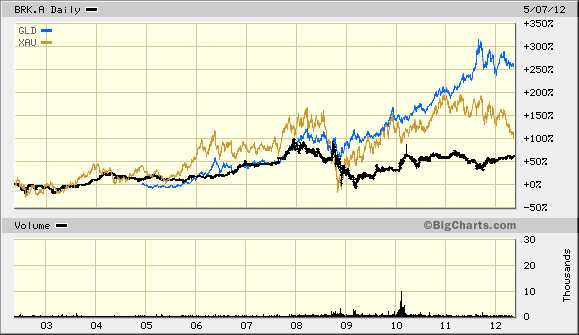
Warren Buffett clearly missed the first ten years of the gold bull market and his disdain for gold prevented him from achieving his primary investment goal of preserving purchasing power for his shareholders.  Over the past decade, Berkshire Hathaway (BRK.A) has underperformed both gold bullion and gold stocks.

Courtesy bigcharts.com

After over 10 years of being wrong, Buffett faces a major dilemma.  Can he afford to continue rejecting the one asset class able to escape the government’s pernicious efforts to destroy the purchasing power of the dollar?

Gold And Silver Bullion Coin Sales Plunge In April – What Is John Q Public Thinking?

The latest sales figures from the U.S. Mint show a continuing trend of lower gold bullion coin sales. Sales of American Gold Eagle bullion coins hit an all time high in 2009 when the Mint sold 1,435,000 ounces. During 2010, sales declined to 1.2 million ounces and in 2011 only 1 million ounces of gold bullion coins were sold.
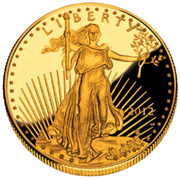
Sales of the American Gold Eagle bullion coins in April totaled only 20,000 ounces, the lowest monthly sales figure since June 2008 when 15,500 ounces were sold.  Total year to date gold bullion sales of 230,500 ounces through April 2012 are down a substantial 43% from the first four months of 2011 when the U.S. Mint sold 407,500 ounces.

If sales of the American Eagle gold bullion coins continue at their present pace, 2012 could turn out to be the fourth year in a row of declining sales.

Gold Bullion U.S. Mint Sales By Year
Year Total Sales Oz.
2000 164,500
2001 325,000
2002 315,000
2003 484,500
2004 536,000
2005 449,000
2006 261,000
2007 198,500
2008 860,500
2009 1,435,000
2010 1,220,500
2011 1,000,000
2012 230,500
Total 7,480,000
Note: 2012 totals through April 30, 2012

Total sales of the American Silver Eagle bullion coins for April 2012 totaled 1,520,000 ounces, down from 2,542,000 ounces in March.  Year to date sales of the Silver Eagle coins through April 30 totaled 11,659,000 ounces, down by 23.5% from total sales of 15,248,000 ounces in the first four months of 2011.  Sales of the American Silver Eagle bullion coins reached an all time record high of 39,868,500 ounces during 2011.

Shown below are the U.S. Mint sales figures for the American Silver Eagle bullion coins since 2000.  Sales totals for 2012 are through April 30th.

American Silver Eagle Bullion Coins
YEAR OUNCES SOLD
2000 9,133,000
2001 8,827,500
2002 10,475,500
2003 9,153,500
2004 9,617,000
2005 8,405,000
2006 10,021,000
2007 9,887,000
2008 19,583,500
2009 28,766,500
2010 34,662,500
2011 39,868,500
2012 11,659,000
TOTAL 210,059,500

The American Gold and Silver Eagle bullion coins cannot be purchased by the public directly from the U.S. Mint. Instead, the Mint sells the coins to a network of authorized purchasers who in turn resell them to the public and secondary retailers.

Sales figures shown above do not include U.S. Mint sales of gold and silver Eagle numismatic coins.  The public is allowed to purchase numismatic versions (uncirculated and proof) of gold and silver coins directly from the U.S. Mint and sales of these coins have also been declining during 2012.

According to Mint News Blog, sales of the 2011 Proof Gold Eagles declined by about 50% from 2010 and sales of the 2012 Proof Gold Eagles have declined by over 60% from the previous year.  The same trend has been seen in the proof version of the American Silver Eagle with 2012 sales down 19% through April.

There are a number of factors likely contributing to the drop off in sales. Over the past few years, the US Mint has caught up with demand for bullion coins, allowing more certainty for the numismatic offerings. The sense of urgency and pent up demand that characterized the product return in 2010 has greatly diminished. There also seems to be a shift away from precious metals in recent months, with some moving back to collector coins. Sales of the US Mint’s Gold Eagle bullion coins were down 30% in the first quarter.

Gold prices may also be having an impact in various ways. For the past two years, the Proof Gold Eagles were released in an environment of rising prices. For the current year, prices have fallen over the past two months leading up to the release. Despite this recent drop, the initial prices for this year’s offerings were higher by the equivalent of $200 per troy ounce compared to last year, possibly making affordability a factor for some collectors. Finally, some collectors may have been delaying orders in anticipation of the price decrease which will take place later today.

With the world economy on the brink of collapse in 2008, Americans decided that they needed to prepare for a financial hurricane and subsequently purchased record amounts of both gold and silver.  Perhaps the public has not noticed that a financial crisis potentially worse than 2008 (and certain to impact the U.S. economy) is brewing “across the pond” with European governments and banks tottering on the brink of insolvency and many countries already in full blown depressions.

With the global economy drowning in debt and facing unprecedented financial problems, it is almost comical that many Americans are avoiding the only asset class able to preserve their wealth.

Gold and Silver Bullion Coin Sales Rise In March

Production figures from the U.S. Mint for March show a sharp increase in the sale of both gold and silver bullion coins from the previous month.

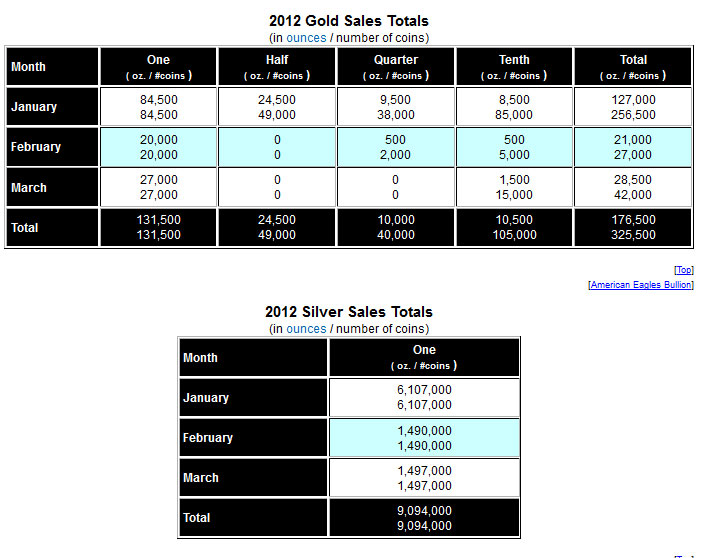
Total sales of the American Gold Eagle bullion coins increased in March to 62,500 ounces, up from 21,000 ounces in February.  Total sales of the American Silver Eagle bullion coins totaled 2,542,000 ounces in March, up from 1,490,000 ounces in February.  Sales of both bullion coins for the first quarter of 2012, however, declined from the prior year.

Sales of the American Gold Eagle bullion coins totaled 210,500 ounces for the first quarter of 2012, down 29.7% from the 299,500 ounces sold in the first quarter of 2011.  Total sales of the American Silver Eagle bullion coins amounted to 10,139,000 ounces during the first quarter of 2012, down by 18.4% from the 12,429,000 ounces sold in the prior year’s first quarter.

The all time record year for sales of the American Gold Eagle bullion coins occurred in 2009 with 1,435,000 ounces sold.  The all time high record for sales of the American Silver Eagle bullion coins was in 2011 when a total of 39,868,500 one ounce coins were sold.

Gold Bullion U.S. Mint Sales By Year
Year Total Ounces Sold
2000 164,500
2001 325,000
2002 315,000
2003 484,500
2004 536,000
2005 449,000
2006 261,000
2007 198,500
2008 860,500
2009 1,435,000
2010 1,220,500
2011 1,000,000
2012 210,500
Total 7,460,000
Note: 2012 totals through March 31, 2012

The amount of physical gold bullion purchased purchased from the U.S. Mint over the past 12 years remains relatively small compared to the amount of gold invested in the two largest gold trust ETFs.  The SPDR Gold Shares ETF (GLD) is the world’s largest physically backed gold exchange traded ETF fund with current holdings of 41.4 million ounces of gold.  The iShares Gold Trust ETF (IAU) currently holds 6.2 million ounces of gold.

The total sales of gold and silver bullion coins detailed above do not include U.S. Mint gold and silver numismatic coin sales which are directly sold to the public.  American Gold and Silver Eagle bullion coins are only sold to a network of authorized purchasers  who in turn resell the coins to secondary retailers and the public.  The U.S. Mint decided that using  Authorized Purchasers to sell gold and silver bullion coins to the public was the most efficient means of selling the coins to the public at competitive prices.

Shown below are the U.S. Mint sales figures for the American Silver Eagle bullion coins since 2000.  Sales totals for 2012 are through March 31st.

American Silver Eagle Bullion Coins
YEAR OUNCES SOLD
2000 9,133,000
2001 8,827,500
2002 10,475,500
2003 9,153,500
2004 9,617,000
2005 8,405,000
2006 10,021,000
2007 9,887,000
2008 19,583,500
2009 28,766,500
2010 34,662,500
2011 39,868,500
2012 10,139,000
TOTAL 208,539,500

Gold Stocks Remain Frozen In Time

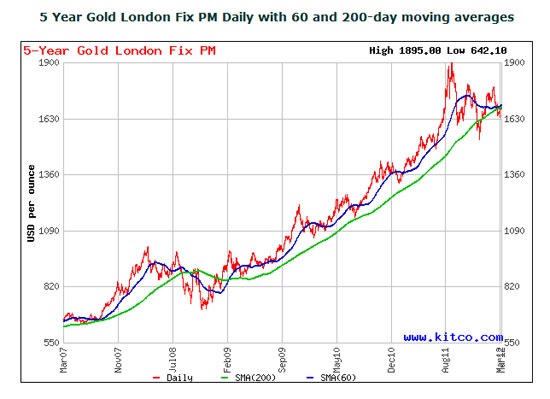
Investors in gold mining stocks have had a tough five years.  Since 2008, the price of most gold stocks have remained frozen in time even as gold bullion has doubled in price.  Is the disparity in price performance between gold stocks and gold bullion a bullish set up or another false dawn for gold stock investors?

Gold - courtesy kitco.com

The PHLX Gold and Silver Index (XAU), which is comprised of 16 major gold and silver producers, is no higher than it was during the last quarter of 2007.   The large cap gold stocks represented by the Market Vectors Gold Miners ETF (GDX) have shared the same fate with no gain for the past five years.

GDX - courtesy yahoo.com

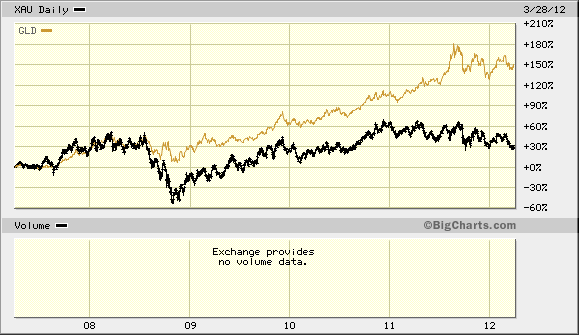
Beginning in 2011, the divergence between the price of gold bullion and gold stocks has widened even further.  Comparing the SPDR Gold Trust (GLD) to the PHLX Gold and Silver Index, we see that gold has dramatically outperformed gold stocks by a factor of five since early 2007.

XAU vs GLD - courtesy bigcharts.com

At this point, gold stocks are incredibly oversold and, in addition, represent sound fundamental value based on the price of gold bullion.  Given the notorious volatility of gold stocks, a move by gold above its high of last year could be the spark that ignites a huge rally in the gold stocks.

John Hathaway of the Tocqueville Gold Fund (TGLDX), who has produced fabulous investment returns over the past decade, had this to say in his latest Investment Update.

Gold and gold stocks appear to be bottoming in the wake of a four month correction which began in mid -August when the metal peaked at $1900/oz. Bearish sentiment is at extremes not seen in many years. This and a number of other indicators, such as stocks that have been hit by negative sentiment, the downtrend in gold prices since August, and tax loss selling, support our view that a rally lies ahead. This very bullish market set-up, in our opinion, mirrors the extraordinary investment opportunity of the despondent year end in 2007. Even though gold prices have been declining for several months, they finished the year with substantial gains. This suggests that the value represented by gold mining equities held in our portfolio could be extraordinary.

Disarray in Europe is, in our opinion, a slow motion version of the global market meltdown in 2007. It appears to us that the U.S. Fed is once again acting as the lender of last resort to European central banks in their efforts to save the euro. As in 2007, U.S. sovereign credit will be substituted for failing credits, in this case, peripheral European states. The fig leaf to justify such action on the Fed’s part is sado-fiscalism, or extreme austerity packages administered by technocrats. Tough restraints on profligate public spending, which has become a way of life in all Western democracies, will not go down easily. These measures are deflationary and will be ultimately met by howls of protests from mobs demanding renewed money printing and deficit spending. In our opinion, the fundamentals for gold are stronger than ever because the outlook for paper currencies is dire. The difficult correction of the last four months has shaken out all but the strongest holders, a perfect set-up for advances to new all-time highs in 2012.

Over the past ten years the Tocqueville Gold Fund has had an average annual return of 24%, far exceeding the 3% return by the S&P500.   The top ten holdings and percent of total assets of the Tocqueville Fund are listed below.

TGLDX Holdings

What Precious Metal Has Performed Best In 2012 And Where Do We Go From Here?

After the recent volatility in precious metals, let’s take a look at the year to date performance of gold, silver, platinum and palladium.  The new year started off with a strong rally across the entire precious metals group which erased some of the losses seen in the second half of 2011.

The across the board rally in precious metals came to an abrupt halt in early March after serial dollar printer Fed Chairman Bernanke made comments suggesting that further quantitative easing was unnecessary (see The Flash Crash In Gold).  Gold, which had closed at $1781 on February 28, sold off sharply, losing $136.75 per ounce by March 14.  Silver, platinum and palladium also sold off and are currently below the highs of the year seen in late February.

The precious metal with the largest gain to date for 2012 is platinum with an impressive 19% gain.  Silver is up 12.72% on the year, followed by palladium with a 5.72% gain and gold is now in last place with a year to date gain of 4.5%.

Platinum may be the most undervalued of all the precious metals based on the fact that the platinum to gold ratio is at levels not seen since 1986  (see Platinum To Gold Ratio Plunges – Buy Signal or New Metric?).

GOLD SILVER PLATINUM PALLADIUM
JAN 3RD $1,590.00 $28.78 $1,406.00 $664.00
MARCH 19TH $1,661.50 $32.44 $1,673.00 $702.00
$ GAIN $71.50 $3.66 $267.00 $38.00
% GAIN 4.50% 12.72% 19.00% 5.72%

Based on previous history, serious precious metal investors probably gave little credence to Bernanke’s suggestion that further Fed monetary easing was not in the cards.  Indeed, barely a week passed before the Fed Chairman was again discussing a new version of quantitative easing known as “sterilized bond-buying.” The always astute James Grant of Grant’s Interest Rate Observer, dismissed the notion that central bank money printing was about to end anytime soon.  In a recent interview with Bloomberg Television, Grant had this to say.

The price of gold is the reciprocal of the world’s faith in the deeds and words of the likes of Ben Bernanke. The world over, central banks are printing money as it has never been printed before. The European Central Bank has increased the size of its balance sheet at the annual rate of 89%. It’s amazing. The Fed is far behind at only 15%. The Bank of England 67% over the past few months. These are rates of increases in the production of paper currencies we have never seen in the modern age. It takes no effort at all. They simply tap the computer screen.

The full interview with Grant is well worth listening to and can be accessed below.

Where do we go from here in what could turn out to be a very interesting year for precious metals?  Here’s a brief roundup of interesting thoughts and analysis from around the web.

The Golden Trader discusses paper trading and manipulation of precious metal prices along with a technical assessment of gold and silver.

Mint State Gold explains why “all the major signs are showing that the quality rare coin market is starting its long awaiting rally. Let me explain why we could see a 30% move higher by year end.”

Why financial repression should be the focus of investor attention.

U.S. Mint Sales of Gold and Silver Bullion Coins Jumps 100%

The U.S. Mint reports that March sales of the American Eagle Gold and Silver Bullion coins are on track to more than double from February sales levels.  Sales during February were unusually low with gold bullion sales down 77.3% and silver bullion sales down 54% from the prior year.  Shown below are the U.S. Mint sales figures for gold and silver bullion coins through March 15, 2012.

The U.S. Mint bullion program has been extremely popular with the public and sales of the bullion coins has soared since 2007.  The gold and silver American Eagle bullion coins are sold by the U.S. Mint to authorized purchasers who pay the U.S. Mint for the cost of the metal plus a mark up to cover operating costs.  The dealers, who are required to maintain a market for the coins, sell to the general public at the market price of the coin plus a premium to cover operating costs.  The weight, purity and content of each bullion coin is guaranteed by the United States Mint.

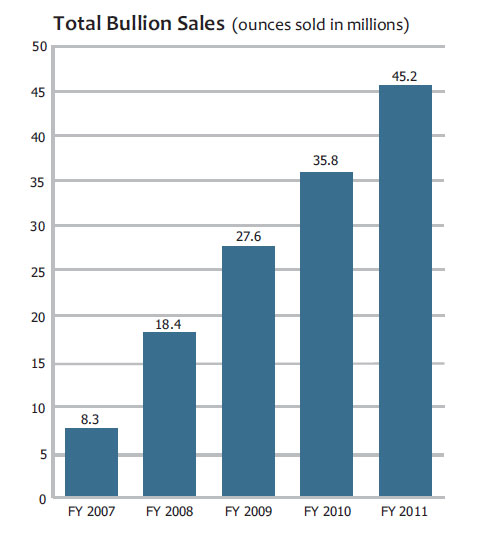
During the U.S. Mint’s fiscal year 2011, demand for bullion coins reached all time highs with sales of 45.2 million ounces of silver and gold bullion coins, up 26.2% from the prior year.  Total U.S. Mint revenue from the sale of the bullion coins also hit an all time record high of $3.5 billion.  Demand for the American Eagle Silver Bullion Coin was especially robust with sales more than doubling from the previous year’s total.   Last year’s sales of the American Eagle Gold Bullion coins, however, declined by 22.7% due to the higher price of gold and a change in the product release schedule for the American Gold Buffalo Bullion coin.

U.S. Mint Bullion Sales

The U.S. Mint also produces numismatic proof versions of the American Gold and Silver Eagles coins which are sold by the Mint directly to the public.  Due to unprecedented demand for gold and silver, the U.S. Mint was unable to offer the proof coins during fiscal year 2009.

The top selling numismatic coin for the past two years was the American Eagle Silver Proof 1 ounce coin with sales of 850,000 coins  in 2010 and 751,000 coins in 2011.

The 2012 American Silver Eagle Proof coin is scheduled to go on sale April 12, 2012 at an expected price of $59.95.

Fed Manipulating Markets In Zero Sum Game To Create Higher Inflation

Presidential hopeful Mitt Romney recently said that “You know, I’m not willing to light my hair on fire to try and get support. I am who I am.”  If only the Federal Reserve Chairman could be so restrained.  Based on recent comments from Fed Chairman Bernanke, it seems likely that he would gladly set both his hair and beard on fire in order to accomplish his mutually exclusive goals of increasing employment while maintaining price stability.

With a stubbornly high rate of unemployment, massive fiscal deficits, very slow economic growth, declining incomes and debt levels that are strangling the U.S. consumer, the Fed is facing a quandary.  How can economic growth be stimulated without simultaneously igniting inflation?

Lower interest rates, the most powerful tool in the Fed’s arsenal, has already been fully exploited while providing  a zero net benefit for consumers.  The zero sum game of lower rates did not prevent the housing market from crashing, has not helped it to recover and has resulted in dramatically reducing interest income for millions of consumers.  Every dollar of interest saved by one consumer means one less dollar of income for savers, many of them retirees who suddenly have seen their CD rates drop to near zero.

With rates at zero, the Fed is now forced to use the last resort option of QE, risking higher inflation as it stokes the economy with digitally created dollar bills.  Increased inflation is the high risk option that the Fed is willing to take as explained in  Bernanke Seen Accepting Faster Inflation as Fed Seeks to Boost Employment.

Federal Reserve Chairman Ben S. Bernanke spent six years pushing for an inflation goal. Now that he has it, some investors are betting he’ll breach the 2 percent target in the short run to lower unemployment.

“The chairman seemed to suggest they will tolerate a misdemeanor on inflation as unemployment continues to fall toward their goal” over several years, said Mark Spindel, chief investment officer at Potomac River Capital, a hedge fund that manages $250 million in Washington.

Policy makers at a March 13 meeting probably won’t deviate from their commitment to hold the main interest rate close to zero at least through late 2014, even if their forecast shows a burst of energy-driven inflation, said Lou Crandall, chief economist at Wrightson ICAP LLC in Jersey City, New Jersey. They’ll probably be more concerned that rising prices will hold back real spending, impeding growth and improvement in the job market, he said.

Crude oil prices have risen 32 percent since the end of the third quarter of 2011 and 6 percent this year. Energy prices could hold the Federal Open Market Committee’s inflation target benchmark, the personal consumption expenditures price index, above the Fed’s 2 percent inflation objective for much of 2012, Crandall said. The PCE rose 2.4 percent for the 12 months ending in January.

Also, workers have weak leverage for increasing wages to compensate for higher costs. Real average weekly earnings have fallen for 10 consecutive months on a year-over-year basis. As energy costs eat up more of consumer expenditures, companies have difficulty raising prices on other goods and services.

“To the extent that PCE inflation is somewhere around 3 percent while unemployment is still above 8 percent, I think there will still be no reaction from the Fed,” said Worah, who’s based in Newport Beach, California.

The expectation among investors that the Fed will allow for a temporary overshoot on the price goal has been “unambiguously bullish” for Treasury Inflation-Protected Securities, Worah said.

Gold, up 18% over just the past year, is also telling us that the Fed is likely to shoot past its goal of attaining a 2% inflation rate.  Furthermore, the Fed’s goal of accepting increased inflation as an acceptable risk for increased economic growth is a self defeating zero sum game.  By driving up inflation, the Fed has increased living costs for the average consumer, negating any positive net affect from stronger economic growth. Consumers, whose spending makes up 70% of GDP, ultimately can’t spend more without real income growth.

In an interview with CNBC, Jim Grant of Grant’s Interest Rate Observer, and a frequent critic of destructive Federal Reserve monetary policies, says the Fed is manipulating interest rates for the sake of achieving “desirable macro outcomes”.  Discussing the Fed’s latest scheme to expand money printing, known as “sterilized bond-buying”, Grant says he is uncomfortable with the program which will create inflation and distortions that will destabilize the entire debt market.

Grant also feels that Bernanke, a self proclaimed “expert’ on the depression of the 1930’s is making fundamentally flawed decisions to forestall Depression II that many feel is looming in front of us.  According to Grant, Bernanke can’t “stop talking about the ’30s”, but when the economy fell off a cliff in 1920 – 1921, the government actually balanced the budget and the Fed raised interest rates and the economy soon recovered on its own and not due to running “immense deficits”.

The full interview with Grant is worth listening to. Please click on this link if the video below does not play.


The Fed has only one hand left to play and it will continue to print money, a fact that has not gone unrecognized by the gold and precious metals markets.

Gold and Silver News and Headlines – Gold Owners Get Nervous

Precious metals advanced across the board today, with palladium the stellar performer with a 2.86% gain.  Gold gained $9.70 to $1685.30, silver tacked on $0.48 to $33.53, platinum rose $18 to $1633.00 and palladium jumped $19.00 to $689.00.

Although precious metals recently hit a selling storm (see The Flash Crash in Gold), precious metals remain up strongly on the year and gold is up $257.20 per ounce or 18% over the past year.  The following chart show the gains for the year on the precious metals group.  All prices per the London PM Fix closing price.

GOLD SILVER PLATINUM PALLADIUM
JAN 3RD $1,590.00 $28.78 $1,406.00 $664.00
MARCH 7TH $1,677.50 $33.17 $1,627.00 $678.00
$ GAIN $87.50 $4.39 $221.00 $14.00
% GAIN 5.50% 15.25% 15.72% 2.11%

Here’s a brief round up of some of the latest thoughtful coverage on gold and silver related news.

Free Von Nothaus from the tyranny of unjust government actions – Judging Silver or Something Else?

As I look at the circumstances, I do not see that von Nothaus or his Liberty Dollar products victimized anyone. In contrast, those who chose to keep Federal Reserve Notes and coinage of the U.S. Mint have been victimized by loss of purchasing power. If anything, and I say this with all due respect, it seems to me that it would be more sensible and appropriate to prosecute those who have victimized American citizens through the depreciation of the “money” issued by the U.S. government.

US Mint Drops Price of Gold Products

With all of the pricing data now available, the US Mint’s gold numismatic products are set for a two tier decrease. This will reduce prices by the equivalent of $100 per ounce of gold content.

Owning gold is a “privilege, not a right”.  Why The US Confiscated Gold in 1933 and Can It Happen Again?

We previously stated that gold ownership was made illegal on 1st May 1933. What we did not tell you was that U.S. citizens, under Order 6102, were allowed to own up to $100 in gold coin [+5 ounces].

Congress could easily revoke the privilege again. In fact, at no time during this century has the U.S. government recognized the right of private gold ownership.

The privilege, not right, to own gold was restored to U.S. citizens on the 15th August 1974 (not 1971, when Nixon floated the USD against gold and stopped foreign central banks from converting USD to gold). It is pertinent to the thinking behind this series, to understand the importance to government of gold and that the right to confiscate may not be restricted to individuals or institutions but could embrace a nation or two.

It’s believed that some 60% of Germany’s gold is stored outside of Germany and much of it in the Federal Reserve Bank of New York. If this is the case one has to ask, in the light of the massive currency swaps engineered by the Fed and the E.C.B. to raise the two tranches of cheap money for European banks, “Was gold swapped too, or was it pledged as collateral?”

The public pressure to repatriate national gold reserves has heightened considerably in the last year. Should Germany want its gold back home, we ask, “Can it get it back or has it already been used in these ways?

Germany to Review Bundesbank Gold Reserves in Frankfurt, Paris, London and Federal Reserve Bank of New York

German lawmakers are to review Bundesbank controls of and management of Germany’s gold reserves.  Parliament’s Budget Committee will assess how the central bank manages its inventory of Germany’s gold bullion bars that are believed to be stored in Frankfurt, Paris, London and the Federal Reserve Bank of New York, according to German newspaper Bild.

There is increasing nervousness amongst the German public, German politicians and indeed the Bundesbank itself regarding the gigantic risk on the balance sheet of Germany’s central bank and this is leading some in Germany to voice concerns about the location and exact amount of Germany’s gold reserves.

The eurozone’s central bank system is massively imbalanced after the ECB’s balance sheet surged to a record 3.02 trillion euros ($3.96 trillion) last week, 31% bigger than the German economy, after a second tranche of three-year loans.

The concern is that were the eurozone to collapse, Bundesbank’s losses could be half a trillion euros – more than one-and-a-half times the size of the Germany’s annual budget.

In that scenario, Germany’s national patrimony of gold bullion reserves would be needed to support the currency – whether that be a new euro or a return to the Deutsche mark.

Bernanke Spooks Gold

Instead, this selloff was sparked not by a development, but a non-development. In his address to Congress, Fed Chairman Ben Bernanke offered no clue as to when the Federal Reserve would unleash its next round of quantitative easing.

The markets took this as a sign that the monetary madness is coming to an end, which would bode poorly for precious metals. Metals are increasingly seen as substitutes for continuously debased fiat money, and tend to do well when new liquidity injections are announced.

Bernanke’s failure to telegraph more printing means nothing. Investors are craving a return to normalcy, which means more prudent monetary policy. As a result, many are grasping at straws. But I believe these hopes are premature, and that gold will be buoyed by easy money for quite some time.

In addition, gold will likely be favored by the greatest financial struggle of the coming decade: China’s plans to replace the United States as the dominant economic power.

Buy Japanese Bonds At 0.05% And Get A Gold Coin

Japan began selling special government bonds Monday aimed at raising funds for reconstruction from the March 2011 earthquake and tsunami, saying it will present buyers with commemorative gold coins imprinted with an image of the “miracle pine” that survived the killer tsunami when the bonds mature in three years.

The coins — worth ¥10,000 each, and silver coins worth ¥1,000 — are engraved with the design of the 30-meter-high pine in Rikuzentakata, Iwate Prefecture, that was the only one of about 70,000 pines on a stretch of coast to survive the massive tsunami.

Peter Schiff on why Buffett is wrong about gold – Buffett’s Bursting Bubble

The gold doomsayers have found their champion in the media’s favorite financial advisor and one of the world’s richest men. Warren Buffett, the man dubbed the “Oracle of Omaha,” has repeatedly and publicly denied that gold is an investment, and called gold buyers “speculators” and people “who fear almost all other assets.” In fact, Buffett claims that gold’s rise has the same characteristics as the housing and dot-com bubbles, and it is only a matter of time before it reverses course. He doesn’t mean that the price will decline because of austerity measures and a free-market interest rate, mind you. He just asserts that because he’s deemed it a bubble, it will inevitably burst.

Gold prices will only go down when governments change course and make significant cuts. Until then, gold is not in a bubble. It’s the only way to protect your wealth; and in the current economic condition, it’s poised to go much higher. I think it’s high time Buffett takes to heart his father’s wise words: “For if human liberty is to survive in America, we must win the battle to restore honest money.”

The Volatile Ride To Higher Gold

Back in 1980, Phase Three only lasted for 21 days, but increased 66% in that time span. Considering the ten year time span of Phase One, and my projection for Phase Two, I feel that Phase Three (which starts in 2015) will last for six months and drive gold up to over $6,000 per ounce. If the world’s financial leaders decide to return to a Gold Standard, or if gold bullion confiscation becomes the government’s reaction to severe inflation, my projections would escalate. Possible other government reactions that can affect my projections negatively are: limiting gold ownership, restrictions on transporting or trading, and any Gold windfall profits tax.