April 7, 2026

Silver Investment Demand Soars In China

The use of silver as a monetary asset in China goes back for centuries.  As detailed in the latest report from the Silver Institute, China’s entire monetary system was based on a silver standard until 1935.  Things changed dramatically after the Communists came to power in 1949 and effectively nationalized the entire silver stock.  Private citizens were prohibited from owning silver or gold and private sales of silver and gold jewelry was banned.

As China slowly adopted free markets principles, government control over silver was liberalized and in 2000, China finally ended the government monopoly on silver trading.  Private exchanges were established which allowed both the supply and demand of silver to expand rapidly.

A momentous moment for silver occurred in 2009 when the People’s Bank of China finally allowed private investors to buy silver.  The opening of the silver market to the Chinese public along with explosive economic growth resulted in an exponential increase of silver demand.  A middle and upper class that was rapidly accumulating financial assets saw silver as the logical store of value to protect their wealth from inflation and currency debasement.

Removing the prohibition on the private ownership of silver resulted in explosive demand for silver bar, coins and metals.  Demand for coins and medals increased from 3.0 million ounces in 2009 to 5.8 million ounces in 2011.  Demand for silver bar increased from 1.3 million ounces in 2009 to 11.3 million ounces in 2011.

The Silver Institute projects that retail investment demand for silver will grow robustly as silver becomes more available to the growing masses of the Chinese middle class.  Currently, investor demand for silver accounts for only a small part of total silver demand.  In 2011, total Chinese silver demand was 170.7 million ounces, with investors purchasing only 17.1 million ounces of coins, medals and bars.  With a population of almost 1.4 billion people, demand for silver could surge exponentially.  If only 1 out of 4 people in China buy one ounce of silver each year, that would represent silver demand of a staggering 350 million ounces, which exceeds total annual silver supply of 281.5 million ounces in 2011.

Long term investors in both gold and silver who understand the underlying fundamental reasons for owning precious metals should ignore short term price fluctuations and increase positions on short term weakness.
Demand For Silver Tops One Billion Ounces Per Year

Here’s a great infographic from the Visual Capitalist showing the supply and demand statistics for silver.  Interestingly, most of the silver produced each year is consumed in thousands of different industrial applications, leaving a relatively small amount available for investment in coins, bars and jewelry.  Unlike gold, the vast majority of silver produced over the years has been consumed, with much of it lost to landfills, leaving a relatively small above ground supply.


Why Silver Will Hit $100

By GE Christenson

There are many predictions for the price of silver. Some say it will crash to nearly $20, and others proclaim $100 by the end of 2012. The problem is that some predictions are only wishful thinking, others are obvious disinformation designed to scare investors away from silver, and many are not grounded in hard data and clear analysis. Other analysis is excellent, but both the process and analysis are difficult to understand. Is there an objective and rational method to project a future silver price that will make sense to most people?

Yes, there is!

I am not predicting a future price of silver or the date that silver will trade at $100, but I am making a projection based on rational analysis that indicates a likely time period for silver to trade at $100 per ounce. Yes, $100 silver is completely plausible if you assume the following:

  • The US government will continue to spend in excess of $1 Trillion per year more than it collects in revenue, as it has done for the previous four years, and as the government budget projects for many more years.
  • Our financial world continues on its current path of deficit spending, debt monetization, Quantitative Easing (QE), weaker currencies, war and welfare, ballooning debts, and business as usual.
  • A massive and devastating financial and economic melt-down does NOT occur in the next four to six years. If such a melt-down occurs, the price of silver could skyrocket during hyperinflation or stagnate under a deflationary depression scenario.

Still with me? I think most people will accept these simple and rather obvious assumptions.

Many individuals find it difficult to believe any projections for silver, either higher or lower, because silver is hated, loved, often ignored, and seldom recognized as another currency. However, most people know that the US government national debt is huge and will grow much larger during the next decade. Examine the following graph:

Click on image to enlarge.

National debt is plotted on the left axis – yes, it was larger than $16 Trillion as of September 30, 2012. Silver is plotted on the right axis. The data covers an 11 year span from September 2001 through September 2012. This period includes the time after the stock market crash of 2000, the game-changing events of 9-11, the real estate crash, and the new bull market in commodities. Each month represents one data point. Note the similarity between the two trends. The statistical measure R-Squared for this 11 year period of monthly data is 0.838 – quite high. R-Squared increases to about 0.90 if national debt is correlated to the monthly price of silver after it has been smoothed with 9 month moving average.

This expansion in the national debt is a simple proxy for expansion of the money supply and the devaluation of the dollar. The exponential growth rate for the national debt averaged over this period is 9.7% compounded annually, while the rate averaged over the last five years is 12.3%. The exponential growth rate for silver is a bit larger – about 20% per year compounded annually. I attribute this larger rate, in excess of 12.3%, to the realization that silver is a competing currency, mining supply is growing slowly, most governments are aggressively “printing money,” industrial demand is increasing, and some investors are actively buying silver. In short, demand is increasing while the realization that silver is still an undervalued investment and cannot be “printed” at will (like dollars and euros) has reached the awareness of individual investors. I believe it is very likely that national debt and the price of silver will continue their 11 year exponential growth trend.

Since silver correlates relatively closely with national debt, we can use national debt as a clear, objective, and believable proxy to model the future price of silver. Extend national debt and silver prices forward for the next six years based on the exponential increase from the last five years, and the result is the following table. Bracket silver prices, high and low, based on past annual volatility of roughly +60% and -35%. You can see from the graph that silver prices are very erratic – silver rallies too far and too fast, and then crashes to absurdly low levels. These stunning rallies and crashes have happened for at least 35 years and probably will continue throughout this decade.

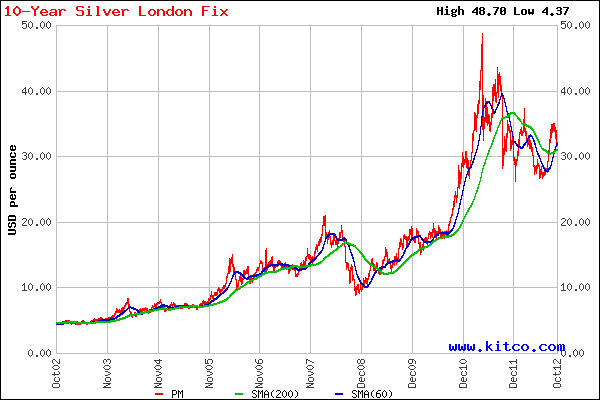
Whether or not prices and crashes are manipulated, and there seems to be credible evidence to indicate such, the “big picture” view is that silver has rallied from about $4 to nearly $50, crashed back to about $25, and is set to rally to well over $100 in the next few years. The week to week movements will become even more extreme so focus on the long-term trend to reduce anxiety and fear.

As you can see, this projection for silver prices indicates that silver could reach $100 as soon as late 2015, with a theoretical projected price of $100 about 2017. The price of silver is about $32.00 as of November 1, 2012.

The next graph shows the price of silver, on a logarithmic scale, with high and low trend lines. The horizontal line at $100 shows the earliest and latest dates at which the trend lines project silver will reach that price. Those dates are 2015 through late 2017, which are consistent with the above projection based on the tight correlation to the national debt. The important realization is that $100 silver is just a matter of time – say three to five more years – depending on the level of QE “money printing,” inflationary expectations, dollar devaluations, fiscal insanity, government deficit spending, wars, and welfare. We have been warned!

Conclusion

We may be skeptical of price projections for silver, but projections for national debt are quite believable. Since the correlation is very close, future silver prices can be projected, assuming continuing deficit spending, QE, and other macroeconomic influences. A dollar crash or an unexpected bout of congressional fiscal responsibility could accelerate or delay the date silver trades at $100, but the projection is reasonable and sensible. Silver increased from $4.01 (November 2001) to over $48 (April 2011). A silver price of $48 seemed nearly impossible in 2001, yet it happened. An increase from about $32 (October 2012) to $100 (perhaps in 2015 – 2016) seems much easier to believe, especially after Bernanke’s recent announcement of QE4-Ever. Read We Have Been Warned.

“Inflation is as violent as a mugger, as frightening as an armed robber and as deadly as a hit man.” – Ronald Reagan

GE Christenson
aka Deviant Investor

The History Of Silver

Silver has been regarded as a store of value and used as a currency for more than 4,000 years.  The role of silver as a form of wealth preservation in a diversified portfolio is likely to grow as central banks suppress real interest rates to below zero while conducting large scale money printing operations.

Investors who harbor major doubts about the integrity of fiat currencies should continue to invest regularly.  Despite being more volatile than gold, until governments regain control of massive fiscal deficits and central banks return to sound money policies, long term silver investment is a sound strategy.

The latest infographic from the Visual Capitalist provides a nice visual history of silver (please click on the image to enlarge).

Gold In The News – German Gold, Gold Confiscation, Technical Charts, New Perth Mint Coins

Gold news from around the web-

Gold Confiscation?

Are those predicting the confiscation of gold by the U.S. government simply seeking headlines or seriously misguided?  Jim Sinclair has the answer.

I am sick of all this confiscation talk of gold and even gold companies. It emanates from gold people who do not know or understand the history of gold. We condemn MSM for inaccurate, false and misleading news. I condemn gold writers who practice sensationalism, who offer their opinions as if they were facts and simply make things up out of thin air as if they were insiders privy to things that no one else is. Right now leaders of this community are printing stuff as misleading as MOPE or MSM ever have.

Eric De Groot put what I have been trying to teach you perfectly today. In the 1930s gold was to the monetary system what QE is today, a means of increasing the supply of money for Fed and Treasury discretionary use. The US Secretary of the Treasury and President Roosevelt set the gold price higher at their daily breakfast together arbitrarily. Higher because to create money then the system required a higher value of gold to have more money outstanding. This is why Roosevelt ordered the confiscation of gold in order to unfold his type of monetary stimulation, his QE. This is what confiscationophiles simply do not know.

 Your fears and the outrageous untrue statement by the Scottish hedge fund manager are based on totally wrong reasoning and misunderstanding. Gold was not confiscated because it was going up in price. Gold’s order of confiscation came as a tool of monetary stimulation in order to create monetary creation in order to attempt to increase employment.

So, Exactly Where is Germany’s Gold?

The Germans, tough with monetary policy, turn out to be wimps when it comes to safeguarding their own massive 3,396 ton gold stockpile.  Turns out that the Germans, who allegedly hold most of their gold in French, British and U.S. vaults, never even bothered to conduct a physical audit of their holdings – talk about trusting your neighbors! After severe criticism and a national “Bring Back Our Gold” campaign, the Bundesbank is finally promising to conduct audits and bring their gold back home.  MarketWatch wonders if the expatriation of German gold may be the beginning of a move to a gold backed currency.

Gold and Silver Technical Charts

Some really amazing gold and silver charts suggest that we may be in the initial stages of a massive gold and silver rally.

Gold and Silver – The Ideal Holiday Gift

A stunning selection of new gold and silver coins from The Perth Mint  provides the answer to “what should I get her for Christmas?”  Included in the November product releases are some unique rectangular colored silver coins.

Gold Through the Centuries

One of the largest Roman gold coin hoards every found was discovered in Great Britain.  The coins are approximately 1600 years old.  Any guesses on what $10,000 of U.S. currency buried today would be worth in the year 3612??

Why Are Americans Underinvested In Gold and Silver?

Although there are no definitive statistics on how many Americans own gold or silver, the number is certainly small.  A Gallup poll earlier this year showed that 28% of respondents thought that gold was the “best investment” but the actual number of people actually owning some form of gold or silver bullion is far less.  A Kitco poll indicated that the number of Americans owning precious metals may be as low as 1%.
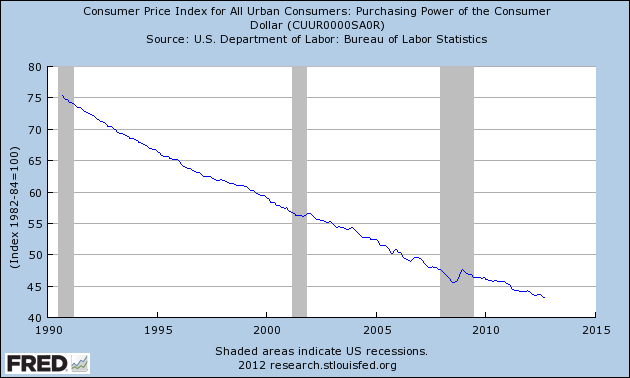
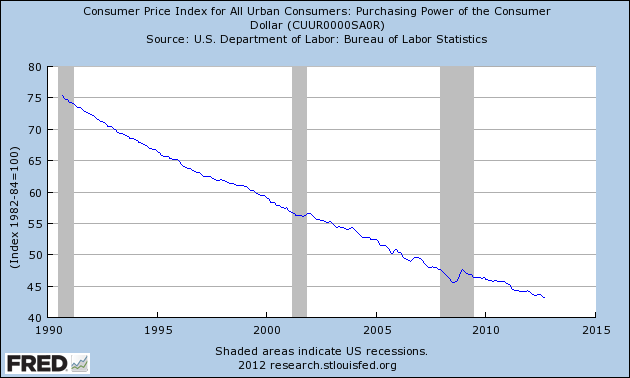
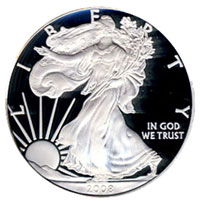
Despite the steady erosion in the purchasing power of the U.S. dollar, Americans retain their faith in paper money, apparently oblivious to the destruction of their wealth.  Monetary debasement is an insidious process that few Americans fully understand as explained by economist John Maynard Keynes in 1921.

“By a continuing process of inflation, Governments can confiscate, secretly and unobserved, an important part of the wealth of their citizens. By this method they not only confiscate, but they confiscate arbitrarily; and, while the process impoverishes many, it actually enriches some …. Those to whom the system brings windfalls …. become “profiteers” who are the object of the hatred … the process of wealth-getting degenerates into a gamble and a lottery .. Lenin was certainly right. There is no subtler, no surer means of overturning the existing basis of society than to debauch the currency. The process engages all the hidden forces of economic law on the side of destruction, and does it in a manner which not one man in a million is able to diagnose.”

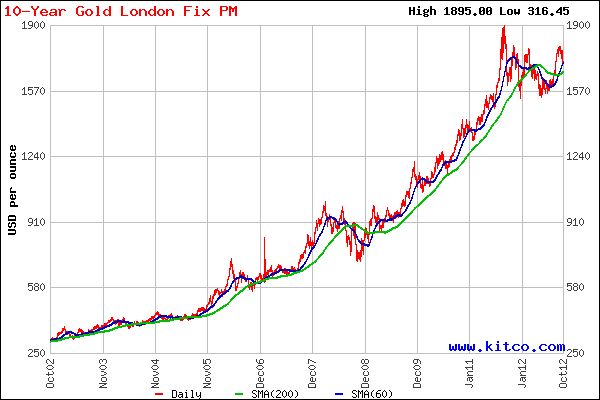
Most Americans don’t bother trying to understand economic theories but it is not hard to understand the following charts.

courtesy: kitco.com

When the average American finally realizes what is happening to the value of the dollar, the rush to gold and silver will result in a massive upward surge in precious metal prices.  That day has not yet arrived and until it does, buy gold and silver with impunity, especially on corrections.

“How To Buy Gold and Silver Bullion Without Getting Ripped Off” – Free Kindle Book For Gold and Silver Blog Readers

Here’s a really great book on how to buy gold and silver that came to my attention.  I would recommend this book (“Stack Silver Get Gold”) to both long time gold and silver investors as well as those considering their first purchase.  Best of all, the price is right.  Author Hunter Riley has offered readers of the goldandsilverblog.com a free copy anytime between this Saturday, October 27th and Wednesday, October 31, 2012, offered through Amazon Kindle.  After October 31st, the purchase price of the book will be $9.99.

If you have a computer, you do not need a kindle to read the book. You can download Amazon.com’s free kindle reader here.
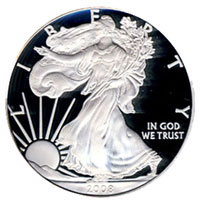
In addition, the author of the book, Hunter Riley, has added a contest where anyone who downloads the book during the Oct27-Oct31st free promotional period gets entered to win some American Eagle silver bullion.
Here’s the introduction to the book which I found compelling


The short book covers the following essential topics:

– How to avoid dealers and con artists who will rip you off

– Coins, rounds, bars, numismatic coins and junk silver – what premium you pay for each form of metal, and the advantages of each type
– What is premium and spot price?
– What type of silver and gold should you buy?
– What forms of gold and silver investments should you avoid?
– What are the dangers of ETF’s?

– Fraudulent dealers selling gold and silver that they don’t possess!
– Gold and silver mining stocks – good or bad investments?
– Gold and silver pools and leveraged accounts
– Phone dealers, TV ads and commemorative coins
– Where should you store your silver and gold?
– What type of home safe should you invest in?
– Wan you ad physical gold or silver investments to your IRA?
– Which is better as an investment? Gold or Silver?

– How to profit as the dollar collapses.
– What are the best gold and silver investing newsletters?
– Where can you buy gold and silver online?

– Which are the most reputable companies to deal with?

Note:  The Gold and Silver Blog receives no compensation for promoting this book.  It is done solely to educate investors on investing in gold and silver.

U.S. Mint Numismatic Precious Metals Sales Decline

According to Coin Update, sales of numismatic precious metal coins showed weekly sales declines.  Future sales, however, may increase due to an upcoming price decrease based on the recent correction in precious metal prices.

The latest report of the United States Mint’s numismatic product sales shows mostly lower numbers for precious metals products. Elsewhere in the report, the Chester Arthur Presidential $1 Coin and Alice Paul Bronze Medal Set makes its debut.

Ten out of sixteen gold numismatic products showed weekly sales declines compared to the prior period. The US Mint currently has these products priced based on an average gold price within the $1750 to $1799.99 range. With the market price of gold below this range for the entire reporting period, buyers may be showing restraint as they await the next weekly pricing adjustment.

Eighteen out of twenty-seven of the silver numismatic products showed weekly sales declines compared to the prior period. The US Mint raised prices for many of these products earlier in the month when the market price of silver was approaching $35 per ounce. Silver has since fallen back from this level, although the higher product prices remain in effect. The America the Beautiful Five Ounce Silver Coins showed sales declines across all nine options currently available. Gains were seen for the 2012 Proof and 2012-W Uncirculated Silver Eagles compared to the prior period.

The 2012 Proof Platinum Eagle, which is the only available platinum product, showed negative sales on the week.

See the full sales report for U.S. Mint numismatic products here.

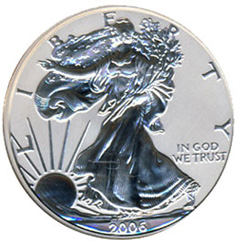
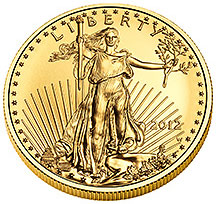
Month to date figures for U.S. Mint gold and silver bullion coins remains strong.  Through October 24th, the U.S. Mint sold 2,584,000 one ounce American Eagle Silver Bullion coins.  If the current sales pace continues, monthly sales could exceed 3.5 million ounces which would be the second best monthly sales total after January when 6,107,000 silver Eagles were sold.

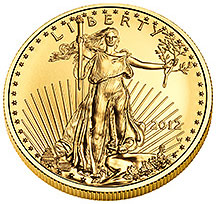
Sales of the American Eagle Gold Bullion coins also remain strong through October 24th with 48,500 ounces sold.  If the current pace of sales is maintained, total sales of the American Gold Bullion coins should reach almost 65,000 for October which would be the third highest sales month of the year.  In January the U.S. Mint sold 127,000 ounces of gold bullion coins followed by 68,500 ounces in September.

Although gold prices have soared over the past decade and the purchasing power of the dollar has collapsed, the American public still does not recognize the value of gold and silver as a store of wealth.  Expect this to change as the bull market in precious metals continues.

Ron Paul Accuses The Federal Reserve of Devastating America

While Wall Street cheers the Federal Reserve’s decision to engage in perpetual quantitative easing, Congressman Ron Paul says the Fed is devastating the U.S. economy through its blatant manipulation of interest rates.  According to Ron Paul, manipulating interest rates to the zero bound level has caused a massive misallocation of capital, destroyed the purchasing power of the U.S. dollar and will eventually lead to another financial crisis.
Ron Paul’s warnings have been routinely dismissed by both Wall Street and his colleagues in Congress.  The majority of the American public know that something is seriously wrong with our financial system but can’t quite connect the dots between the Fed and lower wages and higher prices.  Those who do understand how the Fed is destroying the U.S. economy and are worried about preserving their wealth, should simply copy the investment strategy of Ron Paul who has gone all in on gold and silver.

By Ron Paul

One of the most enduring myths in the United States is that this country has a free market, when in reality, the market is merely the structural shell of formerly free institutions. Government pulls the strings behind the scenes. No better illustration of this can be found than in the Federal Reserve’s manipulation of interest rates.

The Fed has interfered with the proper function of interest rates for decades, but perhaps never as boldly as it has in the past few years through its policies of quantitative easing. In Chairman Bernanke’s most recent press conference he stated that the Fed wishes not only to drive down rates on Treasury debt, but also rates on mortgages, corporate bonds, and other important interest rates. Markets greeted this statement enthusiastically, as this means trillions more newly-created dollars flowing directly to Wall Street.

Because the interest rate is the price of money, manipulation of interest rates has the same effect in the market for loanable funds as price controls have in markets for goods and services. Since demand for funds has increased, but the supply is not being increased, the only way to match the shortfall is to continue to create new credit. But this process cannot continue indefinitely. At some point the capital projects funded by the new credit are completed. Houses must be sold, mines must begin to produce ore, factories must begin to operate and produce consumer goods.

But because consumption patterns have either remained unchanged or have become more present-oriented, by the time these new capital projects are finished and begin to produce, the producers find no market for their goods. Because the coordination between savings and consumption was severed through the artificial lowering of the interest rate, both savers and borrowers have been signaled into unsustainable patterns of economic activity. Resources that would have been used in productive endeavors under a regime of market-determined interest rates are instead shuttled into endeavors that only after the fact are determined to be unprofitable. In order to return to a functioning economy, those resources which have been malinvested need to be liquidated and shifted into sectors in which they can be put to productive use.

Another effect of the injections of credit into the system is that prices rise. More money chasing the same amount of goods results in a rise in prices. Wall Street and the banking system gain the use of the new credit before prices rise. Main Street, however, sees the prices rise before they are able to take advantage of the newly-created credit. The purchasing power of the dollar is eroded and the standard of living of the American people drops.

We live today not in a free market economic system but in a “mixed economy”, marked by an uneasy mixture of corporatism; vestiges of free market capitalism; and outright central planning in some sectors. Each infusion of credit by the Fed distorts the structure of the economy, damages the important role that interest rates play in the market, and erodes the purchasing power of the dollar. Fed policymakers view themselves as wise gurus managing the economy, yet every action they take results in economic distortion and devastation.

Unless Congress gets serious about reining in the Federal Reserve and putting an end to its manipulation, the economic distortions the Fed has caused will not be liquidated; they will become more entrenched, keeping true economic recovery out of our grasp and sowing the seeds for future crisis.

Gold Bullion Coin Sales Soar 76% In September, Silver Sales Up 13%

According to the latest report from the U.S. Mint, demand for both gold and silver bullion coins during September surged to the highest levels since January.

Total sales of the American Eagle Gold bullion coins during September soared 75.6% to 68,500 ounces from 39,000 ounces in August.  Monthly sales of gold bullion coins have fluctuated widely during 2012 with a high of 127,000 ounces in January and a low of 20,000 ounces in April.   The average monthly sales of gold bullion coins through September is 53,500.

Total sales of the American Eagle Gold bullion coins through September total 481,500 ounces.   Unless sales surge dramatically during the last three months of the year, 2012 will be the fourth year of declining sales of the gold bullion coin.   As detailed below, the all time record for sales of the gold bullion coins was during 2009 when sales exceeded 1.4 million ounces.

Gold Bullion U.S. Mint Sales By Year
Year Total Sales Oz.
2000 164,500
2001 325,000
2002 315,000
2003 484,500
2004 536,000
2005 449,000
2006 261,000
2007 198,500
2008 860,500
2009 1,435,000
2010 1,220,500
2011 1,000,000
Sept-12 481,500
Total 7,731,000

U.S. Mint sales of the American Eagle Silver bullion coins during September totaled 3,255,000 ounces, up 13.4% from August sales of 2,870,000 ounces.

Investor demand for the American Eagle Silver bullion coins has been relatively consistent throughout the year.  After a very strong January during which over 6.1 million coins were sold, demand remained strong with monthly sales well in excess of 2 million ounces except for February when sales slumped to 1,490,000 ounces.  If monthly sales of the American Eagle silver coins continue at the September sales pace, total sales for 2012 will be close to the record year of 2011 when almost 40 million ounces were sold.

Total annual sales by the U.S. Mint of the silver bullion coins since 2000 are shown below.  Sales for 2012 are through September.

American Silver Eagle Bullion Coins
YEAR OUNCES SOLD
2000 9,133,000
2001 8,827,500
2002 10,475,500
2003 9,153,500
2004 9,617,000
2005 8,405,000
2006 10,021,000
2007 9,887,000
2008 19,583,500
2009 28,766,500
2010 34,662,500
2011 39,868,500
Sept-12 25,795,000
TOTAL 224,195,500

The American Eagle gold and silver bullion coins produced by the U.S. Mint can only be purchased by Authorized Purchasers who in turn resell the coins to other dealers and the general public.  Numismatic versions (uncirculated or proof) of the American Eagle series coins can be purchased by the public directly from the U.S. Mint.