April 10, 2026

Gold And Silver Gain On Week – Time Tested Indicator Says Gold Stocks Are Cheap

After last week’s major sell off in precious metals, gold and silver prices gained on the week while platinum and palladium registered small declines.   As measured by the closing London Fix Price, gold gained $19.25 on the week and silver gained $2.00.

As is typical after a major pullback, silver prices were volatile.  Silver’s sharp price increase this year had attracted many day traders and leveraged speculators who were forced to sell as silver prices declined, in large part due to the rapid series of margin increases by the COMEX on silver futures traders.

This week’s volatility in silver prices can be seen using the SLV as a silver proxy.  After almost hitting $38 on Tuesday, the SLV plunged to $32 in early Thursday trading before recovering to the $34 level in late Friday trading.
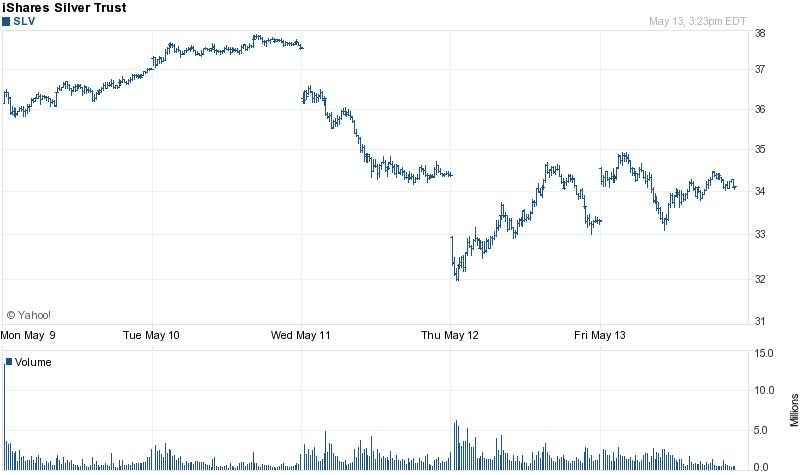
SLV - COURTESY YAHOO FINANCE

The forced liquidation of silver positions by weaker leveraged hands has provided long term investors with a buying opportunity according to the experts at Dillon Gage Metals, a major precious metals dealer.  According to Terry Hanlon, President of Dillon Gage, “This year, silver has had its biggest run in the shortest period of time in recent memory.  Profit-taking corrections are to be expected when markets rally.  This recent price correction doesn’t change the basic fundamentals, which include good demand for silver to make coins in a number of countries.”

Hanlon also noted that the recent strong dollar rally in early May lead to a broad based commodities sell off which extended to precious metals.  The increased margin deposits required by the COMEX which increased from $4,250 a year ago to $16,200 per contract was also an obvious contributor to weakness in silver prices.  Hanlon expects silver prices to remain range bound in the short term saying that “I look for investors and money managers to take a brief breather on the sidelines before getting back into the silver market on the buy side.”

No one can say exactly where silver prices will bottom out before heading higher but Dillon Gage sees “support at the $32 an ounce level”.  Silver’s 200 day moving average is currently in the $28 range which should provide solid technical support.

Precious Metals Prices
PM Fix Since Last Recap
Gold $1,505.75 +19.25 (+1.29%)
Silver $36.20 +2.00(+5.85%)
Platinum $1,774.00 -15.00 (-0.84%)
Palladium $718.00 -3.00 (-0.42%)

It is interesting that amidst a broad based commodities sell off and a major price pullback in silver, gold’s relative performance has been very strong and indicative of fundamental demand.  The recent news that numerous countries are increasing their stockpiles of gold bullion provides further proof that both individual investors and governments are seeking to preserve their wealth by diversifying out of paper currencies.

For investors who prefer to invest in gold mining companies, the K-Ratio, a time tested buy/sell indicator currently has very bullish readings.   The K-Ratio is computed by dividing Barron’s Gold Mining Index by the current Handy and Harmon gold price and reflects the relative value of gold stocks compared to gold bullion.   A reading below 1.2o tells us that gold stocks are cheap compared to gold bullion.  The K-Ratio is currently at .93 indicating that gold stocks are currently a better relative bargain than gold bullion.

Silver And Gold ETFs Stable – Bank Savings vs. Precious Metals and How Much Is a Trillion?

As the silver market stabilized after last week’s sell off, holdings of the iShares Silver Trust (SLV) increased by 153.22 tonnes over the past week.
Since the beginning of the year, the SLV holdings have declined by 381.09 tonnes, but the largest decrease in holdings tracks the silver sell off that began in late April.  From a record high holding of 11,390.06 tonnes of silver on April 25th, the SLV has seen a decline in holdings of 849.58 tonnes.   The reduction of holdings since April 25th exceeds the amount of silver originally held by the SLV at its inception in April 2006 when it held 653.17 tonnes.

One indication of the amount of forced selling that occurred last week is reflected by the premium/discount on the SLV compared to its net asset value.  On April 25th, when the SLV had peak holdings and silver was surging towards the $50 level, the premium on SLV shares was 1.48%.  Investors at that point were paying $45.83 per share while the SLV’s net silver assets were $45.14.  Two days later and trading at very high volume, investors paid $47 per share for the SLV which held silver worth $44.20, a fat premium of 6.29%.

The first week of May saw a steep price decline in silver caused, in large part, by five margin increases by the COMEX on silver futures trading (see How The Comex Crashed The Silver Market).  Forced selling of the SLV resulted in huge discounts from net asset value.  On May 2nd, the discount on the SLV reached a huge 9.87% and sellers of the SLV were receiving only $42.79  for shares with a net asset value of silver worth $47.51.  On Monday and Tuesday of this week, pricing became orderly with only a minor difference between net asset value and market value of the SLV.

The SLV currently holds 338.9 million ounces of silver valued at $13.3 billion.  Despite the recent sell off, silver has had a spectacular performance this year.   From its January low of $26.68 to its closing New York spot price on May 11th of $35.27, silver has risen by 32%, proving the case for diversification into precious metals.

By contrast, savers of paper currency in banks have been treated to returns of virtually zero, courtesy of Ben Bernanke’s zero interest rate policies.  As the public wakes up to the fact that their paper currency savings are becoming worth less and less, the demand for both gold and silver should increase exponentially.

GLD and SLV Holdings (metric tonnes)

May 11-2011 Weekly Change YTD Change
GLD 1,201.04 -18.90 -79.68
SLV 10,540.48 +153.22 -381.09

Holdings of gold by the SPDR Gold Shares Trust (GLD) declined by 18.90 tonnes on the week.  The GDL currently holds 38.6 million ounces of gold valued at $58.2 billion.

How Much Is A Trillion?

Sometimes a very routine event can open your eyes and keep you on the right long term track.  Last week I was having breakfast in Mexico and casually put a tip of a couple of U.S. dollars on the table.  (Yes, they still take our paper money in Mexico).   Gazing at the paper dollars I reflected on how, as a child, two hours of working odd jobs for neighbors would earn me two dollars.

Then, I tried to figure out how big the table would have to be to hold the $2 trillion dollars printed out of thin air by the Federal Reserve over the past couple of years.   At this point, my wife started getting annoyed with me, so I gladly restrained myself from an academic exercise that was fruitless anyways.   How many people can comprehend a trillion dollars?  Not me, but I know it’s a crazy large amount.  I also know that anything that can be produced in the trillions at virtually no cost cannot have any real long term fundamental value.  And that’s all I really need to know to make me indifferent to a short term sell off in the gold and silver markets.

Silver Prices Higher After Latest COMEX Margin Increase

Despite the trepidation by some investors of further price declines, silver bounded higher, even as the fifth recent increase in silver margin futures by the COMEX took affect.  As measured by the London Fix Price, silver closed at $38.00 on Monday, up from $34.20 on Friday.  The impact of the higher COMEX margin requirements had clearly been discounted after being announced last Wednesday.
The COMEX had roiled the silver market last week with a rapid fire series of five hikes in initial margin requirements for trading silver futures (see How The COMEX Crashed The Silver Market).  The actions of the COMEX, combined with a short term overbought market, caused a sell off that sent silver prices plunging by a shocking 26% on the week.  The five margin increases by the COMEX increased initial margin requirements by a substantial 84%.   Thinly capitalized players were forced to liquidate positions driving silver prices lower, causing further forced selling as additional traders liquidated positions to avoid losses and margin calls.

The large increase in margin requirements was highly disruptive to the market and had a dramatic adverse impact on prices.  The mainstream media quickly characterized the drop in silver prices as proof that a speculative bubble had ended and predicted further declines in the price of gold and silver.

However, none of the fundamental forces driving the rise in the price of silver have changed. The forced liquidations of leveraged silver futures traders can be viewed as a positive.  The recent rout likely had the impact of moving positions from weak hands to long term investors willing to ride out the inevitable pullbacks seen in every bull market.

How the COMEX Crashed the Silver Market

By the close of trading on Wednesday, May 4th, the silver market had experienced significant selling pressure that drove prices down by 17.3% from Thursday, April 28th.  This sell off corresponded exactly to a series of increased margin requirements by the COMEX  for trading silver futures contracts.
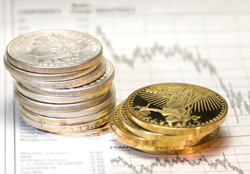
Silver traders who may have been apprehensive about additional margin increases did not have long to wait.  After the close on Wednesday, May 4th, the COMEX announced two huge additional hikes in silver margin, effective at the close of business on Thursday and another hike effective at the close of trading on Monday, May 9th. As of Monday, initial contract margin requirements would be increased to $21,600 and to $16,000 for hedgers.  A year ago, when silver was trading in the $18 range, the margin requirement for a speculative contract was only $4,250.

The rapid series of five margin increases by the COMEX resulted in raising initial margin requirements for speculators from $11,745 to $21,600 – an increase of 84%.    The margin requirements for hedgers also increased by 84% from $8,700 to $16,000.   Silver futures traders would now be forced to come up with huge amounts of additional cash or liquidate holdings on price weakness.   The collapse in silver prices on Thursday May 5th, triggered by the COMEX margin increases, indicates that many players were forced to liquidate positions.

The actions taken by the COMEX constitute a perfect text book example on how to crash a market. The non stop increases in margin requirements resulted in a dramatic reduction of liquidity in the silver market by forcing out small speculators who were not prepared to commit additional cash for margin maintenance.  As prices fell in response to the COMEX margin increases, bigger players in the silver market were forced to liquidate positions to avoid margin calls and large losses on leveraged positions.

The last two margin increases by the COMEX, after silver had already declined by over 17%, created the perfect crash scenario.   Silver traders liquidating positions to meet new margin requirements caused a further cascade of forced selling and the silver crash became inevitable. The elimination of liquidity from any market will result in falling prices and the COMEX knew this.

If someone wanted to crash the silver market, the moves taken by the COMEX were perfectly designed to accomplish this by reducing liquidity at a time during which the markets were already stressed from previous margin increases. The result was a collapse in silver prices from $48.70 to the $34 range.

In response to the outrage over the devastating series of margin requirement increases, Kim Taylor, President of CME Clearing, which owns the COMEX, issued a statement explaining CME’s actions. According to Ms. Taylor, margin increases are related to risk management and done to prevent default by clearing member firms.  Margins are adjusted based on market volatility and are not designed to move a market or discourage investor participation.  Among the factors considered in setting margins is a CME calculation of a worst case scenario for possible portfolio losses.

Specifically regarding the margin increases on silver futures, Taylor stated that “we have made several changes in recent weeks to adjust to volatility in the marketplace…Our interest is in providing security for the entire market – no matter which way it moves”.

CME’s statement seems disingenuous at best.  The protection they speak of is not for the benefit of investors, but rather for the benefit of CME and clearing house members.  The actions of the COMEX in implementing a rapid series of margin increases, even after silver had already steeply sold off, resulted in large profits to short sellers and reduced risk for CME at the expense of huge losses for silver investors both large and small.

A slower series of margin increases would have seemed more appropriate to address price volatility.  The CME knew or should have known that its actions would severely limit liquidity in the silver market.   The decrease in liquidity caused further market volatility, requiring more margin increases, which in turn crashed the price of silver. Anyone looking into the great silver crash of 2011, can start by looking at the COMEX.

Measuring Declines from the High for Gold and Silver Prices

The prices of gold and silver had each risen to fresh all time highs, just before the severe declines experienced over the past few days.
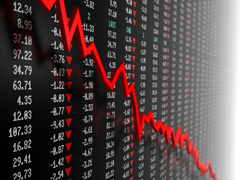
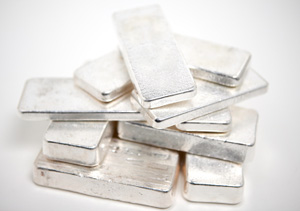
On April 25, 2011, the price of silver touched an intraday high of $49.82 per ounce. This narrowly eclipsed the previous all time high of $49.45 reached in 1980. Silver’s recent price of $34.64 represents a decline of $15.18 or 30.47%.

After breaking above the $1,450 per ounce level in early April, the price of gold had achieved a string of new all time highs. This culminated with the most recent high of $1,577.40 per ounce reached on May 2, 2011. The recent gold price of $1,473.60 per ounce represents a decline of $103.80 or 6.58%.

The severity of the decline for silver has drastically altered the Gold Silver Ratio. This ratio measures the number of ounces of silver necessary to purchase one ounce of gold. At their respective highs, the ratio would have been 31.65. Recent prices put the ratio at 42.54.

Gold

Recent High: $1,577.40 (May 2, 2011)
Recent Price: $1,473.60 (May 5, 2011)
Decline: -$103.80 (-6.58%)

Silver

Recent High: $49.82 (April 25, 2011)
Recent Price: $34.64 (May 5, 2011)
Decline: -$15.18 (-30.47%)

Gold and silver’s stellar performance over the past several years has been interrupted by other declines, some of them even more drastic. From intermediary peaks reached in March 2008, gold and silver fell sharply as the financial world melted down later that year. Gold fell from $1,011.25 to $712.50 per ounce, losing 29.54%. Silver fell from $20.92 per ounce to $8.88, for a loss of 57.55%.

Despite the recent carnage, both gold and silver hold onto gains for the year to date. From the price levels on December 31, 2010, gold is up $63.35 per ounce or 4.49% and silver is up $4.01 per ounce of 13.09%.

Silver ETF Holdings Plunge As Market Selloff Continues, Gold ETF Holdings Show Small Decline

The amount of silver held by the iShares Silver Trust (SLV) plunged over the past week as the silver market experienced a major sell off.

Holdings of the SLV declined by 665.94 tonnes on the week.  To appreciate the magnitude of this decline, consider that the total silver  holdings of the SLV at its inception in April 2006 was 653.17 tonnes.  In addition to this week’s reduction in silver holdings, the SLV saw a drop of 130.49 tonnes in the prior week.

Holdings of the SLV had recently hit a record high of 11,390.06 tonnes on Monday April 25 as prices soared towards all time highs near $50 per ounce.  Silver held by the SLV Trust has declined by 1,002.8 tonnes or 8.8% from the record high, bringing holdings back to the levels reached on February 10th of this year.

The SLV currently holds a total of 334 million ounces of silver valued at $13.5 billion.  After recently reaching a high of $48.35 the SLV sold off sharply, closing yesterday at $38.27.  The SLV has declined by 21% from its all time high reached five trading days ago on April 28th.

GLD and SLV Holdings (metric tonnes)

May 4-2011 Weekly Change YTD Change
GLD 1,219.94 -9.70 -60.78
SLV 10,387.26 -665.94 -534.31

A multitude of factors, both fundamental and technical were cited for the sharp decline in silver prices including:

  • Five margin increases on silver futures contracts, including two new ones announced on May 4th by the COMEX.
  • Liquidation of silver holdings by a hedge fund run by George Soros.
  • Excessive speculation in silver as indicated by huge volume in SLV trading.
  • Manipulation of the gold and silver markets by large players with short positions..
  • A very overbought market described by some as a “religious fervor” for silver.
  • Profit taking at the technically significant level of $50 per ounce, last reached in 1980.
  • The end of QE2 announced by the Fed last week.
  • Huge record volume in silver futures trading.

In any event, silver has become significantly cheaper in the past week and the fundamental reasons for owning precious metals remain intact (see Why There Is No Upside Limit For Gold and Silver Prices).  Long term investors should welcome the shakeout of day traders and speculators from the silver market and view this as a buying opportunity.

Holdings of gold by the SPDR Gold Shares Trust (GLD) declined modestly by 9.7 tonnes.  Current gold holdings of the GLD amount to 39.2 million ounces valued at $60.4 billion.

The inability of politicians to seriously address the budget deficit and ballooning national debt provide a compelling reason to diversity out of the U.S. dollar and into precious metals.   The dollar is close to all time lows as numerous countries announce their intention to diversify out of dollars to protect their wealth.  The disclosure that Mexico had significantly increased its gold reserves this year highlights the flight from paper currencies.  Based on the fundamentals, long term investors should view a correction in precious metal prices as an opportunity to add to positions.

COMEX Increases Silver Margin Requirements for Third Time in Past Week

On Tuesday, May 3rd, the COMEX raised margin requirements for trading silver futures contracts. This was the third increase in the past week.
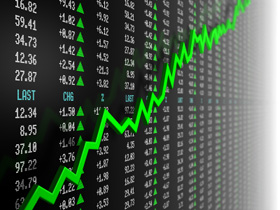
The new margin requirement per contract was increased from $14,513 to $16,200 for initial margin and from $10,750 to $12,000 for maintenance margin.  Hedgers in silver futures pay maintenance margin as initial margin while traders are required to post the higher initial margin amounts.

Effective last Friday, the COMEX had also increased initial margin from $12,825 to $14,513 and from $9,500 to $10,750 for maintenance deposits.

Two days prior to this, the COMEX had also raised margin requirements. On April 27th, margin for initial contracts were increased from $11,745 to $12,825 and margin for maintenance contracts was increased from $8,700 to $9,500.

The CME Group, which owns the COMEX, has been raising margin requirements in an attempt to reduce volatility and protect itself from potential losses generated by large price moves.  As recently as early February the initial margin requirement per silver contract was only $6,075.

Although margin requirements have been raised significantly, the margin required as a percentage of total contract value has remained within a relatively narrow range of between 6 and 8 percent.   The increase in COMEX margin requirements have merely tracked the increase in the price of silver.

Under current margin requirements, a price decline of 8% could wipe out the margin of a silver trader leaving the COMEX exposed to potential losses if the trader does not come up with additional cash.  As silver prices have climbed almost nonstop, the COMEX has raised margin requirements ten times over the past year in order to maintain the same percentage of margin to the silver value represented by one contract.

Even with the higher margin requirements, silver futures contracts allow a trader to make a highly leveraged investment.  One silver futures contract is for 5,000 ounces worth $218,050 at yesterday’s closing London Fix Price.  The new higher margin requirement of $16,200 represents only 7.43% of the value of  one silver futures contract.

After trading close to the $50 per ounce level late last week, silver closed Tuesday at $41.72 in New York trading for a loss of over $8 or 16% over the past two days.

As Gold Hits Record Highs, Perth Mint Finds Success in Smaller Sized Coins

As the price of gold continues to climb, the cost of purchasing a one ounce gold bullion coin is approaching $1,600.  In order to provide the opportunity to own gold within a more reasonable price range, innovative mints have begun offering smaller sized gold coins.   In April 2010, the Perth Mint of Australia introduced a half gram 99.99% pure gold coin named the Mini Roo.

Struck with a fineness of .9999, each Mini Roo contains 0.016 troy ounces of gold. The coins have a diameter of 11.60 mm and thickness of 0.70 mm. By comparison, the one ounce Australian Gold Kangaroo has a diameter of 32.60 mm and thickness of 2.80 mm. The half gram Mini Roo and 1 oz. Gold Kangaroo are shown side by side in the image below.

According to the Perth Mint’s website, the Mini Roo is currently priced at $54.18. A major precious metals dealer’s website currently quotes the price of a single one ounce 2011 Gold Kangaroo at $1,668.23.

Alexandra Lucchesi of the Perth Mint Public Relations Department was kind enough to some insights on the objectives and sales levels of the diminutive gold coins.

Gold and Silver Blog:  Can you provide us with any indication of the sales levels of the Mini Roo half gram gold coin and how it compares to the sale of one ounce coins?

Alexandra:  To compare sales of the Mini Roo and 1oz gold bullion coins would not be a valid comparison.  The issues vary considerably in weight and price, and therefore, do not encompass the interest of the same individual and institutional investors.  Furthermore, the Mini Roo is targeted more toward collectors and gift buyers, whereas the gold coins of the Australian Kangaroo and Lunar series are directed more toward investors.

Gold and Silver Blog:  Has the half gram gold coin met sales expectations and have sales increased as the price of gold has climbed?

Alexandra:  The release of the Mini Roo has met our objectives at both wholesale and retail levels, with sales exceeding more than 15,000 2010-dated coins to date since being released in April last year.  With the 2011 coin only just released a fortnight ago [April 5, 2011], we can not yet estimate sales for the remainder of the year, although, with periodic prompted promotion, we are also anticipating favourable sales of this issue.

Gold and Silver Blog:  Will the Mini Roo become a regular annual issue?

Alex:  A Mini Roo was first introduced to the market in April 2010.  Complementing the world renowned Australian Kangaroo gold bullion coin series, the Mini Roo is expected to be released each year and will continue to portray the identical design as, or a simplified version of, the iconic Australian Kangaroo annual issues.

Gold and Silver Blog:  I would suspect that the much lower cost of the Mini Roo allows greater participation by investors and collectors as well as placing the Mini Roo within the affordable gift category.  Was the higher price of gold the determining factor in deciding to produce the half gram coin?  Have the offerings of smaller sized gold coins resulted in an increased number of new customers?

Alexandra:  That is correct.  The Perth Mint introduced the Mini Roo to encourage a broader audience to start investing in, or collecting, precious metal coin products.  In addition, the smaller coin was perfect to capture the interest of those who, traditionally, were unable to afford the classic Australian Kangaroo bullion coin sizes.  The timing for the initiative was also enhanced by the rising price of gold.  The lower price point of the button-sized Mini Roo does give individual precious metal investors, coin collectors and gift buyers the opportunity to purchase a pure gold coin at an affordable price featuring a similar design as its traditional counterpart.


The Perth Mint Australia

Precious Metals Soar – Thank You Ben Bernanke

As predicted on Monday, the Federal Reserve policy meeting and subsequent press conference by Fed Chief Ben Bernanke had the potential to cause an explosive move up in the precious metal markets. (see Federal Reserve May Cause Stampede Into Gold and Silver This Week)
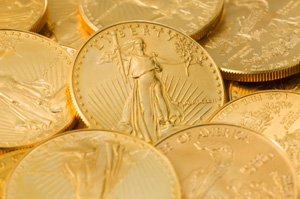
At the conclusion of the Bernanke press conference it became clear that the Fed would maintain its policies of cheap credit and debasement of the dollar.  Subsequent economic reports showed a slowing economy, rising food and energy prices and a slowdown in consumer spending.  This was all the markets needed to hear and precious metal prices exploded upwards on the week.

Silver reached an all time high of $49.75 on Monday before pulling back on Tuesday to $44.60 and then resuming its upward streak after the Bernanke press conference.  The closing London PM Fix Price for silver settled at $48.70 on Thursday.  The London markets were closed on Friday, but in New York spot trading silver ended the week at $48.00, up from last week’s close at  $46.26.

Precious Metals Prices
Thurs PM Fix Since Last Recap
Gold $1,535.50 +31.50 (+2.09%)
Silver $48.70 +2.44(+5.27%)
Platinum $1,835.00 +23.00 (+1.27%)
Palladium $777.00 +12.00 (+1.57%)

As measured by the London PM Fix Price, gold closed Thursday at $1,535.50.  London markets were closed on Friday, but in New York trading, gold ended the day at $1,566.70, soaring $29.90.   From last week’s London Fix Price close of $1,504.00, gold exploded upwards for a gain of $62.70.

As precious metal investors racked up huge gains on the week, many were probably thinking of sending a thank you note to Ben Bernanke.  The reality is different.  Most investors, no matter how bullish they may be on precious metals, are probably diversified and do not have a 100% portfolio allocation to gold and silver.

Investor gains on precious metals, while helping to preserve wealth, may have only partially offset the wealth destruction caused by zero interest rates and falling home prices.  The majority of Americans have the bulk of their wealth tied up in their personal residence and bank accounts and  have seen major declines in their home equity and close to a zero return on savings.  Fed policies are driving more and more investors into the precious metals markets and soaring prices are proof of that.

As noted the London markets were closed on Friday, April 29.  Precious metals prices soared on Friday in New York trading with gold ending at $1,566.70, silver at $48.00, platinum at $1878.00 and palladium at $777.00.

APMEX CEO Says No Bullion Shortage

Despite recent volatility, gold and silver prices continue to push to new highs.  After a brief pullback on earlier this week, silver rebounded strong and once again approaches the $50 level. Gold, which has lagged the price gains in silver, recently rose to a fresh all time high and remains solidly above the $1,500 level.
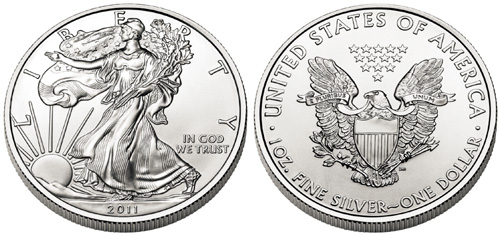
The rapid rise in silver prices has resulted in the Chicago Mercantile Exchange increasing the margin requirements on silver futures for the third time.  The press provided numerous accounts of traders taking huge positions in bearish silver puts.  Silver also faces the psychologically important barrier of $50 per ounce.   During the last great silver bull move of the early 1980’s silver rapidly collapsed from the $50 range and subdued for decades.

Despite the calls for a major correction by silver bears, the metal remains near all time highs and there have been numerous press reports of a physical shortage of silver based on intense investor demand.

Indications of a supply/demand imbalance in the bullion markets can be seen in many areas.   The US Mint has been rationing Silver Eagle bullion coins to its authorized purchasers and earlier this year the Royal Canadian Mint admitted that it was having major problems in sourcing adequate supplies of silver due to high demand.  The spot price of physical silver is trading above the price of futures contracts (known as backwardation) and this is an indication of huge physical demand.  In addition, earlier this week, APMEX, a major precious metals dealer, offered to buy bullion at a generous premium from its customers and cited “incredible demand” for gold and silver bullion products.

Although APMEX says there is no supply/demand imbalance, they recently increased their buy price for some US Mint bullion products. In particular, they are offering $3 over spot silver for one ounce American Silver Eagles. This is higher than the company’s cost of acquisition directly from the United States Mint, which sells the coins at $2 over spot to authorized purchasers.

In order to get a better assessment of the precious metal markets and supply/demand situation in bullion products, Gold and Silver Blog interviewed Michael Haynes, the CEO of American Precious Metals Exchange (APMEX).

When asked about the high prices APMEX is offering for Silver Eagles, Haynes said, “APMEX had not made a general offer to the customer base in quite some time and it seemed logical to remind the customers that APMEX has a need to buy. With respect to prices on Silver Eagles, you rightly describe that APMEX is offering more than the Mint sell price and you also rightly observe that the Mint is allocating product. As previously discussed, APMEX supplements its buying needs from the secondary market. Therefore, APMEX is buying at the bid offered to the customers and as mentioned above, APMEX would rather buy from its customers than a commercial dealer”.

Thus, despite the challenges experienced in other sectors of the market, from APMEX’s perspective they are able to obtain adequate supplies to meet customer demand.   Michael Haynes noted that APMEX is “currently able to buy the products needed to maintain adequate inventories for customers”.

Michael Haynes also provided insights into current customer buying trends.  According to Mr. Haynes, “average order sizes are increasing slightly, but that may be attributed to higher prices of the underlying product.  Recently, the purchases have shifted slightly toward silver”.  There has been no dramatic changes in customer buying patterns related to product size or premium according to Mr. Haynes.

Addressing  the appreciation in precious metals prices, Mr. Haynes noted that “APMEX sales seem to rise in either a rising market or a declining market.  The customers that purchase under those different scenarios are different, in that new customers tend to purchase on increases and mature customers tend to purchase on pullbacks”.

APMEX has apparently met the challenges of meeting surging customer demand for physical bullion products and, in addition, maintains a liquid market for those investors who chose to sell.  Mr. Haynes calls APMEX “one of the great business stories of the internet age”. APMEX was founded by Scott Thomas who has built the company into one of the largest dealers in coins and precious metals based on “a great passion to satisfy customers”.   Mr. Haynes stated that one of his goals is to “reach more of the population with the opportunity to own precious metals”.