April 6, 2026

The Fed Is Confiscating The Wealth Of The Middle Class By Destroying The Value Of The Dollar

Americans need to take a serious look at how the purchasing power of the dollar is being destroyed.  Rampant poverty, declining real incomes and higher prices are all the guaranteed results of a Federal Reserve that remains committed to destroying the value of the dollar.   A dollar saved today that has less purchasing power a year from now equates to the “silent” destruction of the dollar, an event which has gone virtually unnoticed and unprotested by the American public.

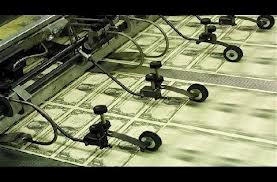
Act #4 of the Fed’s endless money printing campaign directly monetizes over a half a trillion dollars of U.S. deficit spending annually.  In addition to financing the Federal debt with printed dollars, the Fed has also explicitly endorsed  an inflation rate of 2.5% as being “acceptable.”

Impact Of 2.5% Inflation

Even a relatively “benign” inflation rate of 2.5% rapidly erodes the purchasing power of savings. Over a short 5 years, the purchasing power of $100,000 in savings is reduced to $88,110 at an inflation rate of 2.5%.  At a 5% inflation rate, the value after 5 years is only $77,378.  We don’t even want to look at how much purchasing power would be lost over a decade.
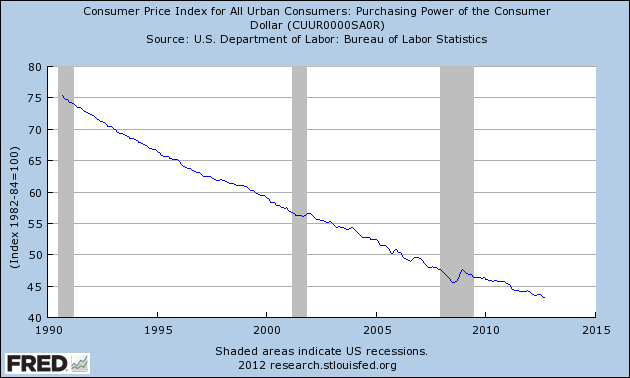
Both consumers and especially savers need to become aware of the wealth depletion caused by purchasing power loss.  From my experience, most people find it conceptually difficult to see a real loss (in purchasing power) when there has been no change in the principal amount of savings.  As John Maynard Keynes wrote in 1920, “By a continuing process of inflation, governments can confiscate, secretly and unobserved, an important part of the wealth of their citizens.  By this method they not only confiscate, but they confiscate arbitrarily; and while the process impoverishes many, it actually enriches some.  And not one man in a million will detect the theft.”

Incredibly, the desperate attempts of central banks to prop up the over-indebted financial system via inflation and money printing is viewed as beneficial by some misguided economists.  Japan’s decision to go all in with “unlimited quantitative easing” was applauded in a recent Slate commentary.

That’s because Shinzo Abe, the overwhelming favorite to lead the Liberal Democratic Party to victory, is running on a bold platform of unlimited quantitative easing and more inflation. If this works—and the odds are that it will—Abe will not only cure a great deal of what ails Japan, he’ll light a path forward for the rest of the developed world.

But if he (Abe) does manage to stick to his guns, the odds are good that it will work. Monetary expansion should reduce the price of the yen and goose exports. More importantly, it will push domestic real interest rates down and spur investment. Creating firm expectations that yen-denominated prices will be higher in the future than they are today should encourage firms and households alike to acquire real goods sooner rather than later. And all this ought to encourage everyone to be investing and spending more.

Bernanke said Japan’s central bankers needed Rooseveltian resolve, but the moral of the story may be that it takes a politician—a Roosevelt—to have the clout and legitimacy to make central banks act decisively when an economy gets firmly mired at the lower bound. If Abe can be that Roosevelt, he’ll not only be a hero of Japan but possibly of the whole world economy. After all, if America’s old advice to Japan turns out to work in practice as well as in theory, then maybe we’ll finally get around to taking our own advice for ourselves.

Does anyone think that Japan’s temporary benefit of a lower currency will not be met with competitive devaluations by other nations?  Exactly how will Japanese consumers be able to spend more if prices increase and wages remain stagnant due to the limiting effects of wage globalization?  The Slate author firmly espouses the lunacy of currency debasement as a wealth enabler despite the fact that no nation in history has ever printed its way to prosperity.

The fact that central banks have firmly committed themselves to money printing on an unimaginable scale is not a cause for hope but rather a clear signal of desperation.  Policy makers have run out of options and in an attempt to forestall the collapse of the financial system, have turned to the last resort option of unlimited money printing.

Gold Demand In Asia Remains Insatiable

As gold demand in Asia soars, vault companies are racing to keep up with storage demand.  In July, Gold and Silver Blog reported on a massive new gold vault being constructed in Hong Kong by Malca-Amit due to unrelenting physical demand for gold in Asia.  The new vault was designed to hold 1,000 metric tonnes of gold and as of July, had already taken in 2,400 tonnes of gold owned by gold exchange traded funds.

It turns out that Malca-Admit should have built a much larger vault.  As demand for physical gold continues to increase, other companies have joined the race to provide secure depositories for wealthy investors.  The Wall Street Journal reports that demand for high-security vault capacity in Asia is soaring in Singapore, Hong Kong and Shanghai.

Brink’s Co., for example, has increased its storage space for precious metals in Singapore more than threefold over the past year, to 200 square meters, and is building a bonded warehouse in Shanghai to store high-value consumer goods and precious metals.

“We are growing, and driving that growth is the storage of precious metals and also bank notes,” said Jos van Wegen, the company’s senior manager of global services in Singapore.

Comprehensive data on the volume of high-security storage capacity in the region isn’t available. But demand for gold is clearly rising.

China’s gold demand in the third quarter of this year was 176.8 tons—16% of global demand and up 47.1% from the same period three years ago, according to the World Gold Council. Hong Kong’s demand totaled 6.9 tons in the third quarter this year, up 56.8% from the third quarter of 2009.

Singapore imported 36.7 tons of gold in the first 10 months of this year, well down from 62 tons in the full year 2011. The government’s announcement in February that, in a bid to become a gold-trading hub, it would scrap a 7% goods and services tax on gold, silver and platinum hurt imports for much of the year. Fourth-quarter gold-import figures for Singapore are expected to be stronger, World Gold Council executives say.

While physical gold requires storage space, it does offer a lot of value in a relatively small package. At around $1,690 a troy ounce, a metric ton of gold is valued at $54.3 million, but would take up only slightly more space than a standard case of 12 wine bottles—though most gold is stored in ingots.

Malca-Amit, a company that stores and transports diamonds and precious metals, has lockups in Hong Kong and Singapore, and is preparing to open one in Shanghai in the first quarter next year. The Shanghai vault will also hold art and luxury goods such as high-value mobile phones and designer handbags.

Malca-Amit’s Singapore vault, capable of holding 600 tons of gold, is almost full, and the company is seeking more space. The amount of gold stored there has increased 200% from a year ago, it says.

Its recently opened Hong Kong vault can hold 1,000 tons of gold, which would be worth more than $54 billion. It is almost large enough to hold the official reserves of China, which total 1,054 tons, according to World Gold Council data.

Malca-Amit has gold-storage sites in New York and Zurich, but the focus of its expansion is firmly on Asia, executive director Joshua Rotbart said. Some Asian investors who are storing their gold in the U.S. and Europe are keen to move it closer to home as more storage space becomes available, he said.

The recent price weakness in gold is apparently viewed as a buying opportunity by sophisticated Asian investors seeking to protect their wealth from the torrential flood of printed money being produced on a global basis by central banks (see Central Banks Pledge Unlimited Money Printing).

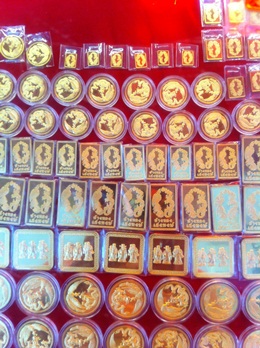
On a recent visit to the Chinatown section of Bangkok, I witnessed first hand large crowds of customers in Chinatown’s numerous retail gold stores.  Gold has never defaulted on its promise as a means of wealth preservation, something clearly understood by the citizens of a country whose history goes back thousands of years.

Customers at Bangkok retail gold store

Chinese Gold

Chinese Gold

The Hidden Risks Of Money Printing

By Axel Merk

While Treasuries are said to have no default risk as the Federal Reserve (Fed) can always print money to pay off the debt, hidden risks might be lurking. As oxymoronic as it may sound, the biggest risk to the economy and the U.S. dollar might be, well, economic growth! Let us explain.

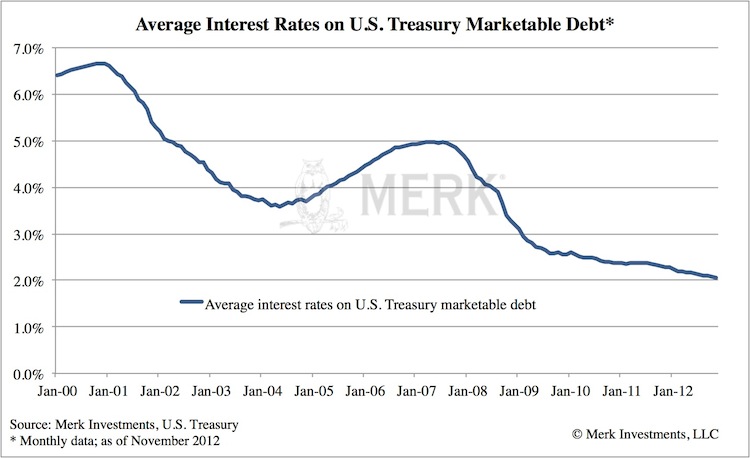
The U.S. government paid an average interest rate of 2.046% on the $11.0 trillion of Treasuries outstanding as of the end of November. Treasuries include Bills, Notes, Bonds and Treasury Inflation-Protected Securities (TIPS). At 2.046%, the cost of carrying the Treasury portfolio currently costs the government $225 billion per annum; about 6% of the federal budget was spent on servicing the national debt. 1

While total government debt has ballooned in recent years, the interest rate paid by the government on its debt has continued on its downward trend:

We only need to go back to the average interest rate paid in 2001, 6.19%, and the annual cost of servicing Treasuries would triple, paying more than Greece as a percentage of the budget. Not only would other government programs be crowded out, the debt service payments might likely be considered unsustainable. Except for the fact that, unlike Greece, the Fed can print its own money, diluting the value of the debt. In doing so, the debt could be nominally paid, although we would expect inflation to be substantially higher in such a scenario.

These numbers are no secret. Yet, absent of a gradual, yet orderly decline of the U.S. dollar over the years – with the occasional rally to make some investors believe the long-term decline of the U.S. dollar may be over – the markets do not appear overly concerned. Reasons the market aren’t particularly concerned include:

  • The average interest rate continues to trend downward. That’s because maturing high-coupon Treasury securities are refinanced with new, lower yielding securities.
  • Treasury Secretary Geithner has diligently lengthened the average duration of U.S. debt from about 4 years when he took office to currently over 5 years.

For the U.S. government, a longer duration suggests less vulnerability to a rise in interest rates, as it will take longer for a rise in borrowing costs to filter through to the average debt outstanding. The opposite is true for investors: the longer the average duration of a bond or a bond portfolio one holds, the greater the interest risk, i.e. the risk that the bonds fall in value as interest rates rise.

Debt management by the Treasury only tells part of the story on interest risk. When the Treasury publishes “debt held by the public,” it includes Treasuries purchased in the open market by the Fed. By engaging in “Operation Twist”, the Federal Reserve stepped onto Timothy Geithner’s turf, manipulating the average duration of debt held by the private sector. Notably, the private sector holds fewer longer-dated bonds, as the Fed has gobbled many of them up.

However, investors may still be exposed to substantial interest risk in their overall fixed income holdings as, in the search of yield, many have doubled down by seeking out longer dated and riskier securities.

The Fed, many are not aware of, employs amortized cost accounting, rather than marking its holdings to market, thus hiding potential losses should interest rates go up and its portfolio of Treasuries and Mortgage-Backed Securities (MBS) fall in value.

Quantitative easing to increase interest risk

Whenever there’s a warning that all the money created by the Federal Reserve is akin to printing money, some dismiss these concerns as the money created out of thin air to buy securities has not caused banks to lend, but park excess reserves back at the Federal Reserve. As of December 14, 2012, $1.4 trillion in excess reserves is parked at the Fed. Substantial interest risk might be baked into reserves:

Consider that the Fed has been paying about $80 billion in profits to the Treasury in recent years. Think of it this way: the more money the Fed “prints”, the more (Treasury & MBS) securities it buys, the more interest it earns. That’s why Fed Chair Bernanke brags that his policies have not cost taxpayers a cent, even if the activities may put the purchasing power of the currency at risk. Now, Bernanke has also claimed he could raise rates in 15 minutes. In our assessment, it’s most unlikely he would do so by selling long-dated securities; instead, in an effort to keep long-term rates low, the most likely scenario is that the Fed will pay a higher interest rate on reserves. Up until the financial crisis broke out, the Federal Reserve would have intervened in the Treasury market by buying and selling securities to move short-term interest rates. In the fall of 2008, the Fed was granted the authority by Congress to pay interest on reserves.

As interest rates rise, not only will Treasury pay more for debt it issues, it may also receive less from the Fed. Interest rates would have to rise to about 6% for the entire $80 billion in “profits” to be wiped out assuming a constant $1.5 trillion in reserve balances ($1.4 trillion in excess reserves and $0.1 trillion in required reserves that also receive interest); that assumes, the Fed does not grow its balance sheet in the interim (in an effort to generate more “profits” for the Fed) and would not reduce its payouts in the interim as a precaution because bonds held on the Fed’s books may be trading in the market at substantially lower levels.

Should interest rates move up, the Treasury may no longer be able to rely on the Fed to finance the deficit (while the Fed denies the purposes of its policies is to finance the deficit, the Fed is buying a trillion dollars in debt as the government is running a trillion dollar deficit).

Biggest risk: economic growth?

In our surveys, inflation tends to be on top of investors’ minds, no matter how often government surveys show us that inflation is not the problem. Should inflation expectations continue to rise – and a reasonable person may be excused for coming to that conclusion given that the Fed appears to be increasingly focusing on employment rather than inflation – bonds might be selling off, putting upward pressure on the cost of borrowing for the government.

But if we assume inflation is indeed not an imminent concern (keep in mind that the Fed is also buying TIPS and, thus, distorting important inflation gauges in the market), we only need to look back at the spring of this year when a couple of good economic indicators got some investors to conclude that a recovery is finally under way. What happened? The bond market sold off rather sharply! A key reason why the Fed is increasingly moving towards employment targeting is to prevent a recurrence, namely a market-driven tightening, pushing up mortgage costs.

The government should be grateful that we have this “muddle-through” economy. Let some of that money that’s been printed “stick;” let the economy kick into high gear. In that scenario, the “good news” may well be reflected in a bond market that turns into a bear market.

Historically, when interest rates move higher in an economic recovery, the U.S. dollar is no beneficiary because foreigners tend to hold lots of Treasuries: should the bond market turn into a bear market, foreigners historically tend to wait for the end of the tightening cycle before recommitting to U.S. Treasuries.

The point we are making is that for bonds to sell off and the dollar to be under pressure, we don’t need inflation to show its ugly head; we don’t need China or Japan to engage in financial warfare by dumping their Treasury holdings. All we may need is economic growth! And while Timothy Geithner has studiously been trying to extend the average duration of U.S. debt, Ben Bernanke at the Fed has thrown him a curveball.

Perception is reality

One only needs to look at Spain to see that a long average duration of government debt is no guarantor against a debt crisis. Spain has an average maturity of government debt of 6 years, yet it does not take a rocket scientist to figure out that borrowing at 6% in the market is not sustainable given the total debt burden. As such, markets tend to shiver when confidence is lost, even if, technically, governments could cling on for a while when the cost of borrowing surges.

History may repeat itself

It was only 11 years ago that the US government paid and average of 6% on its debt. Sure the average cost of borrowing has been coming down. But no matter what scenarios we paint, if the average cost of borrowing can come down to almost 2% from 6%, we believe it is entirely possible to have the reverse take place over the next 11 years. Given the additional risks the Fed’s actions have introduced, the timing could well be condensed. But even if not, we believe it is irresponsible for policy makers to pretend interest rates may stay low forever (except, maybe, Tim Geithner’s steps to increase the average maturity of government debt; but as pointed out, his efforts may be overwhelmed by those of the Fed).

Fiscal Cliff

What’s so sad about the discussion about the so-called fiscal cliff is that even the initial Republican proposal results in approximately $800 billion deficits each year. Financed at an average 2%, this would add over $900 billion in interest expenses over ten years; financed at an average 4%, it would add almost $2 trillion in interest expense over ten years. Mind you, this is a politically unrealistic, conservative proposal. Democrats pretend we don’t even have a long-term sustainability problem, only that the wealthy don’t pay their fair share.

In our humble opinion, both Republicans and Democrats are distracted. In many ways, the simultaneous increase in taxes and cut in expenditures of the fiscal cliff is akin to European style austerity: if the cliff were to take place in its entirety, we would a) suffer a significant economic slow down; b) continue to run deficits exceeding 3% of GDP before factoring in any slowdown; and c) still not have fixed entitlements.

Entitlements

While our discussion focused on $11 trillion in Treasury securities, the so-called “unfunded liabilities” go much further than the $5 trillion in accounting liabilities set aside. Depending on the actuarial assumptions, unfunded liabilities may be as high as $50 trillion to $200 trillion or higher.

In our assessment, the only way to tame the explosion of government liabilities over the medium term is to tame entitlements. But it is very difficult to cut back on promises made. As Europe has shown us, the only language that policy makers understand may be that of the bond market. As such, unless and until the bond market imposes entitlement reform, we are rather pessimistic that our budget will be put on a sustainable footing. Put another way, things are not bad enough for policy makers to make the tough decisions.

Different from Europe, however, the U.S. has a current account deficit. As a result, a misbehaving bond market may have far greater negative ramifications for the dollar than the strains in the Eurozone bond markets had for the Euro. In the Eurozone, the current account is roughly in balance; while there was a flight out of weaker Eurozone countries, that flight was mostly intra-Eurozone towards Germany and Northern European countries.

So while the default risk of U.S. Treasuries may be less than that of Eurozone members, the risks to the purchasing power of the U.S. dollar might be substantially higher. On that note, while the Fed has indicated to buy another approximately $1 trillion in assets over the next year, we would not be surprised to see the balance sheet of the more demand-driven European Central Bank shrink as some banks pay back loans from the Long-Term Refinancing Operation (LTRO) early.

In early January, we will be publishing our outlook for 2013; Please also sign up for our newsletter to be informed as we discuss global dynamics and their impact on gold and currencies. Additionally, please join us for our upcoming Webinar on Tuesday, January 15th, 2013.

Axel Merk

Axel Merk is President and Chief Investment Officer, Merk Investments.

Gold and Stocks Diverge As Central Banks Pledge Unlimited Money Printing

Both the Federal Reserve and the Bank of Japan have gone all in with their attempts to revive weak, debt burdened economies with a pledge of unlimited money printing.
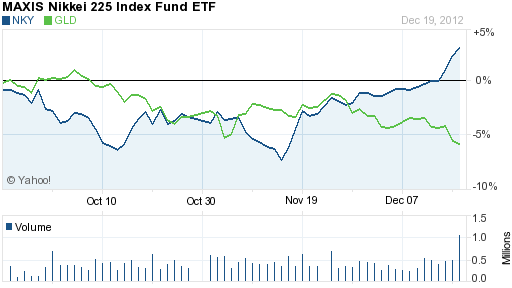
Japan’s incoming Liberal Democratic Party Prime Minister Shinzo Abe, who ran on a platform of unlimited quantitative easing and higher inflation, has quickly forced capitulation by the Bank of Japan to surrender its independence from political influence.

The Bank of Japan pledged Thursday to review its price stability goal, admitting that the move was partly in response to incoming Prime Minister Shinzo Abe’s aggressive calls for the central bank to step up its fight against deflation.

At its two-day policy board meeting, the BOJ decided to expand the size of its asset-purchase program—the main tool of monetary easing with interest rates near zero—and promised to review next month its current inflation goal, something Mr. Abe demanded during Japan’s parliamentary campaign.

Countering speculation that the board’s decision-making process is being driven by politicians, Gov. Masaaki Shirakawa said the bank reviews its price goal every year. But he acknowledged that the policy board had taken Mr. Abe’s request into account.

The Bank of Japan’s quick surrender of monetary policy independence reflected the fact that they had little choice in the matter.  Mr. Abe had previously threatened a  “law revision to take away the BOJ’s independence if it didn’t comply with his demands.  Mr. Abe said the election shows that his views have the support of the people, and, on the night of his victory, he specifically said he expected the BOJ to do something at this week’s meeting.”

The policy of unlimited money printing by Japan came shortly after similar actions were announced by the U.S. Federal Reserve in early December.  Fed Chairman Ben Bernanke, architect of the U.S. “economic recovery” announced that the Fed would purchase $45 billion of US Treasuries every month in addition to the open ended monthly purchase of $40 billion of mortgage backed securities.  The Fed’s expanded “asset purchase programs” will be monetizing over $1 trillion of assets annually, effectively funding a large portion of the U.S. government’s annual deficit with printed money.

The impact of blatantly unlimited money printing by two of the world’s largest economies surprised many gold investors as the price of stocks and gold quickly diverged, with gold selling off and stocks (especially in Japan) gaining.

Why would gold, the only currency with intrinsic value that cannot be debased by governments, sell off as governments pledged to flood the world with freshly printed paper currencies?  Here’s one insight from John Mauldin.

When you reduce the amount of leverage in the system, you’re actually reducing the total money supply. So the Fed can come in and print money, and the money supply – the total amount of credit and leverage and material that’s going through the system – really hasn’t increased.

A lot of monetary economic theories say “the money supply is directly related to inflation.”

It is, but the amount of leverage and credit in the system is also directly related to inflation. It becomes a much more complicated mix. What happens at the end of the debt supercycle, as you’re reducing that leverage, you’re actually in a deflationary world. That is the whole debate between deflation and inflation.

If you read the polls in the United States, we’re just totally dysfunctional. We want to pay less taxes and we want more health care – that doesn’t work. We are going to have to be adults and recognize that problem.

The reason is the Fed is going to do everything they can to fight deflation. The only thing they can do is to print money. They’re going to be able to print more money than any of us can possibly imagine and get away with it without having inflation.

Mr. Mauldin may have a valid point, but a more likely explanation is the suppression of gold prices by governments and central banks as voluminously documented by GATA.

“Those who follow GATA may not be surprised when the monetary metals markets don’t make sense, since they really aren’t markets at all but the targets of constant intervention by governments.”

Silver Investment Demand Soars In China

The use of silver as a monetary asset in China goes back for centuries.  As detailed in the latest report from the Silver Institute, China’s entire monetary system was based on a silver standard until 1935.  Things changed dramatically after the Communists came to power in 1949 and effectively nationalized the entire silver stock.  Private citizens were prohibited from owning silver or gold and private sales of silver and gold jewelry was banned.
As China slowly adopted free markets principles, government control over silver was liberalized and in 2000, China finally ended the government monopoly on silver trading.  Private exchanges were established which allowed both the supply and demand of silver to expand rapidly.

A momentous moment for silver occurred in 2009 when the People’s Bank of China finally allowed private investors to buy silver.  The opening of the silver market to the Chinese public along with explosive economic growth resulted in an exponential increase of silver demand.  A middle and upper class that was rapidly accumulating financial assets saw silver as the logical store of value to protect their wealth from inflation and currency debasement.

Removing the prohibition on the private ownership of silver resulted in explosive demand for silver bar, coins and metals.  Demand for coins and medals increased from 3.0 million ounces in 2009 to 5.8 million ounces in 2011.  Demand for silver bar increased from 1.3 million ounces in 2009 to 11.3 million ounces in 2011.

The Silver Institute projects that retail investment demand for silver will grow robustly as silver becomes more available to the growing masses of the Chinese middle class.  Currently, investor demand for silver accounts for only a small part of total silver demand.  In 2011, total Chinese silver demand was 170.7 million ounces, with investors purchasing only 17.1 million ounces of coins, medals and bars.  With a population of almost 1.4 billion people, demand for silver could surge exponentially.  If only 1 out of 4 people in China buy one ounce of silver each year, that would represent silver demand of a staggering 350 million ounces, which exceeds total annual silver supply of 281.5 million ounces in 2011.

Long term investors in both gold and silver who understand the underlying fundamental reasons for owning precious metals should ignore short term price fluctuations and increase positions on short term weakness.

Demand For Silver Tops One Billion Ounces Per Year

Here’s a great infographic from the Visual Capitalist showing the supply and demand statistics for silver.  Interestingly, most of the silver produced each year is consumed in thousands of different industrial applications, leaving a relatively small amount available for investment in coins, bars and jewelry.  Unlike gold, the vast majority of silver produced over the years has been consumed, with much of it lost to landfills, leaving a relatively small above ground supply.


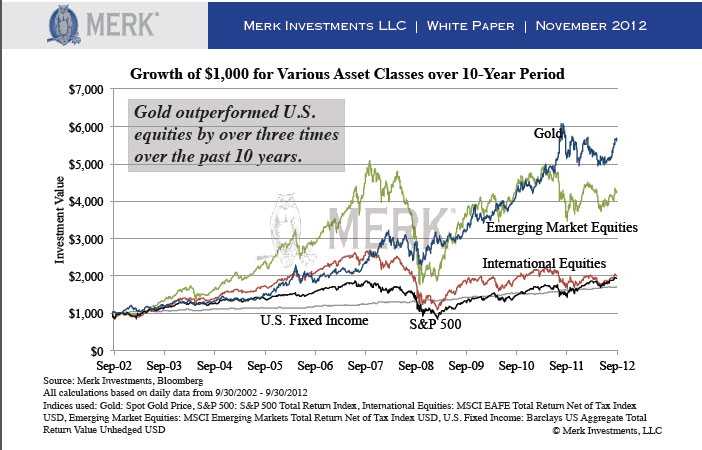
Gold Has Outperformed Stocks By 300% Over The Past Decade

By Axel Merk

Superior Performance of Gold

Over recent years, gold has performed remarkably well relative to other asset classes, in terms of both absolute performance and risk-adjusted performance. Over the preceding 10 years, an investment in gold would have significantly outperformed a corresponding investment in the S&P 500 Index or U.S. bonds, not to mention international and emerging market equities. Over the past 10 years, gold outperformed U.S. equities by over three times:

Courtesy: merkinvestments.com

Gold Shines even when Under-performing

Note that even during time periods when gold underperforms other asset classes, as it did during the 20-year time period analyzed above, the addition of a gold component improves the overall risk-adjusted return profile of a risky portfolio. We consider this to be largely driven by the low levels of correlation between the two assets and thus the positive impact it has on the volatility profile of the hypothetical portfolio above. For example, we find that a portfolio comprised 50% gold and 50% the S&P 500 would have exhibited an annualized standard deviation of returns of 12.7% over the 20-year period ended September 30, 2012.  This is a significant reduction to the annualized standard deviation of returns exhibited by a portfolio comprised 100% the S&P 500, which was 19.2% over the same time frame.

Read the full article here.

Gold Becomes The Ultimate Store Of Value As Central Bankers Create Unlimited Fiat Money

By Vin Maru

Lately we have seen many articles about China and many other central banks continuing to buy and increase their holdings of gold as part of their effort to continue diversifying out of foreign paper currencies. Who can blame them? Would you want to hold paper promises to pay off financial obligations from countries that are essentially bankrupt as a part of your currency reserve? China is doing what is the right thing and in the best interest of China, buying more gold to hold as a part of your reserves in order to make your currency more marketable. They want to make the yuan a competing currency to the other major currencies around the world and they will succeed and owning gold is part of their strategy.

There is some speculation that China is increasing its gold holding to make the yuan a gold-backed currency in an effort to make it a world currency reserve. While it is an interesting concept, it will most likely never happen. In order to back a currency, their gold holdings must increase or decrease alongside the increase or decrease in the number of currency units in the system. A gold backed currency would entail having a fixed rate of convertibility for each ounce of gold to a specific number currency units issued by that country. There is probably no country in the world that will honour convertibility on a fixed basis, it would be financial suicide and is part of the reason why Nixon closed the gold window. Also having a gold backed currency would mean the country would be continually increasing gold purchases to match the inflation of currency units issued. Tracking the amount of gold that is backing currency would also be next to impossible since there is a complete lack of transparency around the amount of currency units being issued by central banks and the amount of gold held by them. Currently currencies can be converted to gold on a floating basis at market price, but going to a gold backed currency would likely never happen.

China is making its currency more readily available for trade, thus bypassing the US dollar and making its currency the payment of choice for its export. Currently the yuan is fixed to the US dollar, but over time it will most likely have to adopt a floating currency like the rest of the world. Until then, expect China to continue adding to its gold reserve in an effort to make the yuan a competing currency for international trade. The US will lose its reserve currency status over time (most likely some time this decade) but it most likely will never go away completely and the yuan will not take over completely. We will most likely just have bi-lateral trade agreements with several national currencies being used for payments. The yuan is just the new kid on the block but there is still the Euro, British pound, Japanese yen, the US$ and probably the IMFs SDR that will also be used. Even the Canadian dollar has been strengthening lately, as the IMF said it’s considering classifying the Canuck buck and the Australian dollar as reserves currencies.

While gold may not be convertible at a fixed rate any time soon, VTB Group is Russia’s first lender to sell perpetual bonds and debt linked to the country’s benchmark equity index and is now selling the nation’s debut notes tied to the price of gold (see Bloomberg article). VTB is offering 1 billion rubles ($32 million) of securities that will be redeemed in December 2013 that will pay a rate on returns based on the gold price up to a limit of 20 percent. Being a pioneer in the Russian market, VTB is the 2nd largest bank and will provide pension funds an alternative to invest in gold without the limits placed on commodity holding by regulators. The article even talks about how even Western financial institutions such as JP Morgan, Barclays, and Credit Suisse are issuing notes tied to gold this month. This is just another example of how gold is becoming an important financial asset. The need to diversify and protect wealth becomes more apparent in an era of currency wars which will destroy the value of fiat money. Financial institutions realize that central banks will continue down the path of printing money, inflation and currency devaluation, there is no other choice. They see the writing on the wall and are now capitalizing on a new markets by providing financial assets tied to the price of gold price.

All these currencies will continue to inflate and I doubt the bankers will allow gold to become a competing currency for everyday transactions. However its role as a store of value will continue to appreciate as long as fiat money continues to exits. So we should be happy that government and central bankers will continue to use and expand fiat currency, it makes their currency worth less and gold will continue to benefit in the long run.

What we are seeing now, with short term fluctuations in the price of gold is just market noise and short term trading opportunities created by the gold market high frequency traders and bullion banks. This will come to pass as the price of gold gets smoothed out and then slowly advances higher with a two steps forward one step back dance along a rising trend. All this talk about gold by mainstream media is just market noise to try and explain very short term movements in price. They have very little understanding of gold and the role it will play in the future as a store of value. Being the good slaves and puppets for the central bankers, MSM is only good at misdirecting the public and they are paid very well for doing so. Once gold finishes this consolidation, the price should continue to advance to all time highs in 2013 and 2014 with a possibility of doubling from the current price to reach a minimum target of $3500 in the next few years.

If you enjoyed reading this article and are interested in protecting your wealth with precious metals, you can receive our free blog by visiting TDV Golden Trader. Also learn how you can purchase and protect your gold holdings by getting a copy of our special report Getting Your Gold out of Dodge or protecting the stock investments you currently own with Bullet Proof Shares.

Regards,

Why Silver Will Hit $100

By GE Christenson

There are many predictions for the price of silver. Some say it will crash to nearly $20, and others proclaim $100 by the end of 2012. The problem is that some predictions are only wishful thinking, others are obvious disinformation designed to scare investors away from silver, and many are not grounded in hard data and clear analysis. Other analysis is excellent, but both the process and analysis are difficult to understand. Is there an objective and rational method to project a future silver price that will make sense to most people?

Yes, there is!

I am not predicting a future price of silver or the date that silver will trade at $100, but I am making a projection based on rational analysis that indicates a likely time period for silver to trade at $100 per ounce. Yes, $100 silver is completely plausible if you assume the following:

  • The US government will continue to spend in excess of $1 Trillion per year more than it collects in revenue, as it has done for the previous four years, and as the government budget projects for many more years.
  • Our financial world continues on its current path of deficit spending, debt monetization, Quantitative Easing (QE), weaker currencies, war and welfare, ballooning debts, and business as usual.
  • A massive and devastating financial and economic melt-down does NOT occur in the next four to six years. If such a melt-down occurs, the price of silver could skyrocket during hyperinflation or stagnate under a deflationary depression scenario.

Still with me? I think most people will accept these simple and rather obvious assumptions.

Many individuals find it difficult to believe any projections for silver, either higher or lower, because silver is hated, loved, often ignored, and seldom recognized as another currency. However, most people know that the US government national debt is huge and will grow much larger during the next decade. Examine the following graph:

Click on image to enlarge.

National debt is plotted on the left axis – yes, it was larger than $16 Trillion as of September 30, 2012. Silver is plotted on the right axis. The data covers an 11 year span from September 2001 through September 2012. This period includes the time after the stock market crash of 2000, the game-changing events of 9-11, the real estate crash, and the new bull market in commodities. Each month represents one data point. Note the similarity between the two trends. The statistical measure R-Squared for this 11 year period of monthly data is 0.838 – quite high. R-Squared increases to about 0.90 if national debt is correlated to the monthly price of silver after it has been smoothed with 9 month moving average.

This expansion in the national debt is a simple proxy for expansion of the money supply and the devaluation of the dollar. The exponential growth rate for the national debt averaged over this period is 9.7% compounded annually, while the rate averaged over the last five years is 12.3%. The exponential growth rate for silver is a bit larger – about 20% per year compounded annually. I attribute this larger rate, in excess of 12.3%, to the realization that silver is a competing currency, mining supply is growing slowly, most governments are aggressively “printing money,” industrial demand is increasing, and some investors are actively buying silver. In short, demand is increasing while the realization that silver is still an undervalued investment and cannot be “printed” at will (like dollars and euros) has reached the awareness of individual investors. I believe it is very likely that national debt and the price of silver will continue their 11 year exponential growth trend.

Since silver correlates relatively closely with national debt, we can use national debt as a clear, objective, and believable proxy to model the future price of silver. Extend national debt and silver prices forward for the next six years based on the exponential increase from the last five years, and the result is the following table. Bracket silver prices, high and low, based on past annual volatility of roughly +60% and -35%. You can see from the graph that silver prices are very erratic – silver rallies too far and too fast, and then crashes to absurdly low levels. These stunning rallies and crashes have happened for at least 35 years and probably will continue throughout this decade.

Whether or not prices and crashes are manipulated, and there seems to be credible evidence to indicate such, the “big picture” view is that silver has rallied from about $4 to nearly $50, crashed back to about $25, and is set to rally to well over $100 in the next few years. The week to week movements will become even more extreme so focus on the long-term trend to reduce anxiety and fear.

As you can see, this projection for silver prices indicates that silver could reach $100 as soon as late 2015, with a theoretical projected price of $100 about 2017. The price of silver is about $32.00 as of November 1, 2012.

The next graph shows the price of silver, on a logarithmic scale, with high and low trend lines. The horizontal line at $100 shows the earliest and latest dates at which the trend lines project silver will reach that price. Those dates are 2015 through late 2017, which are consistent with the above projection based on the tight correlation to the national debt. The important realization is that $100 silver is just a matter of time – say three to five more years – depending on the level of QE “money printing,” inflationary expectations, dollar devaluations, fiscal insanity, government deficit spending, wars, and welfare. We have been warned!

Conclusion

We may be skeptical of price projections for silver, but projections for national debt are quite believable. Since the correlation is very close, future silver prices can be projected, assuming continuing deficit spending, QE, and other macroeconomic influences. A dollar crash or an unexpected bout of congressional fiscal responsibility could accelerate or delay the date silver trades at $100, but the projection is reasonable and sensible. Silver increased from $4.01 (November 2001) to over $48 (April 2011). A silver price of $48 seemed nearly impossible in 2001, yet it happened. An increase from about $32 (October 2012) to $100 (perhaps in 2015 – 2016) seems much easier to believe, especially after Bernanke’s recent announcement of QE4-Ever. Read We Have Been Warned.

“Inflation is as violent as a mugger, as frightening as an armed robber and as deadly as a hit man.” – Ronald Reagan

GE Christenson
aka Deviant Investor

Gold Ready For Explosive Rally Based On Sentiment, Seasonal Factors and Fed Money Printing

Gold has had a volatile year.  From January’s opening price of $1,598, gold quickly moved up by $183 per ounce by the end of February.  An ensuing correction that lasted into July brought the price of gold down by $225 per ounce to $1,556 in mid July, the low of the year.  In August gold started to rally, closing yesterday at $1716.25 per ounce, up $118.25 or 7.4% on the year.
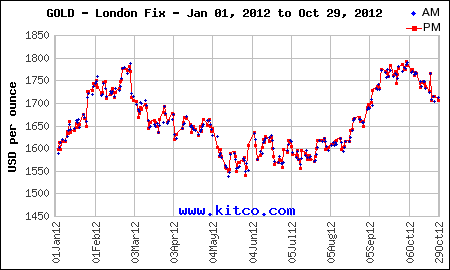
Gold now appears ready to mount an explosive rally that could easily push prices past $2,000 based on sentiment, seasonal factors and rampant money printing by the Federal Reserve.

Gold Traders Bullish

According to Bloomberg, gold traders are the “most bullish in 10 weeks…the highest level since August 24.  Gold rallied strongly from August 24th, adding $124 per ounce by October 4th.

Gold traders are the most bullish in 10 weeks and investors are hoarding a record amount of bullion as central banks pledge to do more to spur economic growth.

Eighteen of 27 analysts surveyed by Bloomberg expect prices to rise next week and five were bearish. A further four were neutral, making the proportion of bulls the highest since Aug. 24. Holdings in gold-backed exchange-traded products gained the past three months, the best run since August 2011, data compiled by Bloomberg show. They reached a record 2,588.4 metric tons yesterday, the data show.

The Bank of Japan (8301) expanded its asset-purchase program on Oct. 30 for the second time in two months, increasing it by 11 trillion yen ($137 billion). The Federal Reserve said last week it plans to continue buying bonds and central banks from Europe to China have pledged more action to boost economies. Gold rose 70 percent as the Fed bought $2.3 trillion of debt in two rounds of quantitative easing from December 2008 through June 2011.

“Central banks are all very concerned about a depression, so they’re keeping monetary policies as loose as possible,” said Mark O’Byrne, the executive director of Dublin-based GoldCore Ltd., a brokerage that sells and stores everything from quarter-ounce British Sovereigns to 400-ounce bars. “People are buying gold as a store of value to protect against currency depreciation.”

Seasonal Factors

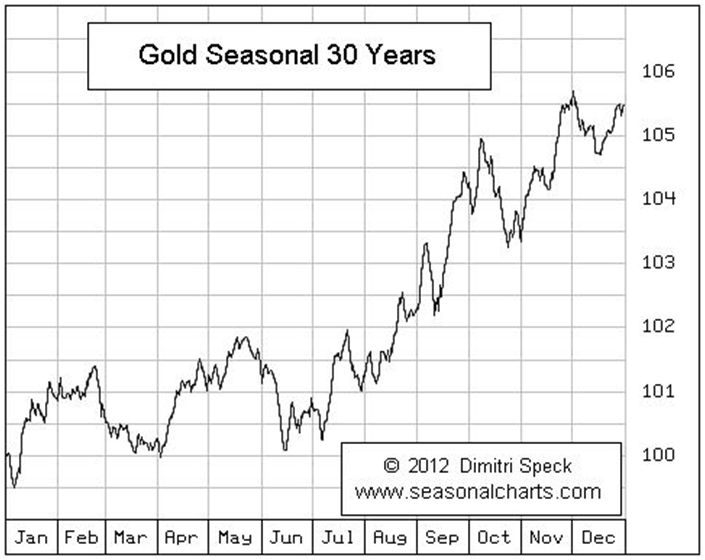
Gold has a pronounced seasonal tendency to rally strongly in the last quarter of the year.  The chart below from GoldCore shows the seasonal strength of gold over the past 30 years.

Courtesy goldcore.com

Rampant Money Printing By The Federal Reserve

Central Banks worldwide have gone on a money printing rampage to save governments that are unable to control spending or raise sufficient tax revenues.  David Einhorn, President of Greenlight Capital, who has a brilliant investment track record, is rampantly bullish on gold and raises the question of what type of truly desperate measures central banks will take if the world economy enters another recession or suffers an exogenous shock.

“It seems as if nothing will stop the money printing, and Chairman Bernanke in fact assures us that it will continue even after the economic recovery strengthens.  Even after the economy starts to recover more quickly, even after the unemployment rate begins to move down more decisively, we’re not going to rush to begin to tighten policy.  Apparently, anything less than a $40 billion per month subscription order for MBS is now considered ‘tightening’.  He’s letting us know that what once looked like a purchasing spree of unimaginable proportions is now just the monthly budget.”

“If Chairman Bernanke is setting distant and hard-to-achieve benchmarks for when he would reverse course, it is possibly because he understands that it may never come to that.  Sooner or later, we will enter another recession.  It could come from normal cyclicality, or it could come from an exogenous shock.  Either way, when it comes,  it is very likely we will enter it prior to the Fed having ‘normalized’ monetary policy, and we’ll have a large fiscal deficit to boot.  What tools will the Fed and the Congress have at that point? If the Fed is willing to deploy this new set of desperate measures in these frustrating, but non-desperate times, what will it do then?  We don’t know, but a large allocation to gold still seems like a very good idea.”