April 13, 2026

Looking for a Top in Gold

Investors and analysts alike are looking at the record prices of gold last year and trying to predict the future. Last year the price of gold rose by more than 27%, contributing to an increase of more than 400% over the past decade.

Another year of double digit gains in the gold price has many experts considering whether prices will continue their upward trajectory, or whether there are warning signs for a potential top. The predictions are as varied as their sources:

  1. According to Goldman Sachs, gold will top in 2012 at $1,750 an ounce.
  2. John Nadler at Kitco.com predicts that gold will cap by the end of 2011.
  3. The CEO of U.S. Gold, Rob McEwen believes that the market is “a third of the way” to a mania.
  4. Jim Rodgers estimates that the long bull market in gold will result in a huge bubble for the commodities market as a whole—and he thinks we’re halfway there already.
  5. Scott Redler at T3Live.com predicts that if the price gap is truly filled, gold will stay range bound between $1,320 and $1,400 for a time before mustering up a bigger rally.

Everyone is eying the market and trying to decide what it is going to do next so that they can react accordingly. Surprisingly though, most investors do not own their own gold and have never owned it.

According to The Street, you’re much more likely to see people selling gold than buying it. Still, the media excitement about gold prices, not to mention the prices themselves, is generating new investors. The SPDR Gold Shares added 155 tons this year, for example. Longtime investors are waiting for the day when everyone jumps on the bandwagon, resulting in the gold bubble they’re currently trying to predict.
US Mint Sells 1,429,500 Ounces of Gold Bullion During 2010

The United States Mint sold less gold bullion during 2010 than the previous year, as measured in ounces. Across their offerings of American Gold Buffalo and American Gold Eagle bullion coins, sales reached 1,429,500 in the current year compared to 1,625,000 in the prior year.
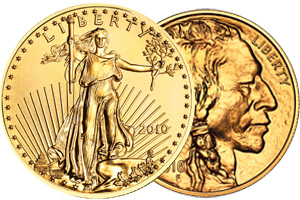
The American Gold Buffalo is struck in one ounce of 24 karat (.9999 fine) gold and carries James Earle Fraser’s classic design from the Buffalo Nickel. The 2010-dated coins were first available on April 29, 2010 and remained available for ordering by authorized purchasers until late September 2010.

The American Gold Eagles are struck in a composition of 22 karat ( .9167 fine) gold and carry the obverse design of Augustus Saint Gaudens’ classic double eagle. A range of weights are available to provide greater investment flexibility. The one ounce 2010 Gold Eagle went on sale January 19, 2010, with the one-half ounce, one-quarter ounce, and one-tenth ounce size coins on sale June 10. The coins remained on sale through the end of the year.

For the calendar year, the US Mint sold the following quantities of gold bullion coins:

Coins Total oz.
American Gold Eagle 1 oz 1,143,000 1,143,000
American Gold Eagle 1/2 oz 46,000 23,000
American Gold Eagle 1/4 oz 62,000 15,500
American Gold Eagle 1/10 oz 390,000 39,000
American Gold Buffalo 1 oz 209,000 209,000
Total 1,429,500

The drop in total ounces sold from the prior year is 195,500, representing a decline of about 12%.

Despite the drop in ounces sold, there was likely an increase for the year based on total dollar sales due to the higher price of gold. For 2010, the price of gold was up more than 27%.

Authorized purchasers are allowed to order gold bullion coins directly from the US Mint in minimum quantities of 1,000 ounces. The price paid is based on the London PM Gold Fix price following the day of order.

US Mint Sells Record 34.6 Million Silver Eagle Bullion Coins

Demand for physical precious metals continues to drive United States Mint bullion sales to new heights. The American Silver Eagle bullion coins sold a record 34,662,500 coins during 2010.

The previous record for annual sales was achieved in 2009 when 28,766,500 coins were sold. This sales level was surpassed in November of this year, so the only question was how far into record territory sales would eventually extend. The final numbers for 2010 represent a rise of 20.50% from the previous record.

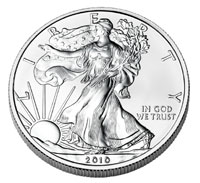
Each American Silver Eagle bullion coin contains one troy ounce of .999 fine silver. The coins have been offered by the United States Mint annually since 1986. By law, the coins must be issued in quantities needed to meet public demand, which means that production fluctuates from year to year to meet this target. At some times during the past three years, production has fallen short of meeting full demand, which has necessitated sales suspensions and rationing programs.

From the start of the program in October 1986 through December 31, 2010, total Silver Eagle bullion sales have reached 241,277,000.

Today, the US Mint began accepting orders from authorized purchasers for 2011 Silver Eagle bullion coins. According to the US Mint’s website, opening orders total 1,696,000, although this might include some remaining 2010-dated coins.


2010 Gold, Silver, Platinum, and Palladium Price Performance

Precious metals delivered another year of strong performance, with double digit percentage gains for gold, silver, platinum, and palladium.
Palladium led the pack with an increase of 96.77% for the year. The metal is now at a nine year high, with gains attributed to the dwindling stockpiles in Russia amidst increased demand for use within catalytic converters in gasoline powered automobiles. As recently as December 2008, the price of palladium was $164 per ounce, compared to this year’s closing price of $791.

Silver had an impressive year with a gain of more than 80%, outperforming gold’s rise of 27.74%. With the price of silver moving up faster than gold, the gold-silver ratio continues to contract. This ratio indicates the number of ounces of silver necessary to purchase one ounce of gold. At the start of the year, the ratio was 64.98. At the close of the year, the ratio is 46.04.

The table below shows the last available London Fix prices from 2009, today’s London AM Fix price, the change, and percentage change.

2010 Precious Metals Price Performance


Dec 31, 2009 Dec 31, 2010 Change Percent
Gold $1,104.00 $1,410.25 $306.25 27.74%
Silver 16.99 30.63 13.64 80.28%
Platinum 1,466.00 1,731.00 265.00 18.08%
Palladium 402.00 791.00 389.00 96.77%

Although palladium and silver outshone gold this year, gold continues its impressive streak of consecutive annual gains. The price of gold has recorded an annual gain each year since 2001. During the ten year period, the price of gold has risen more than fourfold from $272 per ounce to $1,410.

Gold and Silver: Investment Differences

Gold just had an amazing year, in which it reached a new all time high, rising about 25%. Silver provided an even more stellar performance, with a gain of about 75% and counting. It’s no wonder then, that more and more investors are becoming interested in the potential offered by silver.
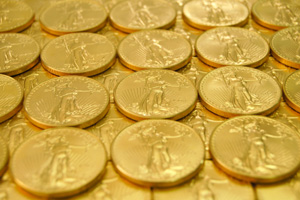
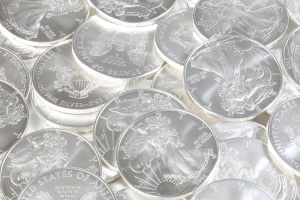
One of the most pronounced differences between gold and silver is the price per ounce. Gold is currently around $1,400 per ounce, while silver is at $30. The difference has not always been so large.

The gold-silver ratio, or the number of ounces of silver it takes to buy one ounce of gold, is currently around 47:1. Historically, this ratio has been around 16:1, which closely corresponds to the ratio of gold to silver within the earth’s crust. Thus on an absolute basis, the difference in price is justified, but not to such a degree as current prices have suggest.

Another key difference between gold and silver is the price volatility. While gold has enjoyed a string of ten straight years of annual gains, silver’s price performance has not been as constant. Some years have been downright disastrous, such as the 27% drop silver experienced during 2008. From the start of the year to the low, silver had experienced a decline of nearly 40%. During 2008, gold had booked a 4.32% gain, with a maximum decline of 14.54% from the start of the year.

Finally, while gold and silver are both metals that store value, silver has been long served as an industrial metal. The recent case for gold demand has been as a hedge against inflation or a safe harbor from fiat currencies. Demand from these factors has offset declines in demand from gold jewelry, which has historically been the predominant source of demand. Silver, on the other hand, can serve in a dual capacity, with possible appreciation in value in times of both economic distress and prosperity.

Silver’s roles may be expanding once again, as it is starting to be utilized for its antibacterial qualities.

With an impressive year nearly in the books, the story for silver seems hardly over. Next year might be telling as to whether silver will continue to make progress in catching up with the historic ratios and start to challenge the label of “poor man’s gold.”

2011 American Gold Eagle Release Date

The United States Mint will begin accepting orders from authorized purchasers for 2011 Gold Eagle bullion coins on January 3, 2011. This will coincide with the start of sales for the 2011-dated Silver Eagles.

Initially, the US Mint will only offer the one ounce version of the 2011 Gold Eagle. Each year since 1986, fractional weight coins have also been offered to accommodate different investment levels and provide greater flexibility. Other sizes include one-half ounce, one-quarter ounce, and one-tenth ounce coins. For the past two years, the Mint has released the one ounce coins first, with the fractional versions offered later in the year.

American Gold Eagles feature Augustus Saint Gaudens’ design used for the $20 double eagle, minted from 1907 to 1933, on the obverse. This is paired with an image depicting a family of eagles on the reverse, designed by Miley Busiek. The composition of the Gold Eagle is 22 karat, or 91.67% purity. Each coin contains its stated weight in pure gold.

As with other bullion coins, the US Mint utilizes a network of authorized purchasers to distribute Gold Eagles to the public. There are six primary distributors who may purchase gold bullion directly from the Mint. The price paid is determined based on the London PM Gold Fix on the date following the order date, plus a premium of 3% (for one ounce coins). The minimum order quantity is 1,000 ounces.

The US Mint will continue to sell 2010 Gold Eagles to authorized purchasers as long as inventories remain. Any 2010-dated coins remaining on January 3, 2011 will be sold on a ratio basis to authorized purchasers who order 2011-dated coins.

Gold and Silver: Investment Similarities

Gold and silver just seem to go together. They’re two precious metals that we love to invest in, especially after the strong performance of the metals during 2011, and gold’s string of consecutive annual gains stretching back a decade.

This year, gold futures have grown as much as 25% this year and silver futures as much as 75%. It’s this last figure that really interests us though. It is indicative of growing investor interest in a metal that is much more affordable than gold, but still offers many of the same benefits in the precious metals market.

Gold and Silver Investment Options

The major similarities that we can point to are related to the various ways that gold and silver are sold and traded among investors. In most cases, a potential investor has a few different options:

  • They can invest in bullion coins
  • They can invest in numismatic coins
  • They can invest in exchange traded funds or ETFs

Gold and silver bullion coins are produced by a number of different world mints. A few of the most widely traded options include the American Silver Eagle from the United States Mint, the Silver Maple Leaf from the Royal Canadian Mint, and the Silver Philharmonic from the Austrian Mint. These coins are issued each year and are generally sold based on the market price of silver plus a mark up. The mark ups might be $2.50 to $4.00 per coin, depending on the quantity purchased.

Numismatic gold and silver coins are those which are valued not only based on their intrinsic value, but also their rarity and condition. In some cases, a rise in the price of precious metals might not result in an increase in value for numismatic coins since other factors come into play. It takes some understanding of the coin market and grading scales to invest in numismatic coins.

For many beginning investors, Exchange Traded Funds provide a useful alternative. Precious metals ETFs are traded on stock exchanges in the same manner as stocks and generally track the price of the underlying metals. There are different types of ETFs, which use either physical metal or futures and contracts to track the price of the underlying metal. The largest and widely held precious metals ETFs are the SPDR Gold Shares ETF (GLD) and the iShares Silver Turst (SLV).

2011 American Silver Eagle Release Date

Sales of the 2011 Silver Eagle bullion coins will begin on Monday, January 3, 2011. This will mark the first day that authorized purchasers may place orders for the coins with the United States Mint.

The American Silver Eagle has been issued in bullion format each year since 1986. Each coin contains one troy ounce of .999 fine silver, with the weight and purity guaranteed by the United States government. The program was authorized by Congress to provide a convenient and cost effective method for Americans to invest in physical precious metals.

The United States Mint sells bullion coins to a small group of official distributors who resell the coins to secondary retailers who in turn sell to the public. This authorized purchaser system is believed to be the most effective and efficient means of distributing the coins to the public, although recently this has been called into question.

Under typical procedures, the group of eleven primary distributors will be able to place orders for 2011 Silver Eagle bullion coins directly with the US Mint. The price paid will be based on the London Silver Fix on the first business day following the order, plus a premium of $2.00 per coin. Minimum order requirements are for 25,000 ounces of silver per order, with orders above the minimum placed in 500 ounce increments.

The bullion Silver Eagles are packaged in plastic tubes containing 20 one-ounce coins. Twenty five tubes are placed into molded plastic shipping containers, containing 500 ounces of silver. The plastic tubes and shipping containers are imprinted with the United States Treasury Department Seal.

The United States Mint is currently selling 2010-dated Silver Eagles. If any inventory of these coins remains on January 3, 2011, the prior year coins will be sold on a ratio basis for any primary distributors placing orders for coins bearing the new date.

Four Approaches To Gold Investment

In its quest to determine the best way to make money from investing in gold, the Wall Street Journal recently took an in depth look at four different gold investment strategies. Each was represented by a preeminent investor, one whose method has seen some success recently.

Here’s what they had to say:

1. The first investor was John Paulson, who made his money by anticipating the economic crisis and acting accordingly. His current method of gold investment is to buy shares of large mining and exploration companies. The idea at work here, according to Paulson, is that “if gold prices do well, the miners will do even better . . . the higher gold prices go, the more miners can profit from potential and existing projects.” The downside here is that mining for gold is an expensive proposition, so the miners must make enough money to cover that expense before turning a profit.

2. The next investor discussed was billionaire Thomas Kaplan. He is focusing his investment funds on junior miners rather than the big mining companies that Paulson is currently interested in. His argument? These smaller companies are “sitting on valuable assets . . . providing the greatest leverage to a bull market.” He believes that these junior miners have a greater potential to go along with their greater risk.

3. The third investor, John Burbank prefers a different route. He focuses his attention on gold bar investment. Since the bars are an actual physical investment, he believes that they are more likely to return his investment than shares and contracts. According to Burbank, “If investors become concerned that shares and futures contracts aren’t fully backed by physical gold, or if inflation surges, they may begin to demand delivery of the metal, sending the price of physical gold soaring.”

4. The final investor, David Einhorn is also interested in bars, but in addition, he chooses to invest in exchange trade funds that own gold miners. He has also purchased call options or gold futures, which require a relatively small investment to control a large gold position.

New Partnership at La Bandera

A press release was distributed last week indicating the Aurion Resources Ltd has signed a binding letter of intent with Gammon Gold Inc. This letter of intent will ultimately give Gammon the option to earn up to a 70% interest in Aurion’s 100% owned La Bandera gold project in Durango Mexico.

Aurion acquired La Bandera only a year ago and since then, they have been working through the early exploration phases. By their own admission, they have been working to attract a joint venture partner. Gammon’s proven track record with similar mine building operations in Mexico makes them an attractive option for Aurion.

La Bandera

The La Bandera site contains an epithermal gold vein system that is more than 20 km long, but it has never been truly explored. Only seven drill holes were ever completed by previous workers. Still, there is evidence of widespread gold in quartz veins, breccias, and stockworks occurring over the length of the system.

Aurion aims to remedy that and according to its press release, “has outlined a more than 2300 m long by 300 m wide Au-in-soil geochemical anomaly coincident with a clay alteration zone which hosts widely spaced quartz veinlets. Individual soil samples assayed up to 2.07 g/t Au and individual rock chip samples of the quartz veins assayed up to 73.7 g/t Au.”

The Details of a Letter of Intent

The agreement between the two companies states that “Gammon can a earn an initial 51% interest by making $5 million in exploration expenditures over 36 months, including a firm commitment to spend a minimum $1 million in the first 12 months. Gammon can earn an additional 19% by completing a minimum $7 million in additional expenditures or by completing a positive feasibility study within 5 years of earning 51% and forming a Joint Venture.

In addition, Gammon will make a $250,000 private placement in Aurion, purchasing share units priced at a 30% premium to the 30-day moving average of Aurion’s share price as of the date of signing a Definitive Agreement. Each unit comes with a 1/2 warrant priced at a 50% premium to the 30-day moving average of Aurion share price, as of the date of signing a Definitive Agreement.