April 10, 2026

Gold Gains Slightly On Week While Silver, Platinum and Palladium Decline

Precious metals had a tough week as silver, platinum and palladium all declined, while gold registered a small gain.

As measured by the closing London PM Fix Price, gold gained $8.25 on the week after declining by $10.75 in the previous week.  Gold remains in a solid long term uptrend.  Since early 2009, gold has remained above its 40 day moving average and every dip to the 40 day moving average has followed with rallies to new highs for gold.

Gold’s last decline to the 40 day moving average in January of this year was subsequently followed by a rally of over $220 per ounce.  A correction to the 40 day moving average would bring gold back to the $1,400 level.
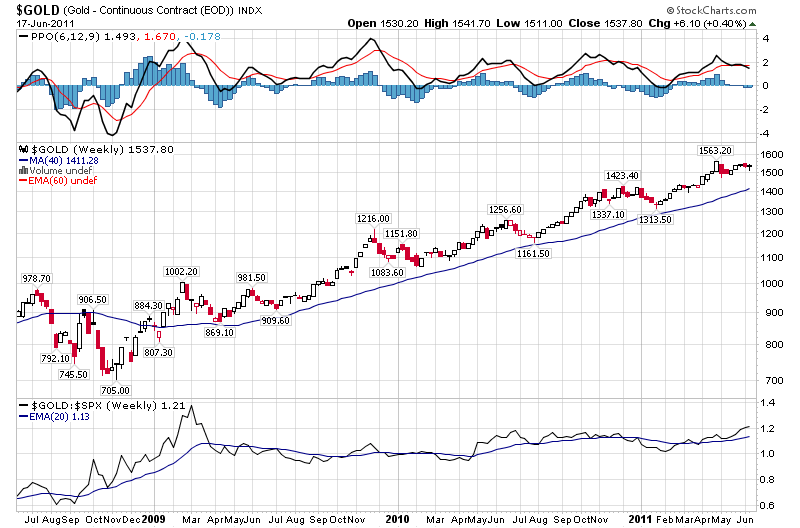
 

GOLD - COURTESY STOCKCHARTS.COM

Gold has held above $1,500 as world financial markets, oil and other commodities have declined substantially over economic worries.   As the European Central Bank struggles to prevent a Greek default that could trigger a series of other sovereign defaults, debt yields are soaring not only in Greece but also Spain, Portugal, Italy and Ireland.

Markets are beginning to reflect the unavoidable truth that we are reaching an end game where sovereign governments have become the new systemic risk to the financial system.  As debt burdened governments face the prospect of financial collapse and political unrest, the only option will be to sell new debt to the central banks who will buy the debt with newly printed money.  As central banks worldwide compete with each other in massive currency debasement, gold will soar to new highs beyond predictions of the boldest gold bulls.

As the slow motion collapse in Europe unfolds, investors in the U.S. seem resolute in the belief that “it can’t happen here, we are not Greece.”  This argument is rejected by Bill Gross who runs Pimco, one of the largest bond funds in the world.  According to Gross, who recently announced that he would stop buying U.S. Treasury debt, the U.S. is actually in worse shape than Greece.

The total debts of the U.S. government, including off balance sheet obligations for open ended social programs, totals $100 trillion.  Gross notes that “To think that we can reduce that within the space of a year or two is not a realistic assumption.  That’s much more than Greece, that’s much more than almost any other developed country.”

Critics who dismiss the warnings of Bill Gross point to the current level of low yields on U.S. treasury debt.  Why would the U.S. be able to sell its debt at such low rates if the finances of the United States are worse than Greece?  The answer is that crises develop in a linear fashion.  Investors don’t worry about credit risk until the crisis is upon them and suddenly everyone wakes up and panics.

Carmen Reinhart of Harvard and formerly of the IMF correctly predicted that a sovereign debt crisis would follow the financial crisis of 2008.  In a study of bond markets as a forecasting tool, Reinhart showed that rates are a poor forecaster of  repayment risk.  According to Reinhart, “Very often, interest rates are a coincident, rather than a leading indicator” of a looming financial crisis.

Preserving wealth during the next financial meltdown will require taking steps before the inevitable crisis develops.

Precious Metals Prices
PM Fix Since Last Recap
Gold $1,537.50 +8.25 (+0.54%)
Silver $35.39 -1.99(-5.32%)
Platinum $1,751.00 -78.00 (-4.26%)
Palladium $754.00 -61.00 (-7.48%)

Platinum had a volatile week, declining by $78 on the week to $1,751.00.  After moving up by $650 per ounce between July 2009 and May 2010, platinum has been consolidating its gains.  During 2011, platinum has remained in a narrow but volatile trading range between $1,700 and $1,850 per ounce as traders try to sort out whether the predominant demand for platinum is industrial usage or investor demand.

PLATINUM - COURTESY STOCKCHARTS.COM

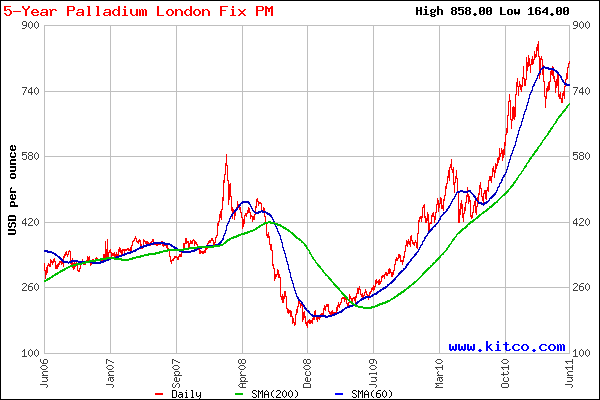
Palladium had the biggest decline in the precious metals group, falling by $61 per ounce for a loss of 7.48%.  After reaching a high on the year of $858 in February, palladium has been correcting in a sideways pattern.


PALLADIUM - COURTESY KITCO.COM

Silver declined by $1.99 on the week to $35.39 after a gain of $2.19 in the previous week.  After the sharp decline in early May, silver has been building a base in the $34 to $38 range.
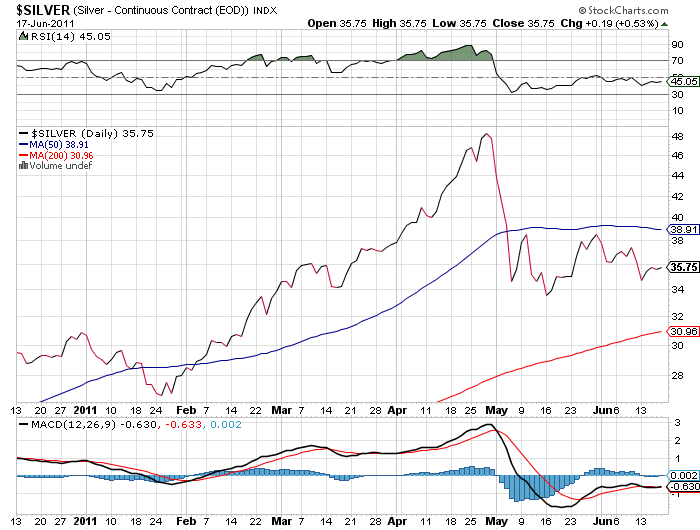
 

SILVER - COURTESY STOCKCHARTS.COM
Silver and Gold ETF Holdings Both Decline On Week

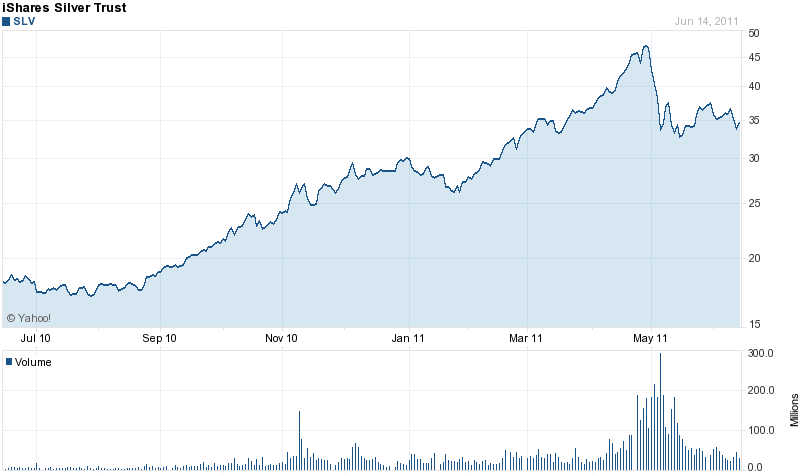
Holdings of the iShares Silver Trust (SLV) declined by 248.69 tonnes for the week after declining by 27.12 tonnes in the previous week.  The year to date decline of silver held by the SLV is 1,256.05 tonnes.

The holdings of the SLV hit an all time high on April 25, 2011 at 11,390.06 tonnes and the decline from this high now totals  a substantial 1,724.54 tonnes.  Total holdings of the SLV have declined by 15.1% from the high of April 25, while the price of silver has declined by 27.6%  from its high of $48.70 reached on April 28th.

Silver closed today at $35.26 (as measured by the closing London PM Fix price), up $8.58 from the low of the year at $26.68 reached on January 28th.  Shares of the SLV closed today at $34.88, down $13.47 from the high of the year at $48.35.


SLV - COURTESY YAHOO FINANCE

The iShares Silver Trust currently holds 310.8 million ounces of silver valued at $10.95 billion.  At the start of 2011, the SLV held 351.1 million ounces of silver valued at $10.9 billion.  The holdings of the iShares Silver Trust does not directly track the price movement in silver due to the manner in which it is structured.  For a discussion of how SLV shares are created or redeemed by Authorized Participants, see How Wall Street Made Profits On Silver ETF Crash.

According to the iShares website, the SLV closed yesterday at a premium of 2.54% to the fund’s net asset value.  On rare occasions when silver is exhibiting large price swings, the premium or discount to net asset value has been as large as 6%.

GLD and SLV Holdings (metric tonnes)

June 15-2011 Weekly Change YTD Change
GLD 1,200.05 -11.52 -80.67
SLV 9,665.52 -248.69 -1,256.05

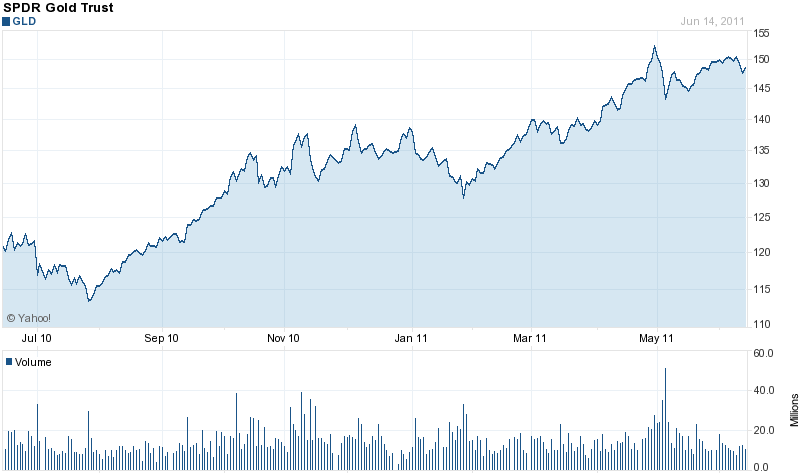
Holdings of the SPDR Gold Shares Trust (GLD) declined on the week by 11.52 tonnes, after declining in the previous week by 1.30 tonnes.  The GLD currently holds 38.58 million ounces of gold valued at $59.0 billion.  The all time record holdings of the GLD was 1,320.47 tonnes on June 29, 2010.

Gold traded in a narrow range over the past week, declining by $8 per ounce.  Gold has stayed above the $1,500 level since May 20th and has gained $141.25 since the beginning of the year.

Shares of the SPDR Gold Trust closed at $149.12, up $0.45, not far off the year’s high of $153.61.


GLD - COURTESY YAHOO FINANCE

Why A Gold Backed Currency Is No Longer Possible

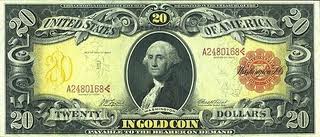
It is ironic that one of the most eloquent proponents of a gold standard did the most to ensure that we will never have one.  Alan Greenspan’s 1966 paper entitled “Gold and Economic Freedom” expounded on the role of a gold backed currency in protecting wealth against inflation by restricting the amount of money that could be produced.

Greenspan notes that the creation of the Federal Reserve was based on the premise that a central bank could supply increased reserves to banks when necessary and thereby offset natural turn downs in the business cycle.

“But the process of cure was misdiagnosed as the disease: if shortage of bank reserves was causing a business decline-argued economic interventionists-why not find a way of supplying increased reserves to the banks so they never need be short! If banks can continue to loan money indefinitely-it was claimed-there need never be any slumps in business. And so the Federal Reserve System was organized in 1913.”

It was not long before the Fed’s ability to allow unchecked credit expansion by banks laid the groundwork for the economic collapse know as the Great Depression.  Greenspan states that in an attempt to offset a mild business contraction in 1927, massive amounts of new bank reserves fostered a speculative boom ending with the Wall Street Crash of 1929.

“When business in the United States underwent a mild contraction in 1927, the Federal Reserve created more paper reserves in the hope of forestalling any possible bank reserve shortage… The excess credit which the Fed pumped into the economy spilled over into the stock market-triggering a fantastic speculative boom. Belatedly, Federal Reserve officials attempted to sop up the excess reserves and finally succeeded in braking the boom. But it was too late: by 1929 the speculative imbalances had become so overwhelming that the attempt precipitated a sharp retrenching and a consequent demoralizing of business confidence. As a result, the American economy collapsed. Great Britain fared even worse, and rather than absorb the full consequences of her previous folly, she abandoned the gold standard completely in 1931, tearing asunder what remained of the fabric of confidence and inducing a world-wide series of bank failures. The world economies plunged into the Great Depression of the 1930’s.”

Fast forward 75 years and we are looking at an eerily similar situation.  Unlimited credit creation by the Fed creates multiple asset bubbles that precipitate an economic crash and the dawn of Great Depression II.

Greenspan goes on to explain why there was ardent opposition to the gold standard despite the catastrophic results of unchecked  credit creation by the Fed in the 1920’s and why deficit spending is equivalent to the confiscation of wealth.

“But the opposition to the gold standard in any form-from a growing number of welfare-state advocates-was prompted by a much subtler insight: the realization that the gold standard is incompatible with chronic deficit spending (the hallmark of the welfare state).

In the absence of the gold standard, there is no way to protect savings from confiscation through inflation. There is no safe store of value. If there were, the government would have to make its holding illegal, as was done in the case of gold…The financial policy of the welfare state requires that there be no way for the owners of wealth to protect themselves.

This is the shabby secret of the welfare statists’ tirades against gold. Deficit spending is simply a scheme for the confiscation of wealth. Gold stands in the way of this insidious process. It stands as a protector of property rights.”

Ironically, the man who best understood the merits of a gold backed currency became the driving force behind the unlimited credit expansion that lead to the largest financial crisis in U.S. history.

Greenspan’s compromise of principles is beyond reproach for a man who understood the consequences of  ultra easy monetary policies, yet allowed himself to be corrupted by lobbyists, bankers and politicians.  Does anyone expect a better performance from current Fed Chairman Ben Bernanke, a man who blatantly prints money in an overt attempt to further debase the U.S. dollar?

Incredibly, Alan Greenspan disingenuously initiated another discussion on the need for a gold standard earlier this year.  In an interview with Fox News in January 2011,  Mr. Greenspan had the temerity to say:

“We have at this particular stage a fiat money which is essentially money printed by a government and it’s usually a central bank which is authorized to do so. Some mechanism has got to be in place that restricts the amount of money which is produced, either a gold standard or a currency board or something to that nature, because unless you do that, all of history suggest that inflation will take hold with very deleterious effects on economic activity.”

http://youtu.be/yRJs5yL62BA

Three conclusions can be reached regarding a U.S. gold standard:

1.  Mr. Greenspan should cease talk about a U.S. gold standard and the dangers of unlimited credit expansion – his previous record  speaks for itself.

2.  The ability of the U.S. to adopt a gold backed currency has been overwhelmed by the debt and leverage which now threaten to bring on a deflationary collapse.  Ben Bernanke knows this which is why he has been printing money on an unprecedented scale.

Ironically, the creation of new credit may be the only factor preventing us from sliding into a deflationary depression  triggered by massive debt defaults.  Ben Bernanke’s prescription of inciting inflation and curing excessive debt with more debt may be the only poor policy option remaining to forestall an unimaginable economic nightmare.  With the global economy tottering on the edge of another financial crisis,  the adoption of a gold standard by the U.S. remains a very remote possibility.

3.  Since the government is not interesting in preserving the value of our currency, individual initiative becomes necessary.  Ten years of rising gold prices tells us the smart money is not waiting for a gold backed currency but instead is turning directly to gold.

Ron Paul’s Call For Gold Backed Currency Would Value Gold At $54,300 Per Ounce

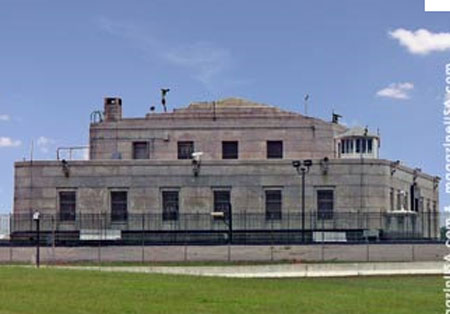
FORT KNOX

Ron Paul said today that the creation of a sound U.S. currency, “backed by gold or some other commodity respected by the market” was the most important first step to create new jobs and encourage capital investment in America.

In an article published on the Ron Paul website entitled “The Keys to Economic Growth“, Ron Paul argued that the U.S. economy was in “terrible shape” and that the trillions of dollars borrowed and printed by the U.S. government have done nothing to turn things around.  Rep. Paul noted that the real unemployment rate was closer to 20% rather than the officially published rate of 9.1% and that real job growth would only come from private capital financing existing business or entrepreneurial growth. New job growth will not occur, said Ron Paul, if we continue to punish those who accumulate capital needed for business expansion.

Ron Paul listed four essential steps that must be taken to turn around the American economy through new job creation.

  1. The U.S. economy cannot be restored, according to Ron Paul, until we “prohibit the Treasury and Federal Reserve from essentially creating money and credit from thin air.”  A currency that is rapidly being debased will not attract private capital.  In order to ensure a sound currency, the dollar should have its value legitimatized via gold or commodity convertibility.
  2. The extreme regulatory burdens on business have greatly inhibited job growth.  The vast bureaucracies and compliance nightmares being created by Obamacare and the Dodd-Frank Act have served to choke off business growth and new jobs since businesses cannot cope with “unknowable regulatory compliance burdens.”   Rep. Paul said it is time to “start shrinking the federal registry.”
  3. The trillion of borrowed dollars spent on foreign wars has reduced our economic growth by sapping the private sector and increasing the Federal debt. Rep. Paul declared that “There is no point in debating a foreign policy we cannot afford.”
  4. According to Ron Paul, the U.S. tax system needs to be revamped to allow U.S. foreign income to be repatriated tax free to the U.S. to allow the funds to be deployed in the domestic economy.   Ron Paul also said it would be better to simply “abolish the income tax altogether.”

Ron Paul noted that free market capitalism and respect for property rights was essential in allowing the creation of U.S. wealth.  The poorest nations on earth routinely demonstrate hostility to free markets, private property and the rule of law, with the predictable result of widespread poverty.

Ron Paul’s attempt to preserve the integrity of the U.S. dollar by backing the currency with gold has little chance of succeeding.  A gold backed currency would prevent Congress and the Fed from running deficits and printing money, something they would fight to avoid at all costs.

It is interesting to speculate, however, on what the value of gold would need to be to in order to back the massive debts and obligations that the U.S. government has piled up.  The United States has issued the most amount of debt of any nation on earth.  Ignoring the trillions in unfunded and off balance sheet obligations, the United States has official debt of $14.2 trillion dollars outstanding, including both marketable Treasuries and intergovernmental debt.

If the U.S. used its official gold reserves of 261.5 million ounces to back the $14.2 trillion of U.S. debt, gold would need to be valued at $54,300 per ounce.


Why Gold Stocks Are A Better Value Than Physical Gold Or Gold ETFs

Many investors in gold mining companies are probably asking “where did I go wrong”?   While the price of gold bullion has moved relentlessly higher,  many large cap gold stocks have seen little or no price appreciation in recent years.

In a previous post, we examined the poor returns of two major gold stock mutual funds compared to the return on owning physical gold.  While the price of gold has soared 80% over the past three years, the three year return on the Vanguard Precious Metals Fund (VGPMX) was -.46% and the three year return on the Fidelity Select Gold Portfolio (FSAGX) was only 16.2%.

Why gold stocks have so badly lagged the run up in the price of gold remains subject to conjecture.  Some analysts speculate that investors prefer to avoid the risks associated with gold mining stocks and as a result have turned to physical gold and gold ETFs.  Since their introduction in 2004, gold ETFs have become very popular with investors, and now hold a total of almost $98 billion in assets.  By way of comparison, the market value of three of the largest gold mining companies, Barrick Gold (ABX), Gold Corp (GG) and Newmont Mining (NEM) total $108 billion.

If the gold ETFs did not exist, it is likely that some of the funds that flowed to gold ETFs would have instead flowed into gold mining companies.  However, the historical correlation between gold bullion and gold mining stocks has not always been perfectly linked.  There have been times when gold stocks outperformed or simply matched the price gains of gold bullion.

The recent under performance of gold stocks relative to gold bullion will probably not continue.  Many large cap gold mining companies are positioned to see significant increases in earnings that will eventually propel their stock prices higher.  Going forward, it is likely that gold investors will see higher returns on quality gold mining stocks than on holdings of physical gold or gold ETFs.

Two high quality gold mining companies previously featured in the GoldandSilverBlog that should see significant price gains are Newmont Gold (NEM) and Kinross Gold (KGC).

Newmont Gold is one of the world’s largest gold producers.  The Company has been increasing profits and production for several years and is forecasting an increase in gold production of 35% over the next six years.  Newmont has gold and copper reserves valued at $363 per share and pays a cash dividend of $0.50 per share which will be increased by $0.20 for every $100 increase in the price of gold.  Newmont shares closed on Friday at $52.10.

Kinross Gold had very strong first quarter results with revenue up 42% and earnings up 81%.  The Company’s cost of production is $543 per ounce and Kinross is forecasting an increase in gold production of 77% by 2015.  At the current price of $15.50 per share, an investor is effectively buying gold at around $250 per ounce.  Kinross Gold pays a dividend of $.10 per share.

The current pricing disparity between quality gold mining stocks and gold bullion has presented investors with an opportunity to purchase gold shares at deeply discounted prices.

Besides being able to effectively buy gold at a steep discount, gold mining companies pay dividends which are likely to increase substantially.   Another significant benefit of owning gold mining companies is the much more favorable tax treatment on gains.  Gold bullion and gold ETFs are taxed as collectibles at 28%, while the long term capital gains tax rate on gold stocks is only 15%.

Gold Down Slightly On Week While Silver, Platinum and Palladium Advance

Gold pulled back slightly on the week while silver, platinum and palladium registered strong gains.

As measured by the London PM Fix Price, gold gave up $10.75 on the week, while silver advanced by $2.19 for over a 6% gain.  Gold remains in a solid uptrend while silver has traded in a narrow range in the mid to high $30’s after the early May sell off.

Platinum continued its winning ways with a $22 dollar gain after picking up $21 in the previous week.  As noted last week, platinum sells below the price at which new mine expansion is profitable.   A price of $2,100 per ounce in necessary in order to motivate platinum miners to expand exploration and production.

In addition, the platinum to palladium ratio is only 2.2 compared to a historical ratio of 3.0 to 4.0, suggesting that platinum is undervalued relative to palladium. Platinum prices have been in a narrow price range between $1,500 and $1,840 since the beginning of 2010.   A breakout above $1,900 could lead to sharply higher prices.

After advancing by $13 per ounce last week, palladium jumped by $45 on the week.  Palladium had a huge run from 1996 to 2000 when the price moved up from $100 to $1,100.  During the worst part of the financial crisis in 2008, palladium dipped below $200 but has since been in a strong uptrend.


Palladium - Courtesy kitco.com

Although some might have expected gold to move up strongly in the face of steep sell offs in the financial markets and the looming threat of a debt ceiling stalemate, the uptrend in gold remains intact.

Anyone doubting the long term value of gold as a store of value versus the paper dollar can reflect on this week’s USA Today column  disclosing the precarious state of U.S. government finances.  Unfunded and off balance sheet financial commitments of the U.S. for government pensions, social security and medicare amount to $527,000 per household.

Precious Metals Prices
PM Fix Since Last Recap
Gold $1,529.25 -10.75 (-0.70%)
Silver $37.38 +2.19(+6.22%)
Platinum $1,829.00 +22.00 (+1.22%)
Palladium $815.00 +45.00 (+5.84%)

The Government has clearly made promises that are economically unfeasible.  What will happen when millions of people, with a strong sense of entitlement and blind belief in the Government, suddenly stop receiving benefit checks?  Or if the checks do keep coming (by virtue of the printing press) of what value will they be?

Perth Mint Introduces Stunning Silver Proof Coins

The Perth Mint has offered a variety of stunningly beautiful coins over the years.  As an investor/collector, it is particularly appealing to purchase coins that not only have the intrinsic value of precious metals but also offer a magnificent coin design.

The latest offerings from the Perth Mint highlight their artistry in producing coins with colorization.  The limited mintage coins are not only enjoyable to own and display but also make excellent gifts, especially for those who have never owned precious metal coins.

The three latest silver proof coins from the Perth Mint illustrate that investing in precious metals can not only be profitable but also enjoyable.

Australian Sea Life II – The Reef – Hawksbill Turtle

This coin’s reverse features the endangered Hawksbill Turtle which lives in the coral reefs of northern Australia.  The silver proof coin’s mintage is limited to only 10,000 coins and is offered in 1/2 ounce size 99.9% pure silver.  The coin’s obverse depicts Her Majesty Queen Elizabeth along with the 2011 year date.  A display case is included with the coin.  The cost of the coin in US dollars is $65.20.

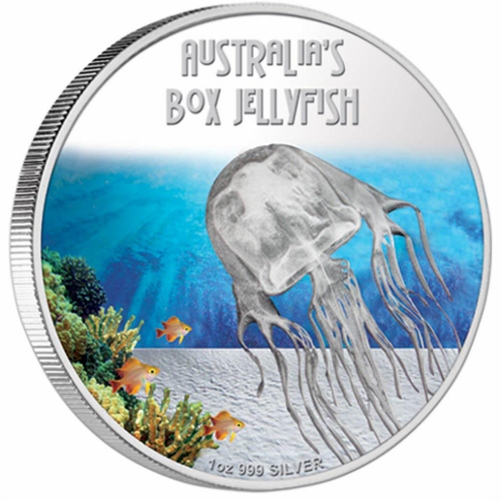
Australia’s Box Jellyfish 1 oz Silver Proof Coin

Depicting the deadly box jellyfish on the coin’s reverse and offered in 99.9% pure silver, this 1 ounce coin has extremely limited mintage of 5,000.  The obverse of the coin features Her Majesty Queen Elizabeth II and also the monetary denomination.  A high gloss timber presentation case houses each coin.  The cost of the coin in US dollars in $112.04.

Transformers III – 1 oz Silver Proof Trio

Transformers III comes as a three coin set with mintage limited at 5,000 coins. Featured on the respective coin’s reverse are colorized depictions of Bumblebee, Optimus Prime and Megatron.  Each 1 ounce coin is struck in proof quality 99.9% pure silver and the obverse depicts Her Majesty Queen Elizabeth.  Each coin comes housed in a clear presentation box.  The cost of the three coin set in US dollars is $288.82.

While the Perth Mint offers a wide variety of coins, many in limited mintage, the U.S. Mint has taken the opposite approach based on the theory that not every collector who wanted the coin would be able to purchase it.   Neither has the U.S. Mint ever produced coins with colorization and many of the U.S. coin designs are dated.

The U.S. Mint should consider producing limited mintage coins with more imaginative designs to create some product excitement and expand the universe of coin and precious metal collectors/investors.


How Soon Will Silver Hit New Highs?

The recent sharp price correction in silver has left many wondering how long it will take before silver recovers and moves on to new highs.

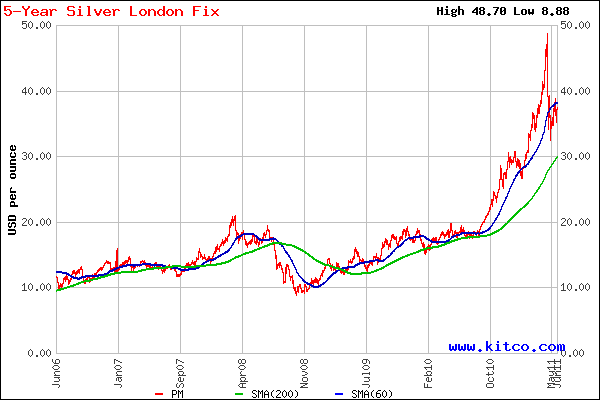
Since hitting its April 28th peak price of $48.70 (as measured by the closing London PM Fix Price) silver declined to a low of $32.50 on May 12, for a loss of $16.20 per ounce or 33.3%.

Looking at the last major price correction in silver which occurred in 2008, we find that the 2011 correction is far less severe.   Silver hit a high of $20.92 per ounce on March 17, 2008 and then proceeded to consolidate until late July.  In August 2008, the financial crisis entered its worst phase and asset classes of every type were driven lower by panic selling and forced liquidation.

On October 24, 2008, silver reached its low at $8.88 and then began a recovery phase, closing at $10.79 per ounce on December 31, 2008.  From the March 2008 high to the October 2008 low, silver dropped by a shocking 57.6%.


SILVER - COURTESY KITCO.COM


From the lows of 2008, silver never looked back and rose to higher highs throughout 2009, closing the year at $16.99 per ounce.  The upward trend continued during 2010 and silver finally closed above the March 2008 high in September of 2010.  Silver continued to gain momentum through the final three months of 2010 and closed at $30.63 per ounce on December 31, 2010.

It took two and a half years (30 months) for silver to fully recover from the price correction of 2008.  For a variety of reasons, the recovery to new highs in silver from the May 2011 sell off should be much shorter.

Authorities were unprepared for the financial meltdown of 2008 and were completely caught off guard as to the severity of the crisis.  In February 2008, just prior to the collapse of major banking institutions, Fed Chairman Bernanke said “I expect there will be some failures.  I don’t anticipate any serious problems of that sort among the large internationally active banks that make up a very substantial part of our banking system.”  It was only months later that almost every large bank in the country was on the verge of failing.

At mid year 2008, the highest ranking financial officials in the U.S. Government could still not see the financial meltdown that was imminent.  In June 2008, Fed Chairman Bernanke said the danger of the economy falling into a “substantial downturn” appears to have waned.  Literally days later, the global financial system was on the verge of collapse.

The system has not been fixed since 2008, despite the expenditure of trillions of dollars by governments and central banks to restore financial stability.  The attempt to solve the problem of too much debt by extending additional credit has failed – the cure cannot be the same as the disease.

Every economic indicator is now pointing towards another global slowdown and this time the insolvency threats extend to numerous sovereign entities which will make containment of a financial crisis more difficult.   Above all else, the world of paper currencies relies upon confidence.  Who is going to be confident that insolvent sovereign States can come to the rescue in Financial Crisis II?

Global authorities do not want to risk a replay of 2008 when the entire financial system came within a heartbeat of collapsing.  At the first signs of a potential financial crisis, central banks will use the only tool they have left and flood the world with printing press money.  The alternative is to risk a full blown Financial Crisis II which ultimately may not be containable.  As the prospects for massive quantitative easing intensify, investors seeking to preserve their wealth will turn to precious metals driving prices sharply higher.

Looking back a year from now, investors will realize in hindsight that the price dip of May 2011 represented the best buying opportunity in silver since October 2008.


Inflation Is “Transitory” – More Nonsense From Bernanke And A Buy Signal For Gold

Federal Reserve

Federal Reserve Chairman Ben Bernanke, speaking at a conference of international bankers in Atlanta today, stated that “the recent increase in inflation will prove transitory.”   Citing the recent decline in commodity prices as an indication that future inflation will be subdued, Bernanke said the Fed will keep inflation under control “using whatever actions are necessary.”

It’s been awhile since a senior U.S. official had the audacity to assert official U.S. policy that is in direct contradiction to actual U.S. actions.   In June 2009, US Secretary Treasurer Tim Geithner told an audience of Chinese students in Beijing that the Obama administration would follow “very disciplined”  spending to reduce massive U.S. budget deficits.  In addition, Geithner stated that “We believe in a strong dollar.”

Finally, in response to concerns by Chinese economists who believed that holding U.S. debt was “risky, Geithner stated that “Chinese assets are very safe.” This final remark drew loud laughter from the audience of Chinese students.

The Chinese are not laughing today as the dollar has plunged in value and U.S. deficits have increased by trillions of dollars since 2009.

As the U.S. dollar continues its downward spiral, the Chinese have initiated actions to diversity out of U.S. dollars and into more stable stores of value by making large investments in natural resources and purchasing stakes in businesses worldwide.  The Chinese were not fooled in 2009 and Bernanke is not fooling anyone today by stating that inflation is transitory.

Bernanke was fortunate that his audience consisted of polite bankers who managed to subdue any overt laughter.  Inflation has been a continual event under our fiat monetary system.   Since officially coming off the gold standard in 1973, the dollar has seen a relentless loss of its value due to inflation and Bernanke knows it.

Bernanke also knows that his worse enemy is deflation which would make the repayment of debts impossible and propel the U.S. into a deep depression.  The U.S. cannot resolve its massive debt and unfunded spending commitments by either economic growth or increased taxation.  The only option left is inflation, which steals wealth by destroying purchasing power, but also allows debts to be repaid using debased dollars.   The Federal Reserve has consistently employed inflationary policies as shown by the BLS chart below.

Even as Bernanke was giving solemn assertions that the Fed would be vigilant in protecting the value of the dollar, the President of the Federal Reserve Bank of Atlanta, Dennis Lockhart, said that the Fed should establish a goal of 2% inflation as an “explicit numerical objective.”  Sorry Dennis, we are already way past 2% inflation.  An inflation rate of 2% may not ring alarm bells to the American public, but a 2% inflation rate equates to a whopping 18% loss of purchasing power over 10 years.

Despite Bernanke’s duplicitous assertion that the Fed will contain inflation “using whatever actions are necessary”, his greatest fear remains deflation. At the Fed’s 2010 summer meeting at Jackson Hole, Wyoming, Bernanke said the Fed would be “proactive” in preventing deflation and that  “The Federal Open Market Committee will strongly resist deviations from price stability in the downward direction.”

The relentless rise in the price of gold directly reflects the dollar debasement policies of the Federal Reserve.  Today’s statements by both Bernanke and Lockhart constitute a long term buy signal for gold investors.


A Large Cap Gold Stock That Could Double In Price

Many small cap gold mining companies have seen significant price gains, while large cap gold stocks have underperformed.  With fundamentals driving the price of gold steadily higher, many large cap gold mining companies are perfectly positioned to see large earnings increases that will propel their stock prices higher.

One large cap gold mining company that could be on the verge of doubling in price over the next few years is Newmont Mining Corporation (NEM).   The stock has underperformed other large cap gold mining companies despite the fact that the company’s fundamentals have dramatically improved over the past few years.  The improved fundamentals, once recognized by the market, are likely to push Newmont’s stock price much higher.

Newmont Mining is one of the world’s largest gold producers with operations in Ghana, Indonesia, Nevada, Australia, New Zealand, Peru, Canada and Mexico.  For the past three years, Newmont Mining has been positioning itself for future growth through financial and operational restructuring and is now poised for additional significant growth in revenue and profits.

Revenues have grown from $6.1 billion in 2008 to $9.5 billion for the year ending December 31, 2010.  During the past three years, gold production increased by only 3.7% from 5.2 million ounces in 2008 to 5.4 million ounces in 2010.  The majority of revenue increases over the past three years were driven by increased gold prices, but Newmont is forecasting an increase in gold production of 35% over the next six years to 7 million ounces annually.  The combination of increased gold production and higher gold prices could result in explosive earnings growth.

Newmont Mining has proven and probable gold reserves of 93.5 million ounces, equivalent to $285 per share.   Newmont is also a major copper producer with proven and probable reserves of 9.4 billion pounds, equivalent to 19.1 pounds per share.   The value of copper reserves is worth approximately $78 per share.   In 2010, Newmont produced 327 million pounds of copper.

Gold reserves are expected to increase based on the Company’s global portfolio and continual exploration efforts.

The Company paid shareholders a cash dividend of $0.50 per share in 2010 and expects to increase this by $0.20 per share for every $100 increase in the price of gold.

Newmont Mining has an extremely strong balance sheet with $5.6 billion in cash at year end 2010.   According to the Company’s annual report, Newmont offers investors the “best per-share gold-price leverage in the industry.  Every $100 increase in gold price translates into approximately $350 in additional after-tax operating cash flows, or approximately $0.70 per share.  We deliver better gold price leverage than any of our competitors.”

Newmont Mining’s stock price of $53.44 at today’s close is actually lower than five years ago when it traded at about $55 in early July 2006.


NEWMONT MINING - COURTESY YAHOO FINANCE

Newmont Mining trades at a low price earnings ratio of 12 and pays a 1.5% annual dividend.  Based on the Company’s recent results and bright prospects for future revenue and profit growth, it is only a matter of time before investors drive the stock price higher.  Many other major gold producers have price earnings ratios in the low 20’s or higher.  If Newmont Mining sold at a PE ratio in the low 20’s, the stock’s price would be over $100 per share.