April 13, 2026

Monthly American Silver Eagle Sales Already in Record Territory

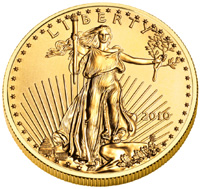
Gold and silver bullion coin sales at the United States Mint are showing exceptional strength. In the past week, authorized purchasers ordered 1,181,000 ounces worth of American Silver Eagles and 32,000 ounces worth of American Gold Eagles.

For the Silver Eagle bullion coins, total sales for the month have now risen to 4,588,000 ounces. With the month not even two-third complete, this total already represents a new record high for monthly silver bullion sales. The previous monthly sales record of 4,260,000 ounces was set in November 2010.

On January 3, the US Mint had begun sales of the 2011 Silver Eagle. Strong initial sales are typical when newly dated coins are available, however the strength has persisted, suggesting other factors are at play. Some new investors may making purchases following silver’s stellar performance during 2010. Existing investors may be adding to positions after silver experienced a brief 7% decline.

US Mint Mint Bullion Coin Program Sales 1/19/2011 (ounces)

Prior Week Year to Date
American Silver Eagle 1,181,000 4,588,000
American Gold Eagle 32,000 75,500
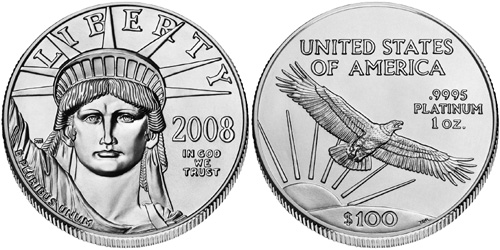
American Platinum Eagle 0 0
American Gold Buffalo 0 0

For the year to date, the US Mint has now sold 75,500 ounces worth of Gold Eagle bullion coins. This is comprised of 73,000 one ounce coins, 1,000 one-half ounce coins, 2,000 one-quarter ounce coins, and 15,000 one-tenth ounce coins. Sales of the 2011-dated one ounce coins began on January 3. Sales of the fractional weight coins are remaining 2010-dated coins.

The month to date total for gold bullion sales now approaches the full month sales level for the year ago period, when 85,000 ounces were sold.
US Mint Added New Silver Blank Supplier in 2010

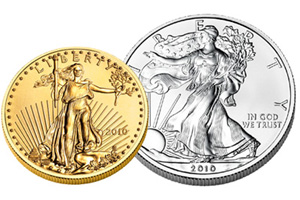
For much of the past three years, the United States Mint has struggled to keep up with the boom in demand for physical precious metals. Although they have been required to mint and issue American Gold and Silver Eagle bullion coins in quantities sufficient to meet public demand, they have often fallen short of this mandate, resorting to sales suspensions and rationing programs.

The US Mint’s 2010 Annual Report details some of the specific steps they have taken to increase the quantity of precious metals blanks that they are able to acquire:

  • The US Mint worked with their existing precious metals blanks fabricators to revise delivery schedules to fit production levels. Level loading materials allowed these fabricators to increase productivity and increase output.
  • A new silver blank fabricator began delivering blanks late in the fiscal year. The US Mint also continues to pursue additional suppliers. The reliance on a small number of foreign suppliers was previous noted as the “heart of the problem” in the US Mint’s struggle to manufacture sufficient gold and silver bullion coins.
  • Productivity and efficiency enhancements were implemented at the West Point Mint. Coin encapsulation and packaging processes were automated, employees were trained to handle more areas of responsibility, and coordination with suppliers allowed continuous assaying, inspection, and coin production to take place.

The US Mint cited the results of their efforts during the year:

  • The average monthly supply of all gold and silver blanks from vendors increased from 2.6 million ounces to 4.1 million ounces.
  • Output at the West Point Mint increased from 175 ounces per labor hour to 215 ounces per labor hour.
  • By August 2010, the US Mint had sufficiently expanded supply to remove order limits and fully satisfy demand for silver bullion coins by August 2010.
  • Popular numismatic products like the 2010 Proof Gold Eagles and 2010 Proof Silver Eagles were launched in October and November 2010. These offerings had been canceled in the previous year.

China’s Emerging Influence in the Gold Market

China and its people have a long held interest in the gold market. The country’s history has been marked by periods of unrest, and its people have regularly chosen to heed history’s warnings when it comes to investment. Their general preference has been for investments that they perceive as safe and solid, as opposed to paper instruments. Thus, their top two investment choices are gold and real estate.

During the course of 2010, China’s gold imports grew nearly 500 percent. What is most surprising is that we have this information at all. Normally China is quite secretive about their gold investments and imports.

China Comes Out

Further information on the Chinese gold market reveals that turnover on the Shanghai Gold Exchanges for the first three quarters of 2010 exceeded total global identifiable demand. The number of individual customers on the exchange neared 1.6 million.

When you also consider the fact that China is the world’s top gold producer and the recent joint announcement of ministry promotion of the gold market—its easy to see why China is considered to be a force to be reckoned with in the 2011 gold investment market.

Searching for Gold

The gloves are finally off after all. China has announced its first gold mutual fund and investment demand in the country is increasing from both individual and governmental sources. The country has positively connected their future development of the gold market to the competitiveness of financial markets and made it known to the world that they don’t plan to keep their movements quiet anymore.

Sensible investors and analysts are taking China’s actions into account when trying to predict the movements of the gold market for the coming year. After all, no one wants to ignore one of the biggest players in the room.

Are Investors Abandoning Gold?

The Associated Press reported that gold and silver are responding to an improved U.S. economy by losing ground in the investment market. Since the start of the year, gold has dropped nearly $50 per ounce, measuring a decline of about 3.5% while silver has fallen by $2.31 per ounce, or 7.5%.
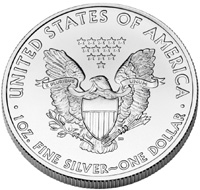
Some experts are responding by beginning to question the continued duration of the record interest in gold and other precious metals. They’re looking for signs that the bubble might pop in the face of predictions about gold’s strength.

Looking at Safety?

In their article, the Associated Press looks at gold and silver prices and suggests that as a consequence of the potential comeback in the U.S. economy, investors are willing to risk abandoning safe haven investments in order to seek out something a little more risky.

During the recent years of economic uncertainty, many investors responded by moving their funds into precious metals like gold and silver. Now that things are looking up, investors are reconsidering that choice in order to seek out more lucrative investment opportunities.

Looking to the Future

It is only the third week of 2011, however, so it remains to be seen whether this movement is real or perceived. No doubt, the state of the economy will give us some hints.

After a decade of stellar performance for gold, we may need to reassess based on the changes in the world economy, if not the production levels of the metal itself. In the meantime, however, gold will remain the commodity to watch and enjoy among investors everywhere.

US Mint 2011 American Silver Eagles Selling Quickly

United States Mint bullion coin sales remained robust for the two available options. In the prior week, authorized purchasers ordered 1,322,000 ounces of American Silver Eagles and 25,000 ounces of American Gold Eagles.

For bullion coin programs, the US Mint does not sell directly to the public, but distributes the coins through a network of authorized purchasers. A group of 11 primary distributors can order coins in bulk quantities from the Mint based on the market price of the precious metals, plus a mark up. In turn, they resell the coins to other precious metals dealers, coin dealers, and the public, as well as facilitate a two way market for the bullion coins.

The US Mint began sales of 2011-dated Gold and Silver Eagles on January 3, 2011. Because inventory of 2010-dated coins remained, the Mint required authorized purchasers to order the newer coins on a ratio basis. For every five 2011 Silver Eagles ordered, they were required to take one 2010 Silver Eagle. For Gold Eagles, the AP’s could order four 2011 coins for every one 2010 coin.

At this time, the US Mint only has available one ounce 2011 Gold Eagles, with fractional weight coins planned to be issued later in the year. The American Silver Eagle is only produced in one ounce size. The release dates for the 2011-dated American Platinum Eagle and 24 karat American Gold Buffalo coins have not yet been announced.

So far, the month of January 2011 is shaping up to be a strong one for silver bullion sales. The past week’s orders for 1,322,000 ounces, bring the monthly (and year to date) total to 3,407,000. In January 2010, the US Mint had sold 3,592,000 ounces for the entire month.

US Mint Mint Bullion Coin Program Sales 1/12/2011 (ounces)

Prior Week Year to Date
American Silver Eagle 1,322,000 3,407,000
American Gold Eagle 25,000 43,500
American Platinum Eagle 0 0
American Gold Buffalo 0 0

Gold and Silver ETF Holdings Decline As Precious Metals Continue Sideways Price Action

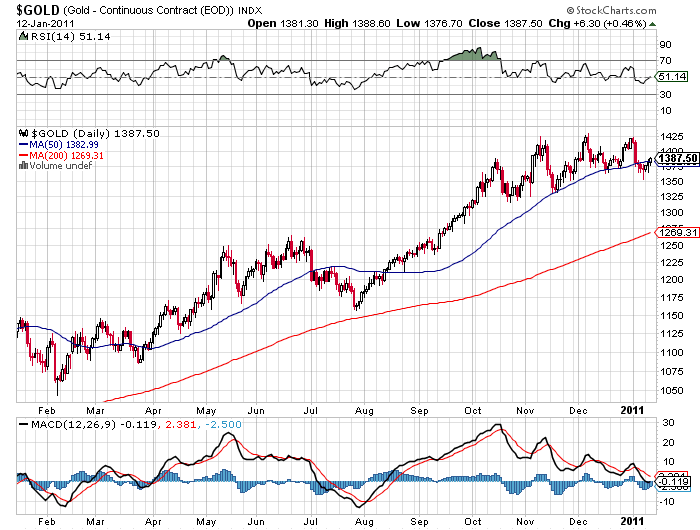
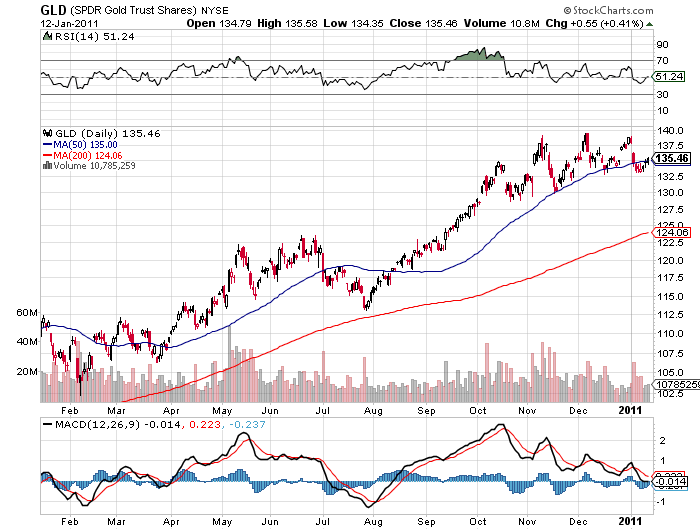
After major upward price movement during the later half of 2010, both the SLV and GLD continue their sideway price action.

As gold and silver prices continue to consolidate, gold holdings in the SPDR Gold Shares Trust (GLD) and silver holdings in the iShares Silver Trust (SLV)  both declined.

The iShares Silver Trust, the largest exchange traded fund back by silver, has a market value of $10.2 billion.  After a one year return of almost 80%, the SLV showed a weekly decline of 191.46 metric tonnes from the previous week.  The SLV now holds a total of 10,725.73 metric tonnes of silver or 344.840 million ounces.

The holdings in the GLD declined by 1.21 metric tonnes in the past week to 1,271.47.  The record high holdings of 1,320.47 tonnes in the GLD was reached last year on June 29 when gold bullion was trading in the $1250 range.

Despite the lack of correlation between gold prices and gold holdings of the GLD, investing in the GLD has produced approximately similar returns to owning bullion, disregarding transaction costs.  The price gain during 2010 was approximately 28% for both gold bullion and the GLD.   For those who choose to avoid holding the physical metal, the GLD was an excellent substitute choice for gold bullion in 2010.

GLD and SLV Holdings (metric tons)

Jan 12, 2011 Weekly Change YTD Change
GLD 1,271.47 -1.21 -9.25
SLV 10,725.73 -191.46 -195.84

GOLD - COURTESY STOCKCHARTS.COM

GLD - COURTESY STOCKCHARTS.COM

Gold and Silver Recap: Back to Work

Another Precious Week

So the holiday season, with decent job creation statistics, has seen some uncustomary cheer for the dollar, and on the face of it this seems to be the main driver for the weakness of gold and silver prices.  After all if you’re priced in dollars, and the dollar goes up then your price goes down.  The last week has been particularly bad for gold, with a 3.5% fall (the figures below cover the whole of the holiday period) which is the largest week on week fall for six months.

The long term trend still looks like it’s going to be up, as the Central Banks are starting to buy gold, apart from the Fed – although if Ron Paul gets his way then Uncle Sam may stop being a hold out as well.

Precious Metals Prices
Fri PM Fix Since Last Recap
Gold $1,367.00 -1.50 (-0.11%)
Silver $28.39 -0.39 (-1.36%)
Platinum $1,735.00 +39.00 (+2.30%)
Palladium $754.00 +16.00 (+2.17%)

Gold-Silver Ratio: 48.15 (was 47.55)

So far the Central Banks that are buying gold are the scary ones; Russia, China and Venezuela.  But one of the more interesting things is that they are doing this in secret.  If it was an attempt to finish off the dollar then this would be in the open.  No, they are seeing gold as an integral, and underweight part of the reserves that are going to underpin their currencies in the future.  In other words an unofficial, secretive return to the gold standard.  This sort of thing is not a long run dampener on the gold price.

Silver also did badly, which was shown in a rather big slip in the gold silver ratio.  If the idea is that silver is priced around a third of its long term price when compared to gold, well it shouldn’t be going in this direction.  Now I don’t fully buy the idea that silver has got to come to around fifteen ounces to an ounce of gold, or at least any time soon.  But it hard to deny that it is out of balance.

What is even odder is that platinum and palladium have seen a large rise over the holiday period.  While gold can have a life of its own, and it’s true that palladium can have more to do with what the Russian ministry of mines is up to, silver and platinum are quite similar.  While platinum and palladium have seemed to be riding the same industrial metal climb as copper, silver seems to have decoupled with the feeling that perhaps we’ve overestimated the inflationary potential for the dollar with the classic inflation hedge of silver taking the hit.

Gold and Silver ETF Holdings Mixed Amidst Price Decline

Over the past week, gold holdings in the SPDR Gold Shares Trust (GLD) fell, while silver holdings in the iShares Silver Turst (SLV) rose. These changes occurred amidst a decline in the price of the metals and a buoyant stock market.

The iShares Silver Trust, which represents the largest exchange traded fund backed by silver, increased by 13.85 metric tons from the previous week. Total holdings are now 10,917.19 metric tons, or 350.996 million ounces.

Holdings within the SPDR Gold Trust fell by 11.38 metric tonnes in the past week to 1,272.68. Trust holdings had reached a record high of 1,320.47 on June 29, 2010. The decline in holdings from the high is now 47.79 metric tons, or 3.6%. During the same period the price of gold has risen by more than 10%.

GLD and SLV Holdings (metric tons)

Jan 5, 2011 Weekly Change YTD Change
GLD 1,272.68 -11.38 -8.04
SLV 10,917.19 +13.85 +4.38

US Mint Platinum Bullion Coins a No-Show for 2010

For the second year in a row, the United States Mint did not offer platinum bullion coins for precious metals investors. Bullion products available from the US Mint during 2010 included only gold and silver coins.

The American Platinum Eagle was last available to the US Mint’s network of authorized purchasers in November 2008 when the last 800 one-half ounce coins available had been sold. Immediately following the sell out, the Mint announced the delayed launch of 2009-dated bullion coins, including the Platinum Eagles.

Since that time, Platinum Eagle bullion coins have not been available in any format. When the coins were previously available, authorized purchasers were able to buy the coins from the Mint based on the market price of platinum plus a mark up of 4%, 6%, 10%, and 15% for one ounce, one-half ounce, one-quarter ounce, and one-tenth ounce bullion coins. Of the United States Mint’s eleven authorized purchasers, five are approved to order platinum coins.

Collector versions of the American Platinum Eagle have been available for the past two years in limited quantities. The one ounce 2009 Proof Platinum Eagle went on sale December 3, 2009 and sold out of the maximum authorized mintage of 8,000 coins within a week.The coins were priced at $1,792 each.

The 2010 Proof Platinum Eagle was offered on August 12, 2010 with a maximum mintage of 10,000. Priced at $1,892 each, these coins also sold out in about a week.

Will the US Mint release 2011 Platinum Eagle bullion coins? Or will the coins fail to make an appearance for the third year in a row?

Brazilian Gold Mine Robbed

It seems that the current interest in physically backed gold is not limited to investment markets. Last week, it was  reported that a British Colombian gold firm was the victim of an armed robbery. The company in question was the Luna Gold Corp, and their Aurizona Mine in Brazil was attacked early Wednesday morning. The robbery did not result in any employee injuries, but approximately 1,500 ounces–$2 million worth—of gold were successful stolen.

The Target

The Luna Gold Corp identifies itself as a “gold mining and exploration company engaged in the exploration and development of gold deposits and advanced stage gold exploration projects in Brazil.” Currently, their attention is focused on the site that was robbed—the Aurizona gold mine. This mine is only in its initial stages of production and the company anticipates an eventual annual production of 60,000 ounces a year.

The surrounding areas are believed to be home to other major gold deposits as well, but that is highly speculative at the moment. Unfortunately, the mine is also relatively isolated—located as it is between the two cities of Sao Luis and Belem in Maranhao state.

The Fallout

That isolation rendered the facility vulnerable to the robbers, who gained access to the site and escaped without being caught. More importantly, they escaped without harming anyone.

The company’s statement touched upon this and other fallout from the event, saying “The safety and welfare of our employees is our highest priority and we will ensure that those involved receive appropriate support and counseling. Theft in this manner is disturbing and regrettable. The company is co-operating with authorities and will update the market when information becomes available.”

As for the loss, Luna Gold Corp will be filing a claim with insurance while the Maranhao Police continue to investigate the incident.