
April 13, 2026

Australia’s Largest Gold Company Seeks to Expand West African Output

According to their recent statements, Newcrest Mining Ltd. is working to double gold production at their Bonikro mine on the Ivory Coast.

Newcrest is an Australian based company, whose operations extend to Papua New Guinea and Indonesia. Following a merger with Lihir Gold completed in August 2010, they became the world’s fifth largest gold producer, in addition to being the largest producer within Australia.

It was through the company’s takeover of Lihir Gold that they acquired their West African mine Bonriko. The mine produced 150,023 ounces of gold in 2009, but it will have to do better than that in the future to justify the company’s interests on the African continent.

Bonriko’s Promise

Geoff Day, chief operating officer-offshore for the Melbourne-based company, told reporters that West Africa has a history of high level gold production. He believes that that history supports the company’s plans for the mine.

“Ideally, and this is not written in stone, if we’re going to have a presence in Africa, we’d be looking for something bigger. You’d have to think it would be in the order of 300,000-500,000 ounces. That would be something where you can say you can support a country presence.”

Newcrest’s Plan

Newcrest Mining forecasts that their gold production will continue to increase. By 2014, they target a gold output of 3.75 million ounces, achieved through an annual increase of 8.2% from existing mines and projects.

Today their share price closed at A$40.24, down .44 for the day. Newcrest Mining Ltd (NCM:AU) has ranged from a 52 week low of A$29.73 to a 52-week high of A$43.71.

Silver Market Correcting or Crashing?

Despite predictions of the silver market’s strength, prices fell from an impressive 30 year high of $30.68 recently. As of the today, COMEX silver futures have fallen about 7% from their recent peak
Likewise, the silver ETF experienced a similar fall in higher volume. From its intraday high of $30.00, it has fallen below $28.00 on higher volume.

It seems like, for the moment at least, silver prices are falling. Will they rise again? And why?

Strong Holdings vs. Falling Prices

In reality, the news is conflicting. After all iShares Silver Trust is the world’s largest silver backed exchanged traded fund and it has just reported reaching an impressive record. On the 7th, it announced that holdings had reached a record 10,941.34 tons, up from 10,816.69 tons on the 6th.

The question is: has silver regained its strength? Is the market simply correcting? Or are we about to experience a major collapse in silver prices despite expert predictions of strength and growth? In any case, how should investors respond to its new movements?

Silver Shortage?

In the end, the best thing investors can do to protect themselves is to simply be careful. Its important to be mindful of the many pressures that the market is under, as well as the predictions of its potential long-term growth. Silver has been sold past the point of availability and as a result significant shortages of the physical metal are developing.

This is in part due to attempts at manipulation that have recently begun to turn on the manipulators. Companies that have traded silver futures in an effort to keep prices low are now being stressed by the rising investor interest in silver. As a result it seems clear that the short-term silver market is about to get truly exciting.

America the Beautiful Silver Bullion Coins on Hold

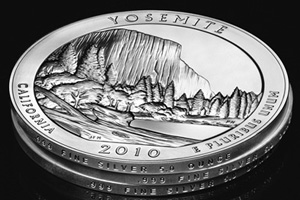
The America the Beautiful Silver Bullion Coins should have been released on December 6, 2010, but instead the program has been delayed by the United States Mint. The delay was prompted by widespread complaints about secondary market prices, which had risen to more than two times the value of the 5 ounces of silver content.

As a bullion product, the coins were to be distributed through the US Mint’s network of authorized purchasers. A small group of primary distributors would be allowed to purchase the coins directly from the Mint at a price based on the market value of the silver content plus a premium of $9.75 per coin. Because of the expected high demand for the coins and the limited mintage available, the Mint urged the primary distributors to keep prices reasonable.

At least one primary distributor began offering the coins for sale at a premium of around $130 per coin over the market value of the silver content. Other bullion and coin dealers further down the distribution chain began offering the coins for even higher prices. The situation ultimately led to a flood of complaints, which caused the US Mint to halt deliveries to primary distributors while they determined the best course of action.

Based on a statement provided by the US Mint, they are currently, “evaluating these reports and collecting information in order to assess the appropriate course of action to make certain that our customers are best served in the distribution of the coins, and to ensure the widest possible availability, accessibility and affordability of these coins.”

The situation stems from the fact that each of the five 2010 America the Beautiful Silver Bullion Coins will have production of only 33,000 units each. The low mintage and high demand for the coins make them more akin to modern rarities than bullion coins. The other bullion coins distributed through authorized purchasers are produced in large quantities to ensure that they are priced and treated like commodities.

In order to accomplish their goals of “availability, accessibility, and affordability,” the natural course of action for the US Mint would be to distribute the coins directly to the public. The US Mint has sold low mintage numismatic products to the public in the past. They have imposed ordering limits or other procedures deemed necessary to achieve fair and widespread distribution.

Unfortunately, this option does not seem to be allowed under the law authorizing the bullion series, which calls for the coins to be distributed through the authorized purchaser network.

Other seemingly logical options such as selling the 2010 releases into the following year or completely scrapping the program for 2010 are also not possible under law. The Mint is required to strike and make the coins available for sale. The bullion coins may only be available for sale during the year in which the corresponding circulating quarter dollars are issued.

Keeping in mind the legal requirements, what options does the US Mint really have for the America the Beautiful Silver Bullion Coins?

  1. Distribute existing production through AP’s and require them to keep prices at a “reasonable” level set by the US Mint. The problem with this option is that the US Mint can only impose such pricing requirements at the primary distributor level. Most primary distributors don’t sell directly to the public, but resell to other bullion dealers. The retail prices would simply be marked up at the next level before reaching the consumer.
  2. Distribute the existing production through the National Park Service. The authorizing legislation allows the NPS to purchase the bullion coins directly from the Mint for resale to the public. Currently the NPS uses partner organizations or concessioners operating under contract to sell products at National Parks. Potentially, the NPS could create pricing and distribution guidelines for their concessioners to follow when offering the coins for sale. The US Mint could assist the NPS in formulating these guidelines.
  3. Increase the premiums charged to primary distributors to a higher level. It seems possible that the US Mint may have underestimated the costs of production anyway. One long time coin dealer stated that their calculations were likely based on much higher production levels, which would have allocated fixed costs over a greater number of units. The US Mint could recalculate the premium charged to primary distributors based on the actual limited production. This would prevent primary distributors from absorbing additional premiums, which were really just attributable to misallocated costs borne by the Mint.
  4. Increase the number of 2010 ATB Silver Bullion Coin minted to a level appropriate for a bullion product. The Secretary of the Treasury has discretion to establish the number of bullion coins available, so the number authorized could certainly be increased. However, with a complicated manufacturing process and less than one month to go, additional production is probably not be possible. Presumably, the low production level announced was the maximum number that the US Mint could reasonably produce before year end.
  5. Seek a change to the legal requirements for the coins. This would require some very prompt action from Congress, which seems unlikely. At mid year or earlier, the US Mint had asked for modifications to some of the more troublesome specifications for the 5 ounce bullion series. The bill containing these fixes (and a questionable modification to the Gold and Silver Eagle laws) was only recently passed in the House and Senate.

When the US Mint announced the halt of the America the Beautiful Silver Bullion Coin Program, I hope they realized that an easy solution was not apparent. Whatever choice they make to address the issues created by this year’s coins will likely upset someone. Even though they haven’t been issued yet, the coins have already been sold and resold on the secondary market based on a certain production and rarity perception.

How Much Gold and Silver Will the Treasury Secretary Determine is Sufficient to Meet Public Demand?

A bill, which seeks to provide greater Congressional oversight for circulating coin compositions, may have implications for the quantity of United States Mint gold and silver bullion coins that are available to precious metals investors.

The bill H.R. 6162 Coin Modernization, Oversight, and Continuity Act of 2010 primarily establishes rules for the Secretary of the Treasury to provide biennial reports to specified committees on the costs related to circulating coins, and make recommendations for new metallic materials or procedures. A final section of the bill deals with “meeting the demand for gold and silver numismatic items”, although the implications seem to extend to bullion coins.

Following the cancellation of the 2009 Proof Silver Eagles, the United States Mint sought greater flexibility to produce numismatic versions of the coin. The Director of the United States Mint requested such authority be granted to the Secretary of the Treasury at a hearing of the Subcommittee on Domestic Monetary Policy and Technology on July 20, 2010. The chairman of the subcommittee Melvin Watt was the one who introduced the bill H.R. 6162.

The following is Sec. 4 of the bill:

Subsections (e) and (i) of section 5112 of title 31, United States Code are each amended by striking ‘quantities’ and inserting ‘qualities and quantities that the Secretary determines are’.

Here’s how the law authorizing American Silver Eagles currently reads (emphasis added):

(e) Notwithstanding any other provision of law, the Secretary shall mint and issue, in quantities sufficient to meet public demand, coins which— (1) are 40.6 millimeters in diameter and weigh 31.103 grams; (2) contain .999 fine silver; (3) have a design— (A) symbolic of Liberty on the obverse side; and (B) of an eagle on the reverse side…

And here’s now the law would read if the bill H.R. 6162 is enacted (emphasis added):

(e) Notwithstanding any other provision of law, the Secretary shall mint and issue, in quantities and qualities that the Secretary determines are sufficient to meet public demand, coins which— (1) are 40.6 millimeters in diameter and weigh 31.103 grams; (2) contain .999 fine silver; (3) have a design— (A) symbolic of Liberty on the obverse side; and (B) of an eagle on the reverse side…

A similar change occurs for subsection (i), which deals with American Gold Eagles.

The inclusion of the word “qualities” was necessary to accomplish the presumed goal of the legislation to allow the issuance of numismatic versions of the coins, but what about the added phrase “that the Secretary determines are sufficient”?

Is the amount of gold and silver bullion coins that the Secretary determines are sufficient to meet public demand different that than amount which will actually meet public demand?

Even under the strict existing standard, there have been extended periods of time when full public demand was clearly not being met. The sale of Gold and Silver Eagle bullion coins have been completely suspended for brief periods, and rationed for considerably longer periods. Most recently, Gold Eagles were subject to rationing from December 2009 until March 2010, and Silver Eagles were rationed from December 2009 until September 2010.

What will happen if the standard becomes less strict and more indefinite?

US Mint Bullion Programs at the Treasury Secretary’s Discretion

Besides the American Gold and Silver Eagles, no other US Mint bullion programs carry the requirement to be produced in quantities sufficient to meet public demand. The language varies, but each program is effectively left to the discretion of the Secretary of the Treasury.

The 24 karat American Gold Buffalo coins, carry the requirements, “Not later than 6 months after the date of enactment of the Presidential $1 Coin Act of 2005, the Secretary shall commence striking and issuing for sale such number of $50 gold bullion and proof coins as the Secretary may determine to be appropriate, in such quantities, as the Secretary, in the Secretary’s discretion, may prescribe.”

The subsection dealing with American Platinum Eagles reads: “The Secretary may mint and issue platinum bullion coins and proof platinum coins in accordance with such specifications, designs, varieties, quantities, denominations, and inscriptions as the Secretary, in the Secretary’s discretion, may prescribe from time to time.”

And, the recently issued 5 ounce America the Beautiful Silver bullion coins: “The Secretary shall strike and make available for sale such number of bullion coins as the Secretary determines to be appropriate that are exact duplicates of the quarter dollars issued under subsection (t)”

Granted that there is no public demand requirement, but how is the Treasury Secretary doing with these other gold and silver bullion programs?

Inventories of the American Gold Buffalo bullion coins were completely depleted by the end of September 2010. At that point, the US Mint indicated that no further inventory of 2010-dated bullion coins would be made available.

The American Platinum Eagle has not been available in bullion format for more than two years. After final inventories were exhausted in late 2008, the US Mint indicated that the 2009 release would be delayed. The 2009-dated bullion coins were eventually canceled. The US Mint has not provided any information on 2010-dated bullion coins, and none have been issued to date.

The America the Beautiful Silver Bullion Coins went on sale to authorized purchasers today. The supply was so limited that the US Mint urged primary distributors to keep prices reasonable. Market forces took precedence and the bullion coins have been selling for double the silver value, or more.

Conclusion

So what is the difference between “quantities sufficient to meet public demand” and “quantities that the Secretary determines are sufficient to meet public demand”?

In practice, we shall see if this represents a different standard, but at this point the change in wording makes me uncomfortable.  I want the supply of gold and silver bullion coins to be determined by demand in the marketplace, not determined by unspecified criteria established by the Secretary of the Treasury.

As the bill has already been passed in the House and Senate, and only requires the President’s signature to become law, it seems too late to do anything other than brace for the possible repercussions.

Another Precious Week: Back on Track – Record Breakers

Gold, Silver, Platinum, and Palladium Weekly Recap

So the price of gold has broken the $1,400 mark, whatever.  The biggest news is that we shrug off records such as these being broken.
The pundits are saying that this is a “flight to safety”, to which we say that’s so last week.  Literally last week.  If you’re memory was at the top end of the gold fish scale (and we’re talking about market pundits here) you’d remember that the flight to safety was last week when all the other metals were going down but gold was up.

Now gold is up less than the other metals, and we know what that means.  Inflation, baby.  Sure enough, oil is up as well.  In fact gold really didn’t show much form until Friday, and that was only because of Chinese figures.

Precious Metals Prices
Fri PM Fix Weekly Change
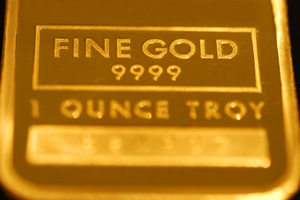
Gold $1,403.50 +48.50 (+3.58%)
Silver $28.74 +2.12 (+7.96%)
Platinum $1,718.00 +79.00 (+4.82%)
Palladium $758.00 +88.00 (+13.13%)

This inflation hedging should be slightly puzzling, after all the Quantitative Easing announcements were a few weeks ago and the bank rescues in Europe may have been mildly inflationary, but they are also a reminder that the whole thing could go down in a deflationary spiral that will hit precious metals.

That’s because we’re looking at the west.  As we’ve been arguing for some time the consumer demand in the east is where the action is.  And the Chinese are very worried about inflation.  China has released figures that have shocked the markets showing that the demand for gold is five times what it was last year.  This is about a third of the total consumer gold demand. The Chinese are scared stiff of inflation, which is going out of control, particularly with a weak currency due to the dollar link.

Precious metals are the answer, and China has historically been particularly fond of silver rather than gold.

Governments are also actively buying, particularly Russia which has overtaken Japan to become the eighth biggest Central Bank holding gold.  And they got the World Cup soccer competition.  Lucky Russia.

In the silver market the talk is about market manipulation and short positions, with some people speculating that the traders who took out the massive short positions need to cover their positions and actually buy silver.  Well perhaps.

Palladium and platinum have also proved to be very tight markets, with palladium getting to its highest price since April 2001.  Palladium in particular has a very narrow supply base, with much of the mines being in Russia.

New US Mint Silver Bullion Coin Series Starts Next Week

The release date, mintages, and premiums for  the United States Mint’s America the Beautiful Silver Bullion Coins were finally revealed this week. Precious metals investors and collectors were in for a few surprises.

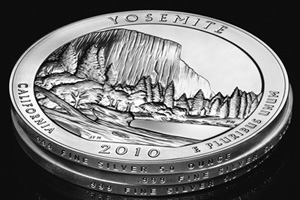
As covered in a previous post, the coins will feature the same designs as the America the Beautiful circulating commemorative quarter dollars. This will result in five different issues per year from 2010 to 2020, and a single issue in 2021. The bullion coins will be struck in 5 troy ounces of .999 fine silver with the curious legal tender face value of 25 cents. Specifications include a diameter of 3 inches and thickness of 0.16 inch.

The release date for the new series will be December 6, 2010. This is the first date that the United States Mint’s authorized purchaser network can place orders for the new series. As with other bullion coins, the US Mint uses a small network authorized dealers to handle distribution. They purchase the coins in bulk quantities directly from the Mint and then resell them to other dealers and/or the public. Individuals are not able to buy the America the Beautiful Silver Bullion Coins directly from the Mint, but must purchase them from a bullion dealer or other market source.

The US Mint will only be producing 33,000 units for each of the 2010 designs. This results in total production of 165,000 of the silver bullion coins. It had previously been reported that 500,000 would be struck, but for unspecified reasons this amount was reduced. In terms of bullion, 825,000 ounces (165,000 of the 5 ounce coins) is an incredibly small amount. In the last  month, the US Mint sold more than 4.2 million ounces of silver bullion.

Premiums charged to authorized purchasers for the America the Beautiful Silver Bullion Coins will be $9.75 per coin. This is a very reasonable amount, but the premiums that are paid on the secondary market might be another matter. At the primary distribution level, the US Mint has warned authorized purchasers to set premiums at a level “competitive with those charged for other bullion coins.” I think the primary dealers will do their best to follow this mandate, but at subsequent levels of distribution, market forces will take precedence and drive prices higher.

In the first quarter of 2011, the US Mint will offer numismatic versions of the 5 ounce silver coins. These will be limited to only 27,000 units each. This will be another adventure waiting to happen. However, in this case the US Mint will sell the coins directly to the public at fixed prices, and will likely impose household limits to ensure broad distribution.

Buying Your Gold at the ATM

In May of this year, the very first gold vending machine in the world was installed and used. That’s right, a vending machine where a customer can purchase gold bars was put into place. It’s located in Abu Dhabi’s Emirates Palace hotel—a luxurious place that is frequented by billionaires and even royalty—and apparently, it’s been a success. Gold to Go, the company that owns and operates the machine has recently announced that it has plans to consider a US installation.
Gold to Go

According to the company’s statements, “Gold to Go is a trading and sales concept which facilitates selling gold bars and coins independently from shop-based display and sales locations.”

Their vending machine in Abu Dhabi, sometimes referred to as a gold ATM, is actually covered in 24-carat gold. The machine works by dispensing gold in discrete black packaging. You can choose to purchase your gold in a number of different forms and weight. A small one-ounce bar is being offered as well as six different coins and 1, 5, and 10 gram bar options. Each is engraved to reflect the unique nature of the gold’s origin. The bars are stamped with the Emirates Palace logo while the coins bear the symbols of gold producing locales like Canada, Australia, and South Africa.

Where is it Headed?

Gold to Go intends their product to target two different audiences. The first is the potential investor. Buying gold this way demystifies the precious metal, they claim. The vending machine can facilitate a private investment for those who would like to take advantage of the metal’s recent market popularity. It also makes a good souvenir for those travelers who can afford it.

The gold vending machines may be available to the public in the United States as early as next year. Currently, it is slated to have locations in both Las Vegas and Florida.

The Rise in Gold Recycling

The industry that centers around recycling gold products like fillings or family jewelry is nothing new in countries like India, where the precious metal is an enduring part of the culture. There, everyone knows where they can buy and sell recycled gold in order to make a little money. In the US, however, things are different.
Until recently few people even considered attempting to sell gold products for recycling purposes. Even if they did, there were few local options for their use. Now, however, the practice of selling your gold to dealers interested in recycling it is on the rise.

Rising Interest

According to recent figures, the supply of secondary market gold coming from the US has risen steadily over the past four years. The reasons?

First of all, the US economy has put many people in the position of needing to access some kind of funding quickly. Commercials for gold recycling services promise to purchase unused gold items for good prices with little hassle and there are all sorts of options available, from pawnshops, to storefronts, to mail-in services. Buyers are making it a simple and convenient way to increase consumers’ ready money supplies.

Secondly, the extremely high demand for gold has resulted in higher prices, making it a great time for consumers to cash in on any gold that they are holding. Many of them do.

Impact on Supply

The increasing amount of recycled gold has helped to bolster overall gold supply. According to figures from the World Gold Council, while mine supply grew by only 3% during the third quarter of 2010, the supply of recycled gold increased by 41%. This served to boost overall gold supply by 18% compared to the year ago period.

US Mint Sells Record 4.26 Million Silver Eagles in November

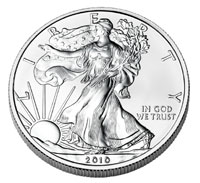
During November 2010, the United States Mint recorded sales of 4,260,000 American Silver Eagle bullion coins. This is significant since it represents the highest monthly sales total in the history of the program.
With the price of silver up more than 65% for the year to date, investment interest in “poor man’s gold” has been on the increase. This has had a big impact on silver bullion sales by world mints, as many prefer to invest in physical precious metals than exchange traded funds or other options.

The previous record for monthly Silver Eagle sales dates back to December 1986 when 3,696,000 of the one ounce silver bullion coins were sold. This had represented the first full month that the coins were available for purchase from the Mint, and reflected the high initial demand for America’s first silver bullion investment product.

In later years, sales of the American Silver Eagle declined, as the price of silver languished. In 1996, bullion sales hit their low as only 3,466,000 coins were sold for the entire year, an amount eclipsed by the monthly sales level a decade earlier.

For the year to date, the US Mint has sold 32,890,500 ounces of silver bullion, which will mark a fresh annual high.

American Silver Eagle Monthly Sales

January 3,592,500
February 2,050,000
March 3,381,000
April 2,507,500
May 3,636,500
June 3,001,000
July 2,981,000
August 2,451,000
September 1,880,000
October 3,150,000
November 4,260,000
December
Total 32,890,500

Details Awaited for America the Beautiful 5 oz. Silver Coins

Silver investors and coin collectors have been awaiting the final details of the United States Mint’s new silver bullion coins. Some preliminary information such as the design, specifications, and production levels have been revealed, but the premiums and exact release dates remain unknown.

The America the Beautiful Silver bullion coins will feature the designs of the new circulating commemorative quarter series struck in 5 ounces of .999 fine silver. Under Public Law 110-456, the coins will be produced with an unusually large diameter of 3.0 inches. By comparison, the Perth Mint’s 5 oz Lunar silver bullion coins have a diameter of about 2.58 inches. The larger diameter makes the US Mint’s coins more difficult to produce and potentially bendable by hand, due to the thickness of only 0.16 inches.

Following the America the Beautiful Quarters Program, a total of 56 different designs will be released between 2010 and 2021. The releases will feature a National Park or National Site from each of the 50 States, 5 U.S. Territories, and Washington, D.C. The order of release has been established based on the dates the areas were federally designated.

By law the US Mint may issue make the coins available for sale only during the calendar year that the corresponding quarter dollars are released. This means that the 2010 5 oz silver bullion coins featuring Hot Springs, Yellowstone, Yosemite, the Grand Canyon, and Mount Hood must be issued available for sale before the close of the year.

Overall production is left to the discretion of the Treasury Secretary. This is in contrast to the American Silver Eagle, which must be struck based on public demand. For 2010, the US Mint has planned production of 500,000 of the America the Beautiful Silver Bullion Coins, equally divided amongst the five designs.

The new silver bullion coins will be distributed through the US Mint’s authorized purchaser network, which currently distributes other bullion products. The premium that authorized purchasers will need to pay above the market value of the silver has not yet been announced. For the American Silver Eagle, the premium is currently $2.00 per coin. Premiums for American Gold Eagles range from 3% to 9% depending on the bullion weight.