April 13, 2026

US Mint Changes Rules for Authorized Purchasers

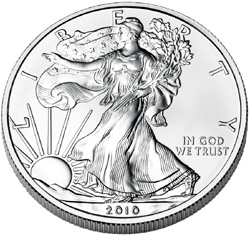
The United States Mint recently revised the requirements to become an Authorized Purchaser for their American Eagle Gold and Silver bullion programs. Since the start of the program, the US Mint has used an authorized purchaser network to distribute the coins to the public.
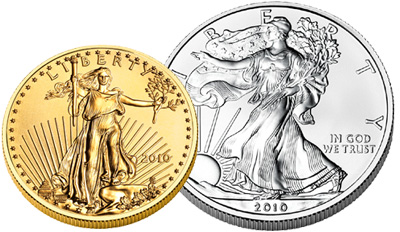
These Authorized Purchasers are the only ones allowed to buy bullion coins directly from the United States Mint. They purchase the bullion coins based on the market prices of the metals plus an established premium. The premiums are currently $2 for Silver Eagles and 3%, 5%, 7%, and 9% for one ounce, one-half ounce, one-quarter ounce, and one-tenth ounce Gold Eagles. Authorized purchasers are also required to create a two way market for the coins to ensure liquidity for US Mint bullion coin investors.

There are currently eight authorized purchasers for gold and twelve for silver.

Changes to the requirements recently made effective included modifications to the sections “Purpose”, “Marketing Support”, “Experienced Market Maker”, and “Tangible Net Worth”. The most significant change was the addition of a new section “Right to Temporarily Refrain from the Review of New Applications.”

The new section states the following (emphasis added):

The United States Mint reserves the right to temporarily refrain from the review of new AP applications during periods in which the allocation of any bullion product is required. The temporary refrain period will continue until a minimum of nine months after all allocations have been lifted, but no more than one year after all allocations have been lifted.

For more than two years the US Mint has continually resorted to their allocation program (rationing) in times when gold and silver bullion demand has spiked. From 2008 to 2010, Silver Eagles have spent more time under allocation than not, with the program implemented February 2008, lifted in June 2009, reinstated in December 2009, and lifted in September 2010.

Under the newly established rules, the US Mint can refrain from considering applications of potential new authorized purchasers until at least June 2011. During this time, if another demand spike necessitates the use of the allocation program, the clock starts again, but only after allocation has been lifted. Given the pattern of the past two years, the period of refrain could last indefinitely.

By law the US Mint is required to supply American Gold and Silver Eagles in quantities sufficient to meet public demand. In reality, the supply of coins is limited based on the number of planchets the US Mint can obtain from foreign suppliers, and distribution is limited based on the small number of authorized purchasers and the new hurdles placed before potential applicants.


Gold and Silver Recap: Are We Peaking Yet? Silver Goes on a Tear

Another Precious Week in the Market

Last week I tried to explain the theory that gold wasn’t actually that high, the dollar was just weak.  So as to stop the hate mail, chair throwing, death threats and broken windows (how did you find my address?) I’d like to point out that this is not a reason for not holding gold.

Precious Metals London Fix Prices
Gold $1,367.50 +26.00 (+1.94%)
Silver $24.42 +2.05 (+9.16%)
Platinum $1,691.00 +8.00 (+0.48%)
Palladium $591.00 +19.00 (+3.32%)

In fact, it is one of the three reasons for holding gold. It is still not really that expensive, its just that paper money is getting progressively cheaper – as any trip to the supermarket or the gas pump will confirm.  The reason is that it’s still a minority taste, and if this is a bubble you’re safe to buy until the shoe shine boy is talking about it.  If you can’t find a shoe shine boy look for a project manager – when they start talking about gold coins then maybe it’s time to short gold.  The third reason is the optional one that we’re all doomed.  But we’ve been all doomed for the last forty years, so just concentrate on the first two.

And gold has done OK this week.  Ben Bernanke has talked about more easing and gold went up.  Towards the end of the week it dipped down again.  One of the interesting things is that the idea of currency wars has come into the open, where the large currencies all play beggar thy neighbor.  There has been no evidence of central government selling of gold.

However, gold is relatively subdued compared to silver.  Due to Nelson Bunker Hunt, it will be a long time before we can say “record highs”, but although second best may not sound so great these “30 year highs” are a big deal due to the fact that this is not some mad Texan billionaire with too much oil money.  These are diverse consumers worried about inflation.

Let’s put this in another way, silver has risen by 45.8% in dollar terms from the start of the year.  One thing that has been noticeable with silver this week has been the amount of articles from places like the Motley Fool.  Could be the chance to take a breather?  Silver has been priced weakly compared to gold in the last couple of years, but 9% in a week is looking essentially unsustainable.

Gold and Silver Recap: Has Gold Really Gone Up?

Another Precious Week in the Market

I know we’re among friends here and I know that saying that Gold isn’t going up is not only just short of insulting a person’s religion, and at the same time it’s pointing at the price just below this paragraph and saying that black is white.  Well, you’re thinking, good luck crossing the road with that attitude.

Precious Metals London Fix Prices
Gold $1,316.25 +25.25 (+1.6%)
Silver $21.95 +0.42 (+1.9%)
Platinum $1,679.00 +4.00 (+0.2%)
Palladium $571.00 +4.00 (+0.7%)

But here’s the thing, gold is going up in dollar terms.  And what’s the dollar been doing?  Weakening.  That’s right.  Gold is going up in relation to a weakening dollar.  A lot of things are doing that.  The price of cotton is going up against the weakening dollar.

So Kitco decided to do introduce an index which looked at a “weighted basket of currencies”.  Now there’s probably a lot wrong with their methodology (the prime point I’ll come to later) but the basic story is something that should make you sit up.  Their gold index has a 30 day graph and you see the price of gold going up against the dollar and marginally falling, yes falling, against the weighted basket of currencies.

It’s different over longer periods, where they basically follow the same direction, and this is a bit of an aberration.  But the aberration is what really matters.  The gold story in the last month, including its new records (which were reached this week) is really a dollar record.

But there’s still the killer flaw, and that is that the gold price is still being measured in comparison to fiat currencies.  And fiat currencies are being printed like there’s no tomorrow.  Competitive devaluation they call it in the fever swamps.

In the real world of precious metal, where you can’t simply print more of it, silver is the real winner.  Again.  Some of this is a catch up on gold, but a lot of it is because silver is seen as a clearer anti inflation play than gold at the moment – as all the wedding jewelery and end of the world types are creating so much white noise on the gold price.

One interesting fact about who’s selling gold is the gold mining companies are not selling gold.  Now that may sound like the second (really) stupid thing I’ve said in one post, but this is what’s happening.  One of the biggest gold miners, AngloGold Ashanti, has “eliminated its hedge book“.  Now this is the fact that they used to sell some of their gold in advance, before it came out of the ground.  This would go on to the futures market and Anglo would get the money, minus the pseudo-interest, early.  It kept them stable and less exposed to the turbulence of the spot markets.

Now Anglo’s going all-in.  No more future selling (which in itself meant a temporary shortage on the market as there’s less future gold being sold) and full exposure to the gold price.

Governments and Central Banks are being very quiet at the moment.  But Vietnam has started to allow some importing of gold, just in time for the wedding season.  In itself it will be a pinprick, but it’s a timely reminder of one vital support over the next few months.

American Palladium Eagles?

Should the United States Mint produce a palladium bullion coin? A Congressman from Montana, where most domestic palladium mining takes place, thinks so.
The bill H.R. 6166 American Eagle Palladium Bullion Coin Act of 2010 was introduced on September 22. The bill had no cosponsors, but has been passed in the House of Representatives without objection. In order for the proposal to become a reality, the bill must be passed in the Senate and then signed into law by the President.

This is not the first attempt for palladium bullion coins. Previous attempts in the House and Senate have included:

  • H.R. 5614 Original Saint-Gaudens Double Eagle Ultra High Relief Bullion Act
    • Introduced March 13, 2008 by Sen. Max Baucus of Montana
  • S. 2924 Original Saint-Gaudens Double Eagle Ultra High Relief Bullion Act
    • Introduced March 13, 2008 by Rep. Michael Castle of Delaware. Passed House May 15, 2008
  • S. 758 Original Saint Gaudens Double Eagle Ultra High Relief Bullion Act of 2009
    • Introduced April 1, 2009 by Sen. Max Buacus of Montana – April 1, 2009
  • H.R. 3405 Original Saint Gaudnes Double Eagle Ultra High Relief bullion Act of 2009
    • Introduced July 30, 2009 by Rep. Dennis Rehberg of Montana

The latest bill does include some interesting provisions. Although it directs the source of palladium for the coins to be from newly mined domestic sources, if no such palladium is available, it would also allow other available sources to be used. This is an improvement from the laws behind the American Gold and Silver Eagle program.

The Palladium Eagle bullion coins would have a weight of one ounce, fineness of .9995, and face value of $25. The size and thickness of the coins would be left to the Secretary of the Treasury to decide. This is an improvement on the law behind the America the Beautiful 5 oz. Silver Bullion coins, which require a problematic 3 inch diameter.

The Secretary of the Treasury can decide if proof and uncirculated versions of the American Palladium Eagles should be struck. Again, this is an improvement from the lack of direction provided by the law behind American Gold and Silver Eagles.

There are some quirks to the bill, such as the stipulation that the surface treatment of each year’s proof or uncirculated version should differ in some material way from the preceding year. Until now, the US Mint hasn’t done much in the way of striking coins with varying surface treatments.

The bill also states that any US Mint facility other than West Point should strike coins other than the proof version of the Palladium Eagles. In other words, Philadelphia, Denver, or San Francisco would need to strike bullion and uncirculated coins, while West Point could strike proof coins.

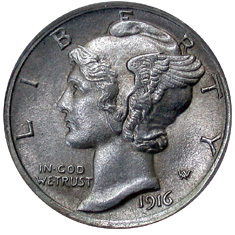
Finally, the bill directs the use of designs by Adolph A. Weinman. Specifically the obverse design from the Mercury Dime and the reverse design from the 1907 American Institute of Architects Medal. Both would be rendered in high relief.

2010 Proof Silver Eagles to Fly November 19

The United States Mint has announced that the 2010 Proof Silver Eagle will be available for collectors this year. The news comes one month after the official conclusion of the US Mint’s long running rationing program, which had been in place due to high demand for bullion coins.

By law, the US Mint is required to produce American Gold and Silver Eagle bullion coins in quantities sufficient to meet public demand. Following their legal team’s interpretation, in times when bullion demand has exceeded planchet supply, the US Mint has sourced all incoming planchets to the production of bullion coins and foregone the production of collector coins.

This interpretation of their legal responsibilities led to the cancellation of the 2009 Proof Silver Eagle and the lengthy delay and uncertainty surrounding this year’s offering.

The 2010 Proof Silver Eagles will be available for ordering on November 19, with fulfillment of orders beginning on December 1. Pricing has been established at $45.95 per coin. This represents a hefty increase from the last available proof Silver Eagles, which were priced at $31.95 back in 2008. A household ordering limit has been established at 100 units.

The US Mint is not saying just how many coins will be available for collectors, as it will remain contingent on the level of bullion coin demand. If precious metals investors manage to tone it down for a few months, just how many 2010 Proof Silver Eagles will be produced?

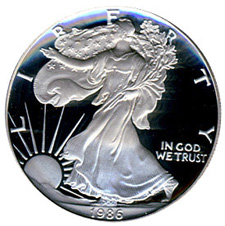
A possible clue lies in the US Mint’s original request to Congress when they were attempting to amend the law to allow proof coins to be struck even while bullion demand remained unmet. They had requested authority to use up to 2 million incoming planchets to strike Proof Silver Eagles each year. This would top the highest mintage for a proof issue of the series, currently held by the 1986 Proof Silver Eagle with a final mintage of 1,446,778. The legislation eventually introduced in Congress left the determination up to the Secretary of the Treasury.

Gold and Silver Recap: Gold Still Climbs

Another Precious Week in the Market

I know that this may be a bit of a shock for a few of you, but large governments aren’t concerned about inflation.  They are so scared that any move to seriously cut down inflation will kill their economies stone dead that inflation is allowed to run wild.

Precious Metals London Fix Prices
Gold $1,316.25
Silver $21.95
Platinum $1,679.00
Palladium $571.00

The Euro may be gaining on the dollar, but that’s not the real story.  The Euro and the Dollar are a see-saw at the moment, when one starts climbing against the other, then the other will start to panic and tell the market that they are a really bad buy and go down again.  The other large currencies are also playing around.  A governor of the Bank of England has told savers to do their patriotic duty and spend their savings, while the Japanese are selling off Yen to stop the currency climbing.

But this is all a sideshow.  Competitive devaluation just means that more paper gets printed.  Sure, it has different colors and pictures, but it is still paper.  It’s the barbarous relics of precious metals where the real action is.

And gold hit another dollar record, or we should say that the dollar hit another all time gold low, on Friday.  The interference that is happening with the comparative currency values is obscuring the fact that we are going through a general inflation, and when there’s inflation then it seems like the price of gold and silver rise, because the value of the dollar as it is objectively measured is falling.  This in turn means that people want gold in order to protect their wealth and the actual price of gold starts rising.  We’re nowhere near that stage yet.  After all, how many of your work colleagues hold gold?

There’s not been much to go on with the central banks, apart from a move by Iran to sell off gold to support their currency.  The Europeans seem to have also hit a temporary halt, according to the “Central Bank Gold Agreement”, something we’ll come to at another time.

Gold may not have been on the main street radar in the same way as buying rental property was, but it has been on many investors for a while.  Silver has been rather neglected.  But silver is starting to gather steam.  It’s ratio to the gold price has gone below 60 for the first time in the last year.  It is starting to hit thirty year highs, when that mad Texan billionaire Bunker Hunt almost cornered the silver market. It’s still less than half of that crazy price ($48.70).

And platinum and palladium are also joining this devaluation party, with palladium going to a two and a half year peak, having risen 45% since May.  These are seen as great catalytic converters, and the China market is often quoted, but in the end it looks like gold and, increasingly, silver are pulling the prices of these metals up.

Silver Eagle Bullion Coin Premiums Up Again

The US Mint has ratcheted up premiums for their popular American Silver Eagle bullion coins once again. Premiums charged to Authorized Purchasers were increased from $1.50 to $2.00 per coin. The increase was made effective today.

Authorized purchasers are the only ones allowed to purchase bullion coins directly from the US Mint. The increased premium level, will no doubt filter down through the distribution channels and result in higher prices paid for silver bullion at a time when spot prices continue to soar.

During the past two years, premiums have been raised on two other occasions. These were relatively modest adjustments compared to the current 50 cent per coin increase. On October 14, 2008, premiums were increased from $1.25 per coin to $1.40 per coin. Then on January 27, 2009, premiums were increased from $1.40 to $1.50 per coin.

The increase in premiums for silver bullion coins comes just a few days after the US Mint announced the depletion of their 24 karat gold bullion offering. The latest available information suggests that the coins will not be offered for the remainder of the year, with the start of sales for 2011-dated coins still undetermined.

2010 Gold Buffalo Bullion Coin Inventories Depleted

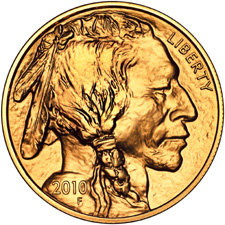
Even though its only September, US Mint sales of the 2010 American Gold Buffalo bullion coins are done for the year. Availability for the one ounce 24 karat gold bullion coin has become erratic in recent years, with the coins only available for a few months at a time, rather than throughout the year.

A memorandum sent to the US Mint’s authorized purchaser network included the following brief statement: The United States Mint has depleted its inventory of 2010 American Buffalo One Ounce Gold Bullion Coins. No additional inventory will be made available.

The 2010 Gold Buffalo bullion coins originally went on sale April 29, 2010. After just under five months of availability, the US Mint recorded sales of 209,000 coins.

The American Gold Buffalo series was introduced in 2006, in part to compete with the 24 karat gold offerings of other world mints. The US Mint’s popular American Gold Eagle is struck in a composition of 22 karat gold.

The 2006 Gold Buffalo was launched on June 22, 2006 and the coins were available throughout the remainder of the year. In 2007, the coins were available all year, although sales levels took a dip from the strong levels of the inaugural year. The following year, the more erratic availability would begin.

In September 2008, the US Mint announced their inventory of Gold Buffalo bullion coins depleted. The offering remained unavailable for more than a month. In November sales briefly resumed to sell one last batch of 25,000 coins. After that point, Gold Buffalo bullion coins were not available again for nearly a year.

The 2009 Gold Buffalo coins finally went on sale October 15, 2009 and only lasted until December 4, 2009 before inventories were depleted.

Will we ever see a return to normalcy when bullion coins are available throughout the year and not subject to depletion, suspensions, and rationing?

Gold and Silver Recap: Record Breaking Prices

Another Precious Week in the Market

Gold is breaking records ($1298) and silver has set a thirty year high ($21.35), in dollar terms at least, and we’re all on tenterhooks – or perhaps we shouldn’t be.  Precious metals will be around long after their latest price spike, and it’s all about storing value.

The main thing that’s been driving the gold and silver price recently has been the weak dollar.  You may not think that, but all the currencies are currently in a competitive printing championship.  The Federal Reserve, the Bank of Japan, and the Bank of England are all talking about more money printing to stave off (more) recession while the European Central Bank is making similar noises if you could hear them over the screeching of Portugal and Ireland, although the Euro has done quite well, in comparison.

There’s no new gold selling action from governments, yet.  The governments shot their bolt somewhat in the early part of the decade, but they still do have some gold that could seriously depress the market.  However at the moment a gold sale looks like it’s not on the cards. Governments are desperately trying not to increase the value of their currencies.

The action is in the buying.  Not so much governments.  Recent buyers like Russia, China and India are keeping quiet at the moment, but in Asia the wedding season is coming.  And that means retail buying of gold.  There’s usually an uptick in the gold price around now.  Despite what we’ve all seen with the floods in Pakistan the monsoon’s actually been good for most of the Indian sub-continent and the Chinese economy is still powering ahead, so there will still be sales.  Even George Soros is talking about buying gold, as is John Paulson.

There’s something more sinister.  Congress is talking about legislation to “protect” precious metals investors.  Like in 1933 when all the gold, apart from some collectible coins, was taken out of the hands of private investors?  We’ll have to keep an eye on that.

As for silver, this is a far straighter inflation hedge than gold – which also thrives on political instability.  At this price it’s likely that less than the often quoted 50% is used in industrial production.  It pays to remember that silver has gone up 27% since the start of the year, so it may be the Cinderella metal, but we all know what happened to her.

Platinum ($1645) and Palladium ($562) are, like silver, also climbing up due to the combination of industrial demand and inflation worries.

US Mint to Offer 2010 Proof Gold Eagles

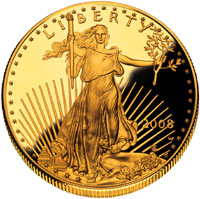
The United States Mint has officially announced the availability of 2010 Proof American Gold Eagle coins.

Although these are collector coins, their fate has become intertwined with the demand for bullion coins. The end of Gold and Silver Eagle rationing and the recent decline in bullion sales, no doubt helped clear the way for the collectible offering. Proof Gold Eagles had been canceled for 2009.

The US Mint will offer the full range of 2010 Proof Gold Eagles, including 1 oz, 1/2 oz, 1/4 oz, and 1/10 oz coins. These will be available for sale individually or as part of a four coin set. The following product limits have been established for each offering:

Product Product Limit
1 oz. Coin 25,000
1/2 oz. Coin 15,000
1/4 oz. Coin 16,000
1/10 oz. Coin 27,000
4 Coin Set 39,000

If the US Mint manages to completely sell out of all options, that would represent 111,350 ounces of gold. Through the end of August, the average number of ounces sold through the American Gold Eagle bullion program was around 108,000 per month.

There is still no word on whether the US Mint will have the time and precious metals blank supplies to produce and offer 2010 Proof Silver Eagles.